Every white noise machine roundup opens the same way: here are twelve machines, this one has the most sounds. That is not the decision you are trying to make. The decision is whether a machine helps with your noise at all - and for one very common problem, it mostly does not.
Masking and blocking are different things
A sound machine does not remove noise. It adds noise - a broad, featureless sound that raises the floor so that intermittent sounds no longer stand out against silence. That is masking, and it works brilliantly on sounds that are roughly the same loudness as the mask you are adding.
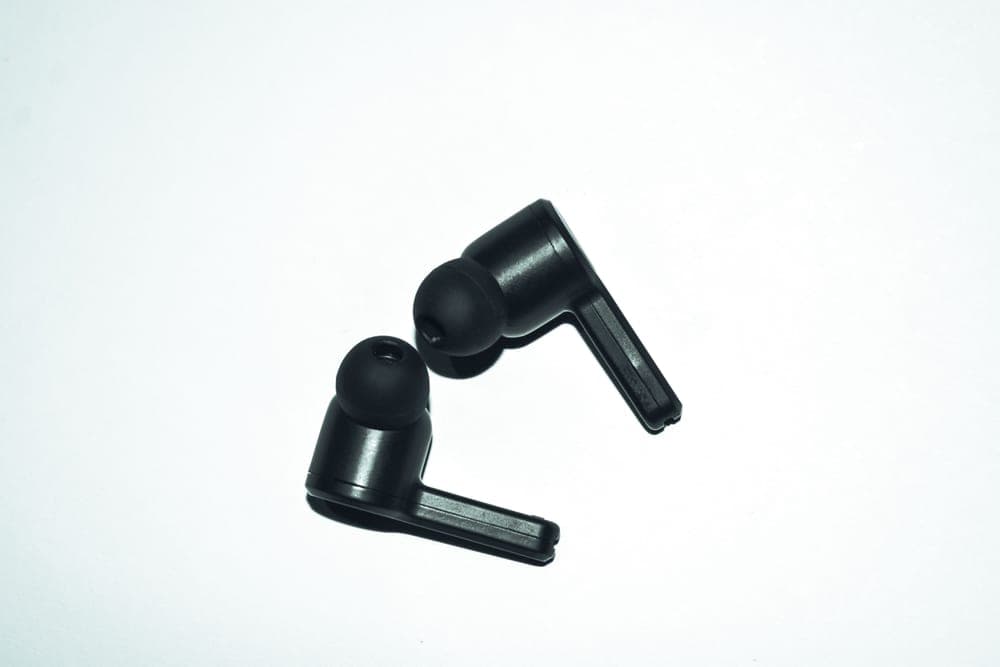
Blocking is the opposite approach: an earplug or a sealed earbud physically stops sound reaching your eardrum. It works on loud sounds that masking cannot cover without becoming louder than the problem.
The rule of thumb that follows is simple and it is the single most useful thing on this page: mask quiet intermittent noise, block loud noise. A hallway door, a distant road, a partner turning over - mask it. A snorer at full volume, a party through a wall, a garbage truck at 5am - block it.
How loud is too loud for masking?
There is a useful reference point here. The World Health Organization recommends keeping night-time outdoor noise below 40 dB to prevent sleep disturbance, and its community-noise guidance suggests bedrooms stay under about 30 dB for good-quality sleep. The threshold associated with waking is around the low 40s.
In practice: if the noise waking you is at the level of ordinary conversation or louder, you are past where a masking machine wins comfortably - you would have to run the machine loud enough to be a problem itself. That is when earplugs stop being the cheap option and start being the correct one.
Fan or digital: the one spec that matters
Sound machines split into two families and the difference is audible.
Fan-based (mechanical)
A real fan spins inside a shell. There is no recording, so there is nothing to repeat - the sound is genuinely different from second to second in the way moving air actually is. People who find digital machines unbearable are almost always hearing the loop point, and a mechanical machine removes it entirely. The trade-off is one sound, no timer, and a faint motor hum in a silent room.
Digital
Sound is played back or synthesized. Cheap digital machines loop a short sample, and once you have noticed the seam you cannot un-notice it. Good digital machines generate the sound continuously rather than playing a file, which gives you variety - including pink and brown noise, which a fan physically cannot produce - with no loop.
“Non-looping” is therefore the spec to check, not the number of sounds. Fifty looping presets are worse than one that never repeats.
White, pink or brown?
The color words describe how energy is distributed across frequencies. White noise is flat and bright - good at masking high-frequency sounds like voices and clatter. Pink noise rolls off the highs and sounds like steady rain. Brown noise rolls off further and sounds like a low distant rumble, which is why it is usually the best match for traffic and for snoring.
There is even a small research literature here: Papalambros and colleagues (2017) delivered timed pulses of pink noise to sleeping older adults and reported improved slow-wave activity and memory recall. That was carefully phase-locked laboratory stimulation, not a machine on your nightstand playing rain all night - and other work has found overnight pink noise exposure could impair sleep-dependent insight. The honest summary is that noise color is a comfort choice, not a proven upgrade. The full three-way comparison is on white vs pink vs brown noise.
What not to buy
- Anything advertising a sound count without saying non-looping. Twenty looping tracks is a worse product than one that never repeats.
- A machine with a light you cannot fully turn off. A bright status LED in an otherwise dark room is a separate sleep problem you are buying on purpose - see how to make a bedroom dark.
- A machine as your answer to a snoring partner. It helps at the margins and it will not carry you through the night. Here is what actually does.
- A phone app, as a permanent solution. Fine for a trial - the full comparison is here - but a phone in your bedroom brings its own problems.
How we chose
We started from machines and hearing protection currently sold in the US with published specifications, then compared what changes the outcome: whether the sound loops, whether it is mechanical or digital, the volume range, the published noise-reduction rating for anything that goes in your ear, portability and power, and whether basic use requires an app or an account. We ruled out anything we could not verify as currently available, and anything materially more expensive than a product doing the same job.