
How this page is funded: we earn a commission if you buy through the links below, at no extra cost to you. As an Amazon Associate we earn from qualifying purchases. It does not change which products we pick or the order they appear in. Full disclosure.
How these picks were made: by comparing published specifications and clearly-credited public reporting. We do not run a laboratory, we have not measured these products, and we do not claim to have slept with them. Here is exactly how we choose.
Short version: a hotel room fails in four places - corridor and neighbor noise, light you cannot switch off, a temperature you do not control, and the fact that your brain treats an unfamiliar room as a place that needs watching. Gear fixes the first three cheaply and packs into a corner of a bag: a small rechargeable sound machine, foam earplugs for the nights when the corridor is the problem, a flat mask with a bendable nose bridge, and a low-profile reusable plug for the nights you are sleeping on your side. The fourth is not a shopping problem, but it is the one worth understanding, because it is why the first night is always the worst one.
Most advice about sleeping in hotels is about the mattress, and the mattress is almost never the issue. Hotels buy good mattresses. What they cannot buy is a room that behaves like your own.
The first night is worse for a reason
If you consistently sleep badly on night one of a trip and then fine on night two, you are not imagining it and it is not the bed. Researchers at Brown University found that one brain hemisphere stays measurably more active than the other during deep sleep on the first night in an unfamiliar place, and that sounds played to the ear connected to that more vigilant hemisphere woke people faster. They called it a night watch. It is the documented mechanism behind the “first-night effect” that sleep laboratories have worked around for decades by discarding their own first night of data.
You cannot buy your way out of that. What you can do is remove everything the night watch has to react to - which is exactly what the rest of this page is about. A half-alert brain in a silent, dark room has nothing to escalate. The same brain in a room where a door slams at 1am will wake you fully, every time.
Two practical consequences. Arrive a night early when the thing you are traveling for actually matters. And take something familiar - your own pillowcase is the classic, and it costs nothing to pack.
Failure one: the corridor
Hotel noise is a different shape from home noise. At home you learn your building’s sounds and stop hearing them. In a hotel every sound is novel, which is precisely what the night watch is tuned for, and the sources are relentless: fire doors that close hard, the ice machine, luggage wheels on a hard floor, an elevator shaft, the room next door’s television, and the cleaning cart at seven in the morning.
Almost all of it is intermittent rather than continuous, and that is the key to treating it. Intermittent noise wakes you because of the contrast between it and the silence around it - so the fix is not silence, it is raising the floor. A small sound machine running continuously turns a door slam from an event into a bump. The World Health Organization’s night noise guidance is built around exactly this: it is disturbed sleep, not loudness alone, that does the damage.
The mechanism is the same one covered on white noise versus pink noise versus brown noise, and the portable machines are ranked on battery and packed size on best travel sound machines. A phone will do in an emergency, with the caveats on sound machine versus a white noise app.
When masking is not enough: a genuinely loud neighbor, or a street-facing room above a bar. Then you want blocking rather than masking, which means earplugs - see sound machine versus earplugs for which problem needs which.
Failure two: light you do not control
Hotel rooms are full of light sources that are nobody’s fault and cannot be switched off. The strip of corridor light under the door. The smoke detector LED. The television standby light. The thermostat display. The gap where two blackout curtains fail to meet in the middle - which they always do, because hotel curtains are hung to look right rather than to overlap. And then, in summer or at northern latitudes, sunrise through an east-facing window at five in the morning.
Light at night is not a comfort issue. A consensus set of recommendations published in PLOS Biology puts the recommended bedroom level very low indeed, and the practical point is that you cannot negotiate a hotel room down to it. You can only take the light off your own face.
A mask is the only portable fix, and the specification that matters in a hotel is not darkness but the nose bridge: the single biggest leak on any mask is the gap beside the nose, which is exactly where that strip of corridor light comes in. A flat mask with a bendable bridge closes it and packs completely flat, which is why it beats a deeper, more luxurious mask for travel. The full shortlist is on best sleep masks for travel, and the blackout question in general is on best blackout sleep masks.
Two free improvements while you are there: clip the curtain gap shut with a trouser hanger, and drape a towel over the thermostat display or the television. Both work better than they sound.
Failure three: the temperature
Hotel HVAC is designed for a corridor of identical rooms, not for you, and it usually fails in one of two ways: a system that runs the room warm and cannot be turned down past a floor, or a unit that cycles on and off all night with an audible clunk each time, which is a noise problem wearing a temperature problem’s clothes.
Your body needs its core temperature to fall in order to sleep, which is why a warm room is so reliably disruptive - the mechanism is set out on you cannot sleep because you are too hot. In a hotel you have fewer levers than at home, but you have more than you think:
- Strip the bed back. Hotel beds are made with a heavy duvet and a layer of decorative throw. Take layers off before you get in rather than at 3am.
- Set the unit before you go out, not at bedtime. A room takes an hour to move; a thermostat does not.
- If the unit cycles audibly, run it continuously on a low fan rather than letting it start and stop. Continuous noise is far less disruptive than intermittent noise - and it doubles as masking.
- Ask for a different room. The cheapest fix on this page, and the one people are most reluctant to use. Away from the elevator, away from the ice machine, higher floor, non-street side.
Failure four: everything is slightly wrong
The pillow is the wrong height. The sheets are a different texture. The room smells of a cleaning product you do not own. The lamp switch is in a place your hand does not expect. None of these is a problem on its own and all of them feed the night watch.
The counter is familiarity, deliberately imported. Keep the same wind-down you use at home - the sequence matters more than the location, which is the argument on how to set up a bedroom for sleep. Bring your own pillowcase. Play the same sound you fall asleep to at home, which is a real argument for carrying a machine rather than relying on whatever the hotel television offers. And keep your usual wake time: the strongest signal you can send a confused body clock is a consistent morning, which is why a travel sunrise alarm earns its space in a bag for longer trips.
The kit, and why these four
The constraint on travel gear is not performance, it is whether you will actually carry it. Everything here packs flat or small enough to live permanently in a wash bag, which is the only way a travel kit survives contact with a second trip.
| Item | Which failure it fixes | Why this one for travel |
|---|---|---|
| Yogasleep Hushh+ | Corridor and neighbor noise | Six ounces, rechargeable, and the amber night light replaces the one you will trip over |
| Mack’s Ultra Soft Foam | Noise a small machine cannot mask | NRR 33, weighs nothing, and losing a pair in a hotel room does not matter |
| Mavogel Cotton Mask | Door strip, standby LEDs, early sunrise | Bendable nose bridge closes the gap; packs completely flat |
| Loop Quiet 2 | Noise, on the nights you sleep on your side | Low profile against an unfamiliar pillow; washable, so one pair lasts the trip |
Two earplugs on one list is deliberate, and it is the honest version of this recommendation rather than an upsell. They solve different nights: foam when the noise is genuinely loud and you need every decibel, the low-profile reusable plug when the problem is moderate and the real obstacle is lying on a strange pillow. The reasoning is laid out on foam versus silicone earplugs, and our Loop Quiet 2 review is blunt about how much the comfortable one does and does not block. If you only want to pack one, pack the foam - it is cheaper and it blocks more.
One warning worth repeating: at NRR 33 you may well sleep through a wake-up call or a phone alarm, which in a hotel is a genuine risk rather than a theoretical one. Set a second alarm across the room, or read earplugs that still let you hear your alarm before you depend on them.
If the problem is the flight rather than the hotel
A plane is the same four failures with the dials turned up and no control over any of them: constant low-frequency engine noise, cabin lighting on somebody else’s schedule, a temperature set for an aisle rather than a window, and a seat. The kit above still applies - the mask and the plugs do most of the work - but the ranking changes, because a sound machine is useless against engine noise and comfort against a seat back becomes the whole problem. The mask side of that is on sleep masks for travel, and the blocking side on noise canceling earplugs for sleeping.
What not to bother with
- Portable blackout curtains. They exist, they are heavy, and the suction cups fall off hotel glass in the night. A mask weighs nothing and works.
- A travel weighted blanket. There is no such thing that is both heavy enough to work and light enough to carry; weight is the product. If weighted sleep is what you are missing on the road, that is an argument for accepting a worse night, not for checking a bag.
- White noise through the hotel television. It works, up to a point, but most sets have a sleep timer that cuts out mid-night and a standby light that then becomes failure two.
- A second pillow from reception. Actually do this one - it is free, and pillow height is the single most common “everything is slightly wrong” complaint. Related: sleeping positions and the gear that suits each.
If the trips are frequent enough that this has become a permanent problem rather than an occasional one, the underlying issue is usually a body clock that never settles - the night-shift page deals with the same mechanism from the other direction, and the full list of sleep problems starts from whatever is actually waking you.
Four items, one per failure, all of them pack flat
Tap any row to jump to the full write-up. Each thumbnail is the product photograph from that item’s own Amazon listing, and the price in the last column is the one Amazon showed at the last check.
| # | Product | Best for | The spec that decides it | Price |
|---|---|---|---|---|
| 1 | 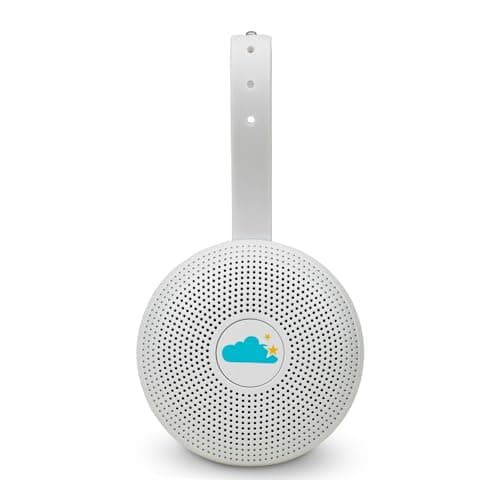 Yogasleep Hushh+Six ounces, an amber night light, Bluetooth streaming and a rechargeable battery - the most complete of the small machines. | A night light and a battery in one small body | 20+ sounds plus Bluetooth streaming, amber night light, 6 oz | |
| 2 | 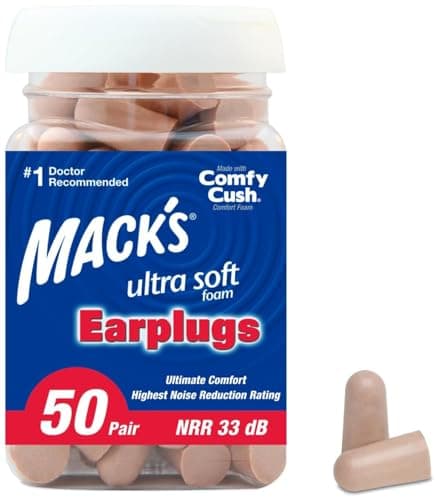 Mack's Ultra Soft Foam EarplugsThe highest-rated foam plug in common retail, at a price where losing one in the sheets does not matter. | Maximum blocking for the least money | NRR 33 dB - the highest rating in this roundup | |
| 3 | 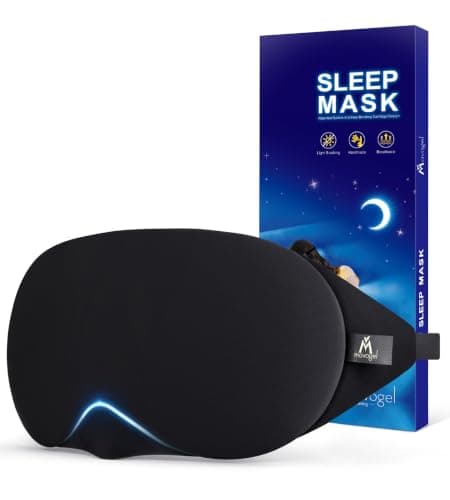 Mavogel Cotton Sleep MaskLayered cotton with a bendable nose wire - it closes the gap beside the nose that plain silk masks leak through, while staying flat enough to lie on. | A flat mask with a real nose seal and no cups | Bendable nose bridge, layered cotton, adjustable 19-29 in strap | |
| 4 | 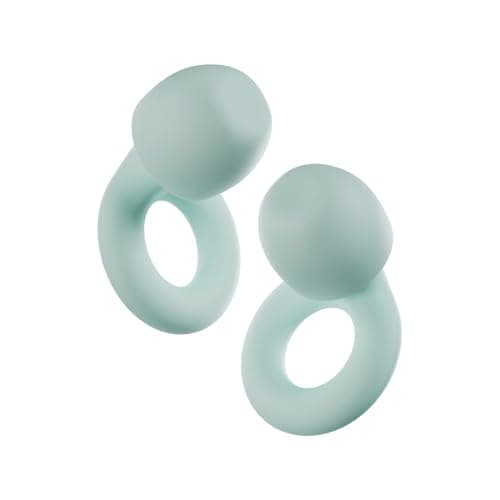 Loop Quiet 2Reusable silicone with a low profile that does not press back when your ear is against a pillow - you trade some blocking for that. | Side sleepers who reuse their plugs | 14 dB NRR / 24 dB SNR - lower than foam, and deliberately so |
Prices come straight from Amazon and are refreshed daily; the date they were checked is stamped under the buy buttons below. If a price has gone stale or a listing has no offer, the button falls back to “Check price on Amazon” rather than showing a number we cannot stand behind. As an Amazon Associate we earn from qualifying purchases.
One fix per failure mode, chosen on packed size as much as on performance - a travel kit you resent carrying is a kit you leave at home. Every pick is a real, currently-sold product; none has been tested by us, and the specifications are the manufacturers' own.
#ad How we are funded · price as of November 12, 2026
Our top pick · A night light and a battery in one small body
1. Yogasleep Hushh+
Six ounces, an amber night light, Bluetooth streaming and a rechargeable battery - the most complete of the small machines.
- Sounds:
- 20+, plus anything you stream over Bluetooth
- Light:
- Adjustable amber night light
- Battery:
- Rechargeable, USB-C (5V adapter not included)
- Size:
- 1.4 x 3.4 x 6.5 in, 6 oz
- Warranty:
- 1 year, with a 30-night trial
What it gets right
- Amber light rather than blue-white, which is the right choice for a bedroom
- Bluetooth means it doubles as the bedtime-audio speaker
- Clips to a stroller or packs flat in a carry-on
Where it falls short
- You supply your own USB power adapter
- Bluetooth streaming drains the battery much faster than the built-in sounds
- Small driver - it will not out-mask a mains machine
Skip it if: You want the deepest, room-filling sound. That is a job for a mains machine with a real speaker.
#ad How we are funded · price as of November 12, 2026
Pick 2 · Maximum blocking for the least money
2. Mack's Ultra Soft Foam Earplugs
The highest-rated foam plug in common retail, at a price where losing one in the sheets does not matter.
- Rating:
- NRR 33 dB (manufacturer figure)
- Material:
- Slow-recovery polyurethane foam
- Reuse:
- A few nights each, then discard
- Sold as:
- Bulk packs
What it gets right
- Nothing in common retail blocks more
- Cheap enough to replace constantly, which is also more hygienic
- The soft compound is tolerable for side sleepers once compressed correctly
Where it falls short
- Only works if you roll and insert them properly - most complaints are fit, not product
- Disposable, so there is an ongoing cost and ongoing waste
- At 33 dB you will very likely sleep through a standard alarm
Skip it if: You have to hear an alarm, a child, or a smoke detector. This is the wrong tool for that night.
#ad How we are funded · price as of November 12, 2026
Pick 3 · A flat mask with a real nose seal and no cups
3. Mavogel Cotton Sleep Mask
Layered cotton with a bendable nose wire - it closes the gap beside the nose that plain silk masks leak through, while staying flat enough to lie on.
- Material:
- Layered cotton and modal over an elastic foam core
- Nose seal:
- Built-in bendable strip you shape once
- Strap:
- Adjustable, fits roughly 19-29 in
- Profile:
- Flat - no molded eye cups
- Care:
- Hand wash; travel pouch included
What it gets right
- The nose wire closes the one gap that ruins cheap masks
- Side wings keep pressure off the temples
- Flat enough to sleep face-down on a pillow
Where it falls short
- Hand wash only, which people ignore and then regret
- The strap pills and wrinkles over months of use
- The fabric rests directly on your eyelids
Skip it if: You need to blink or open your eyes under the mask. That takes a contoured mask with cups.
#ad How we are funded · price as of November 12, 2026
Pick 4 · Side sleepers who reuse their plugs
4. Loop Quiet 2
Reusable silicone with a low profile that does not press back when your ear is against a pillow - you trade some blocking for that.
- Rating:
- 14 dB NRR, 24 dB SNR (manufacturer figures - the same plug under the US and European standards)
- Material:
- Reusable silicone
- Fit:
- Multiple ear-tip sizes included
- Care:
- Washable, reused for months
What it gets right
- The low profile is the reason side sleepers stick with these
- Washable and reusable, so the running cost is near zero
- Multiple tip sizes solve the fit problem foam plugs create
Where it falls short
- 14 dB NRR is meaningfully less blocking than a 33 dB foam plug
- Higher up-front cost than a year of foam
- Silicone can work loose over a long night
Skip it if: Your problem is loud, low-frequency snoring. You want the foam number, not the comfort number.
Questions people actually ask
Why can't I sleep the first night in a hotel?
It is a documented effect. Brown University researchers found that on the first night in an unfamiliar place, one brain hemisphere stays more active than the other during deep sleep and wakes you faster in response to sounds - a night watch. It settles by the second night, which is why the first is reliably the worst.
What should I pack to sleep better in a hotel?
A small rechargeable sound machine for corridor noise, a flat sleep mask with a bendable nose bridge for the light leaking under the door, and earplugs for the nights masking is not enough. All three fit in a wash bag. Your own pillowcase is the free addition that does more than it should.
How do I block the light coming under a hotel door?
A mask, because you cannot fix the door. Pick one with a bendable nose bridge - the gap beside the nose is where that strip of light actually reaches your eyes. Clipping the curtain gap shut with a trouser hanger and draping a towel over the thermostat and television lights are the other two free fixes.
Is a white noise machine or earplugs better for hotels?
A machine, for most hotel noise, because corridor noise is intermittent and a machine raises the floor so a door slam stops being an event. Earplugs win when the noise is genuinely loud and sustained - a street-facing room, a loud neighbor - because then you need blocking rather than masking.
Should I ask to change hotel rooms?
Yes, and far earlier than most people do. It is the cheapest fix available. Ask for a room away from the elevator and the ice machine, on a higher floor, and away from the street. Doing it at check-in is much easier than doing it at midnight.
Does arriving a day early actually help?
For anything that matters, yes - it moves the first-night effect off the night before the thing you traveled for. If that is not possible, keeping your usual wake time and your usual wind-down sequence is the next best lever.
Sources
- Brown University - Half the brain stays alert on the first night in a new place (Tamaki M, Sasaki Y et al., Current Biology, April 2016 - the first-night effect).
- World Health Organization - Night Noise Guidelines for Europe.
- Brown TM et al. Recommendations for daytime, evening and nighttime indoor light exposure to best support physiology, sleep and wakefulness in healthy adults. PLOS Biology, 2022.
- CDC - About Sleep: recommended hours of sleep by age and sleep habits.
- Yogasleep - Hushh+ portable sound machine (manufacturer specifications).
- Mack's - Ear Plugs for Sleeping (manufacturer specifications).
- Mavogel - Cotton Sleep Mask (manufacturer specifications: five layers of cotton, elastic sponge and modal, patented bending nose design).
- Loop (US store) - Quiet 2 earplugs (manufacturer specifications: 14 dB NRR, soft-touch silicone, four ear-tip sizes XS to L, keychain carry case, 100-day returns).
Back to what to do when you can't sleep.
Read next
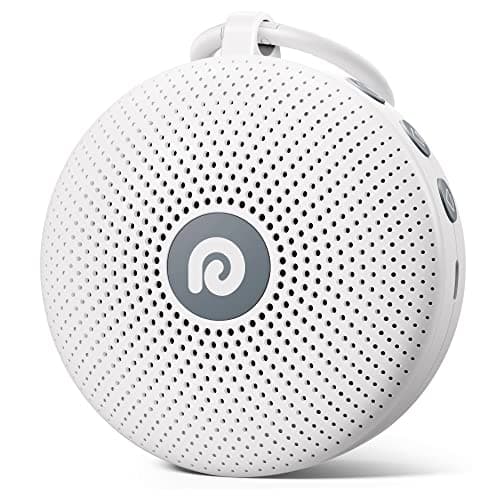 Best travel sound machinesThe portable machines, ranked on battery and packed size.Read it
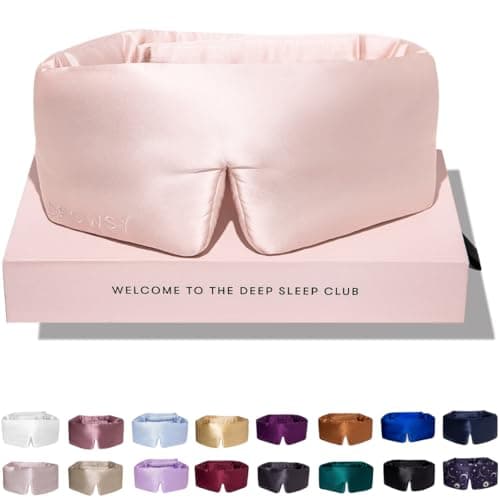 Best sleep masks for travelThe mask side of the kit, in full.Read it
 Best travel sunrise alarm clocksFor trips long enough that the mornings matter.Read it
- Loop Quiet 2 reviewHow much the comfortable earplug really blocks.Read it
 You can't sleep because you're too hotThe temperature failure, at home and away.Read it