
How this page is funded: we earn a commission if you buy through the links below, at no extra cost to you. As an Amazon Associate we earn from qualifying purchases. It does not change which products we pick or the order they appear in. Full disclosure.
How these picks were made: by comparing published specifications and clearly-credited public reporting. We do not run a laboratory, we have not measured these products, and we do not claim to have slept with them. Here is exactly how we choose.
Short version: the Soundcore Sleep A20 is the alternative to buy for most people, because it pairs 30 dB of passive high-frequency noise reduction with a 14-hour battery in a side-sleeper shell, at a fraction of the Ozlo’s price. The A30 is the one to buy if a snoring partner is the specific problem, because it adds active noise cancellation with adaptive snore masking. The Perytong headband is the budget pick - a few dollars, and the only option here with nothing in your ear canal at all.
A word on the Ozlo first, because this is not a page about why it is bad. It is a well-engineered product and it does something genuinely unusual: it is built as a masking device that happens to stream, rather than as an earbud that happens to have a sleep mode. People shop around for it for one reason, and it is the price - it is the most expensive single item in this site’s registry. If you want everything it does in one object, it is the only thing that does all of it, and the right answer is to buy it.
What the Ozlo Sleepbuds are known for
Four things, from the published specifications (Ozlo Sleepbuds 2 listing) and from independent coverage of the sleepbud category (SoundGuys) (CNN Underscored):
- A passive seal plus a steady masking sound shield, tuned for snoring. The approach is the product. It is not trying to cancel noise electronically; it seals, then holds a constant sound above the seal so what gets through stops standing out.
- 1.6 g per bud, sitting flush to the ear. This is the headline physical spec and the hardest thing on this page to match. Four soft ear-tip sizes come in the box.
- A 14-hour battery with a private in-ear alarm at a volume you set, so you can block the room and still be woken.
- A Smart Case that logs bedroom noise, light and temperature, plus 50-plus sleep sounds and an app on iOS and Android.
Worth knowing what it is not: it is not the most blocking thing you can put in an ear. Cheap foam reaches NRR 31 to 33 dB (Mack’s specifications), more passive attenuation than any sleep earbud at any price. Electronics buy you audio, masking and an alarm - not raw attenuation.
How we chose the alternatives
An alternatives page is only useful if it is honest about which property you are replacing, so every pick below had to beat or match the Ozlo on at least one stated strength rather than simply being cheaper. The criteria, in the order they decide a purchase:
- Published noise reduction, with the method named. Passive isolation and active cancellation are different mechanisms with different frequency behavior, and a figure means nothing without knowing which one produced it. Where a maker publishes a decibel number we quote it and attribute it; we have not measured anything ourselves.
- Whether the shape survives a pillow. This is the spec that actually decides whether a sleep earbud gets used after week two. Every pick here either publishes a low-profile side-sleeping shell or sits outside the ear entirely.
- A battery that outlasts a night with margin. Anything quoting six hours is a daytime product wearing a sleep label. Fourteen hours covers a night and the nap you did not plan.
- A sized-fit system. Ear canals vary more than product pages admit, and a seal you cannot achieve is a specification you did not buy. Multiple tip sizes in the box count for more here than an extra feature.
- No invented testing. We have not run these in a lab or worn them for a month. Everything stated is a published specification, clearly attributed public reporting, or a property of the physics - and the cons are listed on every pick because a page that only lists upsides is an advertisement.
One thing deliberately not used as a criterion: sound library size. Every product here streams over Bluetooth, so the catalog on your phone is the catalog you get, and counting a maker’s built-in sounds mostly measures its marketing.
If what you want is the sleepbud experience for less
Buy the Soundcore Sleep A20. It publishes 30 dB of passive high-frequency noise reduction, 14 hours per charge and 80 hours with the case, in a low-profile shell with ear wings built for side sleeping, over Bluetooth 5.3 so it streams any source (manufacturer specifications). That is the same shape of product - seal, masking sound, all-night battery - at a small fraction of the outlay.
The honest cons: it is physically larger than 1.6 g buds sitting flush, so a very firm pillow and a bony ear is still a worse experience than the Ozlo; there is no sensing case; and the passive figure is a high-frequency one, which means traffic rumble and bass get through much as they do with any passive device. It is the pick on sleep headphones under $200 for the same reasons.
If what you want is the snoring performance
Buy the Soundcore Sleep A30. The Ozlo’s masking shield is explicitly tuned for snoring; the A30 attacks the same problem from the other direction, adding active noise cancellation on top of passive isolation plus adaptive snore masking that responds to detected snoring, with an app and sleep tracking (manufacturer specifications).
Why this matters for snoring specifically: snoring carries a lot of its energy low in the frequency range (Sowho et al. on snoring as noise pollution), which is where passive materials perform worst and active cancellation performs best. Cons: ANC costs battery, it is the most expensive alternative here, and some people perceive a pressure sensation from active cancellation that they do not get from a passive seal. The two Soundcore models are compared directly on A20 versus A30.
If what you want is the comfort, not the electronics
Buy the Perytong headband. Ultra-thin flat speakers inside a stretch fabric band, removable so the band washes, with nothing in the ear canal at all (listing specifications). For a side sleeper who cannot tolerate anything solid in the ear - and that is a large share of the people who go looking for Sleepbuds in the first place - this is the only option here that solves the problem rather than shrinking it.
Be clear about the trade, because it is a big one: the blocking is essentially none. This masks and it does not block, so it works against a hum and poorly against a door. It is also warm on the head and the sound quality is modest. But it costs a fraction of everything else on this page, and if comfort is the thing that has defeated you, nothing else here will fix it. Do sleep headphones work is the honest page on that distinction.
If what you actually want is silence
Buy the Loop Dream, or foam plugs. The Dream is 21 dB NRR and 27 dB SNR in a soft silicone body shaped to be slept on, with four tip sizes XS to L plus four Double Tip sizes (manufacturer specifications). No audio, no battery, no app - just a seal and a shape designed for a pillow.
This is the alternative people most often need and least often consider. If you were drawn to the Ozlo because you want the room to go away rather than because you want to listen to anything, electronics are an expensive way to get less blocking than a plug. Remember too that published NRR assumes ideal insertion and NIOSH recommends derating it for field use (NIOSH 98-126) - fit beats rating. Cons: no alarm, no masking sound, and tips are a consumable. The full field is on the reusable earplug roundup and earplugs under $25.
What no alternative here matches
Two things, and they are the reason the Ozlo costs what it costs. The first is the physical size - 1.6 g flush to the ear is a hardware achievement, and every alternative on this page is either noticeably bigger in the ear or outside it entirely. The second is the Smart Case that logs bedroom noise, light and temperature; nothing else here measures the room at all.
If either of those is the reason you were looking at it, buy it. If you were looking at it because you want to sleep through a noisy room and the price made you hesitate, the A20 gets you most of the way for a fraction of the money, and a five-dollar box of foam gets you more blocking than any of them.
There is a third consideration that is not a specification: every electronic sleep device on this page depends on firmware and a companion app that somebody has to keep maintaining, and the sleepbud category in particular has a history of products being discontinued. That risk applies to the Ozlo and to the Soundcore models equally, and it is one more argument for trying the cheap option first. A foam plug has no firmware, no account and no end-of-support date - and if it turns out that plain blocking was all you needed, you have saved the entire outlay rather than most of it.
Which one to buy, by situation
You share a bed with a snorer. The A30, because snoring sits low in the frequency range and active cancellation is strongest exactly where passive materials are weakest. If the budget will not stretch, foam plugs plus a machine between you and the bed is the cheap version of the same two-layer idea.
You sleep on your side and everything hurts. The Perytong headband first, because it is cheap enough to find out for the price of a takeout meal, and the Loop Dream second if you want real blocking in a body designed to be lain on. Buying a more expensive earbud rarely fixes a canal that rejects earbuds.
You want to listen to something as you fall asleep. The A20. It is the best balance here of audio quality, blocking and battery, and it is the only pick that is genuinely pleasant for an audiobook as well as for masking.
Your problem is a street, a hallway or a thin wall. Consider not buying earbuds at all. A machine costs less, needs no charging and nothing goes in your ear - white noise machines for apartments works through where that does and does not hold.
You travel constantly. The A20 for the case battery, or the Loop Dream if you would rather carry something that never needs charging. The first night in an unfamiliar room is measurably worse than the ones after it (the first-night effect), which is the one case where paying for better sleep gear has an obvious payback.
Before you buy any of them
- Decide whether you need an alarm you can hear. A sealed bud with active cancellation can hide a phone alarm. Models with a private in-ear alarm solve it; otherwise see plugs that still let you hear your alarm.
- Think about eight hours a night, every night. Safe listening is a function of level and duration together (WHO, Making Listening Safe), and noise-induced hearing loss is cumulative (NIDCD).
- Have a cleaning routine. Anything sealed in the ear overnight needs one, and plugs can tamp existing wax inward (MedlinePlus). Sleeping with headphones covers the rest.
- Consider whether a machine would do instead. It costs far less and nothing goes in your ears - see white noise machines for apartments and sound machine versus earplugs.
For the whole category, start from the sleep earbuds roundup.
What to buy instead, and why
Tap any row to jump to the full write-up. Each thumbnail is the product photograph from that item’s own Amazon listing, and the price in the last column is the one Amazon showed at the last check.
| # | Product | Best for | The spec that decides it | Price |
|---|---|---|---|---|
| 1 | 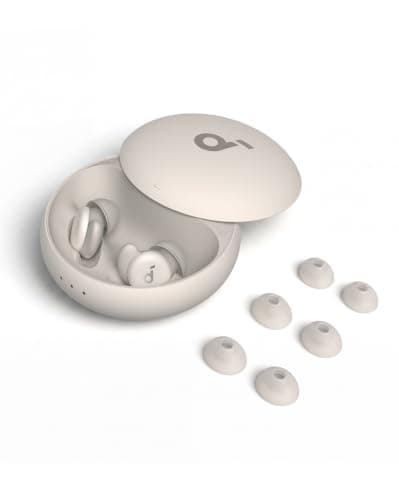 Soundcore Sleep A20Low-profile buds designed to be lain on, with the battery life to actually cover a full night plus a nap. | The value pick in sleep earbuds | 30 dB high-frequency passive noise reduction, 14 h per charge | |
| 2 | 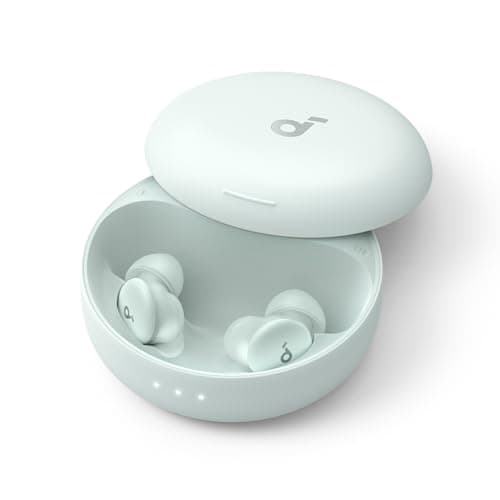 Soundcore Sleep A30The first sleep earbud with active noise cancellation, tuned for the low-frequency rumble that passive isolation cannot touch. | A snoring partner, specifically | Active noise cancellation with adaptive snore masking | |
| 3 | 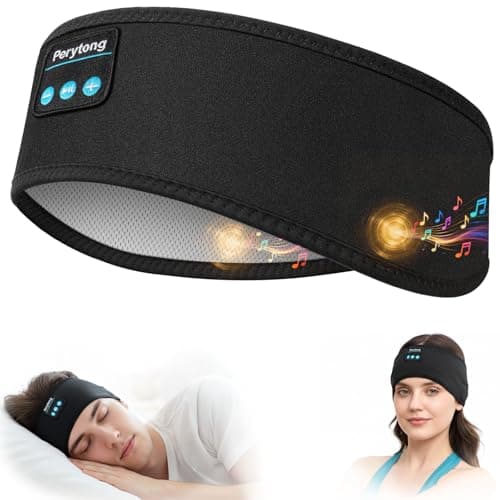 Perytong Sleep Headphones HeadbandFlat speakers in a stretch headband. Nothing enters the ear canal, which is the entire reason to buy it. | Side sleepers who cannot tolerate anything in the ear | Ultra-thin flat speakers inside a stretch fabric band | |
| 4 | 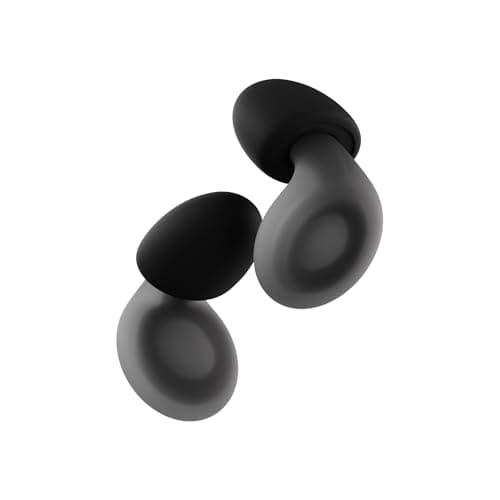 Loop DreamThe only plug here designed from scratch for bedtime rather than adapted to it - Loop's softest silicone, oval memory-foam tips and four tip sizes to get the seal right. | Side sleepers who want one plug and no compromises | 21 dB NRR / 27 dB SNR in a body shaped to be slept on |
Prices come straight from Amazon and are refreshed daily; the date they were checked is stamped under the buy buttons below. If a price has gone stale or a listing has no offer, the button falls back to “Check price on Amazon” rather than showing a number we cannot stand behind. As an Amazon Associate we earn from qualifying purchases.
Each row carries the price Amazon showed at the last daily check, with the check date stamped under the button. Ranked by how closely each one matches a stated Ozlo strength rather than by price alone.
#ad How we are funded · price as of November 12, 2026
Our top pick · The value pick in sleep earbuds
1. Soundcore Sleep A20
Low-profile buds designed to be lain on, with the battery life to actually cover a full night plus a nap.
- Noise reduction:
- 30 dB high-frequency, passive (manufacturer figure)
- Battery:
- 14 h per charge, 80 h total with the case
- Profile:
- Low-profile shell with ear wings, built for side sleeping
- Bluetooth:
- 5.3 - streams any audio source
What it gets right
- Passive isolation plus masking audio is a stronger combination than either alone
- Battery outlasts the night, which most true-wireless buds do not
- Streams anything, so you are not locked into one app's sound library
Where it falls short
- No active noise cancellation - that is the A30
- Passive isolation is weakest exactly where snoring lives, in the low frequencies
- Anything in your ear canal all night is a hygiene commitment
Skip it if: You just want silence. Earplugs block more, cost a fraction, and never need charging.
#ad How we are funded · price as of November 12, 2026
Pick 2 · A snoring partner, specifically
2. Soundcore Sleep A30
The first sleep earbud with active noise cancellation, tuned for the low-frequency rumble that passive isolation cannot touch.
- Noise reduction:
- Active noise cancellation plus passive isolation
- Snore masking:
- Adaptive - responds to detected snoring
- Profile:
- Low-profile, side-sleeper oriented
- App:
- Yes, with sleep tracking
What it gets right
- ANC targets the low frequencies foam plugs and passive buds both struggle with
- Adaptive masking means the volume is not held constant all night
- Undercuts the premium sleep-bud competition on price
Where it falls short
- Expensive next to passive buds and an order of magnitude dearer than earplugs
- ANC draws power, so battery life is shorter than the A20
- Feature depth you will never use if all you want is quiet
Skip it if: Your noise is high-frequency - traffic, chatter, a TV next door. Passive blocking handles that for far less.
#ad How we are funded · price as of November 12, 2026
Pick 3 · Side sleepers who cannot tolerate anything in the ear
3. Perytong Sleep Headphones Headband
Flat speakers in a stretch headband. Nothing enters the ear canal, which is the entire reason to buy it.
- Type:
- Bluetooth headband with removable flat speakers
- In-ear:
- No - speakers sit outside the canal
- Blocking:
- Essentially none; this masks rather than blocks
- Care:
- Band washes after removing the speaker modules
What it gets right
- Genuinely comfortable against a pillow - flatter than any earbud
- Cheapest route into sleep audio by a wide margin
- Doubles as a light eye cover if you pull it down
Where it falls short
- Blocks almost no external noise on its own
- Sound quality is adequate, not good
- The band rides up over a long night for some people
Skip it if: You need noise blocked, not covered. This adds sound, it does not remove any.
#ad How we are funded · price as of November 12, 2026
Pick 4 · Side sleepers who want one plug and no compromises
4. Loop Dream
The only plug here designed from scratch for bedtime rather than adapted to it - Loop's softest silicone, oval memory-foam tips and four tip sizes to get the seal right.
- Rating:
- 21 dB NRR, 27 dB SNR (manufacturer figures)
- Material:
- Soft silicone body, foam-silicone hybrid tips
- Fit:
- Four tip sizes XS-L, plus four Double Tip sizes
- Care:
- Reusable; tips are a consumable and get replaced
What it gets right
- Low-profile body in Loop's softest compound - the pressure point most side sleepers complain about is the one thing it was designed around
- Oval memory-foam tips expand into the ear canal rather than pushing back against it
- Eight tip pieces in the box, which is the difference between a plug that seals and one that falls out
Where it falls short
- The most expensive plug on this page by a wide margin
- 21 dB NRR is low - a foam plug blocks meaningfully more, and T3's reviewer notes this is passive muffling with no active cancellation
- Memory-foam tips are a recurring cost once they stop recovering their shape
Skip it if: You want maximum blocking for the least money. A foam plug beats it on raw attenuation for a few dollars.
Questions people actually ask
What is the best alternative to Ozlo Sleepbuds?
The Soundcore Sleep A20 for most people - 30 dB of passive high-frequency noise reduction, 14 hours per charge and a side-sleeper shell, at a fraction of the price. Buy the A30 instead if a snoring partner is the problem, or the Perytong headband if you cannot tolerate anything in your ear canal.
Is there a cheaper alternative to Ozlo Sleepbuds?
Several. The Soundcore Sleep A20 is the closest in kind for far less, the Perytong headband costs a few dollars and puts nothing in the canal, and a box of foam earplugs blocks more than any of them. What you give up is the 1.6 g flush fit and the sensing case.
What do the Ozlo Sleepbuds do that cheaper earbuds cannot?
Two things. They are 1.6 g per bud and sit flush to the ear, which no alternative here matches physically, and the Smart Case logs bedroom noise, light and temperature. The masking, the battery and the in-ear alarm are all matched by cheaper products.
Do sleep earbuds block more noise than earplugs?
No. Cheap disposable foam reaches NRR 31 to 33 dB, more passive attenuation than any sleep earbud at any price. Electronics buy you audio, active cancellation and an alarm rather than raw blocking - so if you only want silence, plugs are better and far cheaper.
Are Ozlo Sleepbuds worth the money?
If you want a bud small enough to disappear in the ear, a masking shield tuned for snoring, an in-ear alarm and room sensing all in one object, nothing else does all four and the price is the price. If you only want one or two of those, you are paying for the rest.
What should a side sleeper buy instead of Sleepbuds?
Either the Soundcore A20, whose shell and ear wings are built for side sleeping, or the Perytong headband if anything in the canal is what hurts. The Loop Dream is the third option: no audio, but a body shaped specifically to be lain on.
Sources
- Ozlo - Sleepbuds 2, passive seal with masking sound shield, Smart Case and in-ear alarm (Amazon listing, specifications as published by the seller).
- Anker soundcore - Sleep A20 sleeping earbuds (manufacturer specifications).
- Anker soundcore - Sleep A30 sleeping earbuds (manufacturer specifications: active noise cancellation, three-stage snore masking, 9 h per charge).
- Perytong - sleep headphones headband, removable flat Bluetooth speaker modules (Amazon listing, specifications as published by the seller).
- Loop - Dream earplugs for sleeping (manufacturer specifications).
- Mack's - Ear Plugs for Sleeping (manufacturer specifications).
- SoundGuys - Best earbuds and headphones for sleeping.
- CNN Underscored - The best headphones for sleeping, tried and tested.
- Sowho M, Sgambati F, Guzman M, Schneider H, Schwartz A. Snoring: a source of noise pollution and sleep apnea predictor. Sleep, 2020;43(6):zsz305 (Johns Hopkins School of Medicine).
- NIOSH - Criteria for a Recommended Standard: Occupational Noise Exposure (DHHS/NIOSH 98-126), hearing protector NRR derating recommendation.
- World Health Organization - Making Listening Safe (safe listening levels and duration).
- NIDCD (National Institute on Deafness and Other Communication Disorders, NIH) - Noise-Induced Hearing Loss.
- MedlinePlus (US National Library of Medicine) - Ear wax, medical encyclopedia entry.
- Brown University - Half the brain stays alert on the first night in a new place (Tamaki M, Sasaki Y et al., Current Biology, April 2016 - the first-night effect).
Back to the best white noise machines.