
How this page is funded: we earn a commission if you buy through the links below, at no extra cost to you. As an Amazon Associate we earn from qualifying purchases. It does not change which products we pick or the order they appear in. Full disclosure.
How these picks were made: by comparing published specifications and clearly-credited public reporting. We do not run a laboratory, we have not measured these products, and we do not claim to have slept with them. Here is exactly how we choose.
The verdict up front: if you already run a Nanit camera, the Sound + Light is the obvious buy - it adds cry detection, temperature and humidity to a system you are already watching. If you do not, buy the Hatch. Outside the Nanit ecosystem you are paying a premium for eleven sounds and coarser volume control.
What each one actually is
The Nanit Sound + Light is a sound machine with sensors bolted on: eleven sounds, a multi-color night light, a rechargeable battery, plus cry detection and temperature and humidity tracking. It can be driven from the Sound + Light app, the Nanit app, buttons on the device, or Google Home.
The Hatch Rest (2nd gen) is a routine device: eleven sound profiles plus three lullabies, 32 volume steps, an adjustable light and Time-to-Rise. It has no sensors and no battery - unplug it and it stops.
Side by side
| Nanit Sound + Light | Hatch Rest (2nd gen) | |
|---|---|---|
| Sounds | 11 | 11 profiles plus 3 lullabies |
| Volume steps | 10 | 32 |
| Battery | Yes - rechargeable | No |
| Sensors | Cry detection, temperature, humidity | None |
| Wake cue | OK-to-wake alarm | Time-to-Rise |
| Control routes | Two apps, on-device buttons, Google Home | Hatch app, on-device buttons |
| Best case | You own a Nanit camera | You want a routine, not a sensor |
The spec that decides it for light sleepers
Ten volume steps against thirty-two sounds like a footnote and is not. With ten steps you are frequently choosing between slightly too quiet to mask and noticeably louder than you want. With thirty-two you can land on the level that just covers the noise, which is the setting night-noise guidance and common sense both point at. If the machine is going to run for eight hours next to a sleeping head, finer is better.
The spec that decides it for everyone else
The Nanit has a battery and the Hatch does not. That covers three real situations: a power cut, a hotel room, and the half hour in the living room before bed. Hatch’s answer is the pricier Rest+, which is a different product at a different price.
The temperature readout is the underrated one. A room that runs warm is a genuine cause of waking, and it is the kind of thing you never measure until something measures it for you - see the too-hot page for what to do about it once you know.
The verdict
Own a Nanit camera? Buy the Nanit. The sensors feed a system you already check, the battery makes it portable, and consolidating apps is worth something on its own.
No Nanit camera? Buy the Hatch. Time-to-Rise is the feature with the longest useful life in this category, and 32 volume steps beat 10 every night of the year. Stripped of its ecosystem the Nanit is an ordinary 11-sound machine wearing a premium price.
Want neither ecosystem? The Momcozy comparison is the cheaper fork in this road, and the main roundup covers machines built for adults rather than nurseries.
The two machines, side by side
Tap any row to jump to the full write-up. The photographs are licensed stock images chosen to illustrate the category - they are not photographs of these specific products, and each one’s alt text describes what is actually shown.
| # | Product | Best for | The spec that decides it | Price |
|---|---|---|---|---|
| 1 | 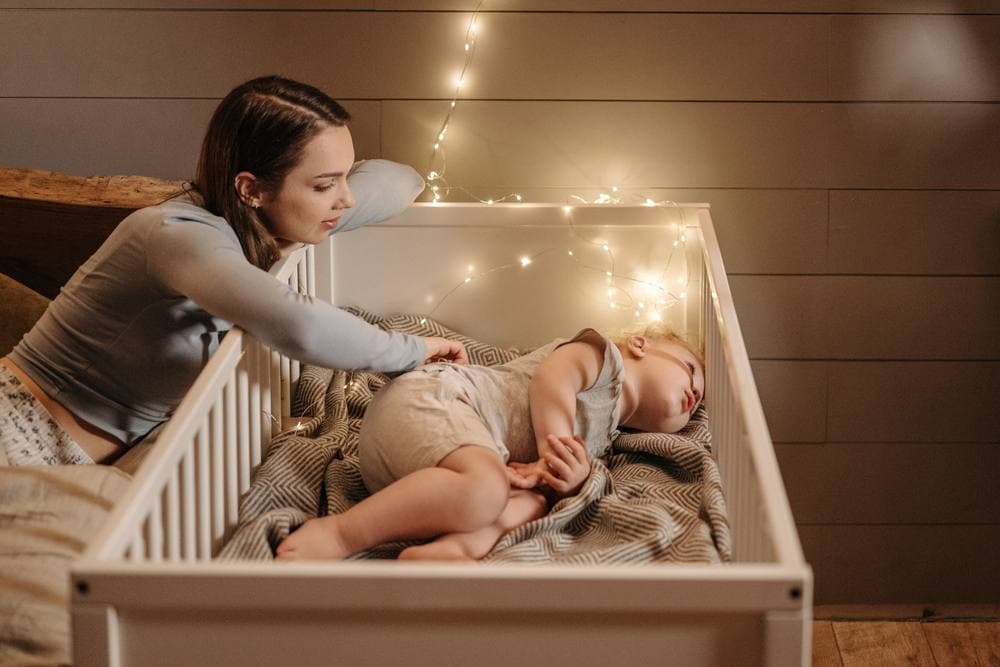 Nanit Sound + LightA sound machine that is also a sensor: it listens for crying, tracks room temperature and humidity, and runs on its own battery. | Households already running a Nanit camera | 11 sounds, rechargeable battery, cry detection plus temperature and humidity tracking | |
| 2 | Hatch Rest (2nd gen)Sound machine, night light and an OK-to-wake color cue in one, with the routine programming that is the real reason people buy Hatch. | Time-to-Rise, and one device a child grows into | 11 sound profiles, 32 volume steps, Time-to-Rise color cue |
We have no live price feed for this site yet, so every button reads “Check price on Amazon” rather than showing a number that could be out of date. As an Amazon Associate we earn from qualifying purchases.
Both do sound and light. The deciding question is whether there is a Nanit camera in the house, because that is where the Nanit stops being an expensive 11-sound machine.
Our top pick · Households already running a Nanit camera
1. Nanit Sound + Light
A sound machine that is also a sensor: it listens for crying, tracks room temperature and humidity, and runs on its own battery.
- Sounds:
- 11, including white noise, nature, lullabies and wake songs
- Light:
- Multi-color night light, brightness adjustable
- Battery:
- Rechargeable - it works unplugged
- Sensors:
- Cry detection, temperature and humidity
- Control:
- Sound + Light app, Nanit app, on-device buttons or Google Home
What it gets right
- The only pick here that reports room temperature, and too warm is a real cause of waking
- Runs on battery, so it travels and survives an outage
- Four control routes, including buttons on the device itself
Where it falls short
- Ten volume steps against the Hatch's 32, which is a coarser adjustment
- The sensor features only pay off inside the Nanit ecosystem
- Fewer sounds than budget rivals
Skip it if: You do not own and will not buy a Nanit camera. Stripped of the ecosystem it is an ordinary 11-sound machine at a premium price.
Pick 2 · Time-to-Rise, and one device a child grows into
2. Hatch Rest (2nd gen)
Sound machine, night light and an OK-to-wake color cue in one, with the routine programming that is the real reason people buy Hatch.
- Sounds:
- 11 profiles including white noise, rain, ocean and wind, plus three lullabies
- Volume:
- 32 steps
- Light:
- Adjustable color and brightness
- Control:
- Hatch Sleep app over Wi-Fi, iOS and Android
- Power:
- Mains only - the standard Rest has no battery
What it gets right
- Time-to-Rise is the feature parents keep using past the baby years
- 32 volume steps let you sit just above the room rather than well over it
- Routines run on a schedule without anyone touching the device
Where it falls short
- No battery - unplug it and it is off
- Fewer sounds than much cheaper rivals
- Some app content sits behind the Hatch+ subscription
Skip it if: You travel with it, or you need it to survive a power cut. The plug-in Rest does neither; the Rest+ adds a battery at a higher price.
Questions people actually ask
Is the Nanit sound machine worth it without a Nanit camera?
Usually not. Outside the Nanit ecosystem you get eleven sounds and ten volume steps at a premium price, and the cry detection and temperature tracking have nowhere useful to report to. The battery is the one feature that still pays off on its own.
Does the Nanit Sound + Light work on battery?
Yes - it has a rechargeable battery, so it runs unplugged and survives a power cut. The standard Hatch Rest does not; Hatch sells the Rest+ for that, at a higher price.
Which has better sound, Nanit or Hatch?
Both carry eleven sounds, so the deciding factor is control rather than library size. The Hatch's 32 volume steps let you sit just above the room; the Nanit's ten steps often leave you choosing between too quiet and too loud.
Does the Nanit have a Time-to-Rise equivalent?
It has an OK-to-wake alarm that changes the light at a set time, which is the same idea. Hatch's implementation is the more established one and is the reason most Hatch owners cite for keeping the device past the baby years.
Can you control either one without a phone?
Both have buttons on the device. The Nanit adds Google Home as a fourth route. Neither is unusable when the Wi-Fi drops, which is worth checking before you buy any connected bedroom device.
Sources
Back to the best white noise machines.
Read next
- Momcozy sound machine vs HatchThe cheaper fork in the same road.Read it
- Best sound machines with a night lightIf the light is what you are shopping for.Read it
- Best sound machines with battery backupFor power cuts, hotels and the road.Read it
- Why a hot room wakes youWhat to do once something is measuring the room.Read it