

How this page is funded: we earn a commission if you buy through the links below, at no extra cost to you. As an Amazon Associate we earn from qualifying purchases. It does not change which products we pick or the order they appear in. Full disclosure.
How these picks were made: by comparing published specifications and clearly-credited public reporting. We do not run a laboratory, we have not measured these products, and we do not claim to have slept with them. Here is exactly how we choose.
Short version: Mack’s Slim Fit is the pick, because it is NRR 31 dB foam in a deliberately narrower barrel - the only plug here that keeps high blocking while shrinking the body. It is also the cheapest thing on this page, so it is the budget pick as well. If you would rather solve fit with sized tips than with a smaller barrel, the Loop Quiet 2 is the one to buy.
Ear canal diameter varies enormously between people and between your own two ears, and almost no sleep plug is sold with a diameter printed on the box. That is why this feels like a personal failing when it is a sizing problem: standard foam is made to one diameter, and if your canal is narrower than that diameter, no insertion technique fixes it.
How to know this is your problem
The symptoms are consistent. The plug will not go in far enough to seal, so you still hear everything. It goes in and then works its way out over an hour. It aches at the entrance to the canal rather than deep inside - that is the plug pressing outward against the canal wall. Or it seals fine on one side and not the other, which is simply your two ears being different sizes.
Pain is diagnostic, not something to push through. If the ache is the dominant symptom rather than the fit, earplugs that do not hurt is the page to read first - low-pressure foam and shape are different fixes from diameter.
Route one: a narrower barrel
Two of the picks here shrink the plug rather than the tip.
- Mack’s Slim Fit. NRR 31 dB in ultra-soft polyurethane foam with a smooth skin, in a smaller diameter than standard foam plugs, sold specifically for small or sensitive canals (manufacturer specifications). Losing 2 dB against a standard NRR 33 plug to gain a seal is a trade worth making every time.
- Howard Leight Maximum Lite (LPF-1). NRR 30 dB in low-pressure foam with a contoured T-shape and a smaller-diameter body for narrower canals, sold in a 200-pair box (published specifications). Buy this one if the problem is pressure as much as width - low-pressure foam expands with less force.
Route two: sized tips
The reusable plugs solve the same problem from the other direction: a fixed body with interchangeable tips you match to your own canal.
- Loop Quiet 2. Reusable silicone with multiple ear-tip sizes in the box, 14 dB NRR and 24 dB SNR (manufacturer specifications). Lower blocking than foam by design, washable, and the easiest way to find your size because the sizes come with it.
- Loop Dream. Four tip sizes XS to L plus four Double Tip sizes, 21 dB NRR, in a body shaped to be slept on (manufacturer specifications). The widest sizing range of anything here, and the most blocking among the reusables.
- Alpine SleepDeep. Small, medium and large, plus a multisize pack to find your size, in a silicone-free hypoallergenic body with an oval shape that follows the ear’s contours (manufacturer specifications). This is the one to try when both foam and silicone have failed.
Fitting a plug in a small canal
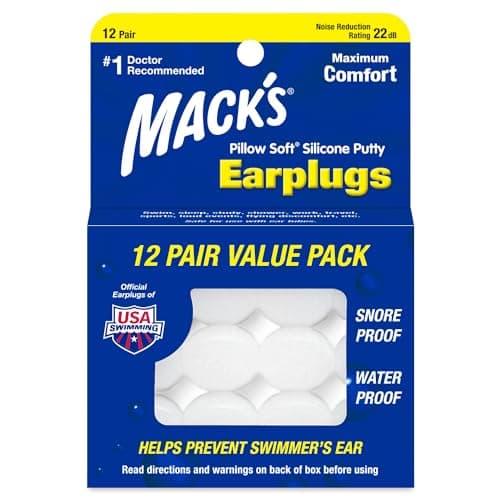
Technique still matters once the size is right. Reach over your head with the opposite hand and pull the top of your ear up and back - that straightens the canal and is the difference between a plug sitting at the entrance and one sealing properly. For foam, roll it thin first and hold it for twenty seconds while it expands. For putty like the Mack’s Pillow Soft, you are covering the canal entrance rather than filling it (fitting instructions).
Expect to buy twice. Nobody gets canal sizing right from a listing, and the multisize packs exist because the makers know it. Lower-frequency noise is the hardest thing for any passive plug to attenuate regardless of fit (Carillo et al. on low-frequency attenuation), so if your problem is a bass-heavy neighbor, a plug alone may not be the answer - sound machines for noisy neighbors covers the masking route.
If nothing in the canal works
There is a whole category for that. A fabric headband with flat speakers sits outside the canal entirely and masks rather than blocks - sleep headphones for side sleepers ranks those, and sound machines versus earplugs is the strategic version of the same question. For the full earplug field, see the main earplug roundup.
Plugs that fit a narrow canal
Tap any row to jump to the full write-up. Each thumbnail is the product photograph from that item’s own Amazon listing, and the price in the last column is the one Amazon showed at the last check.
| # | Product | Best for | The spec that decides it | Price |
|---|---|---|---|---|
| 1 | 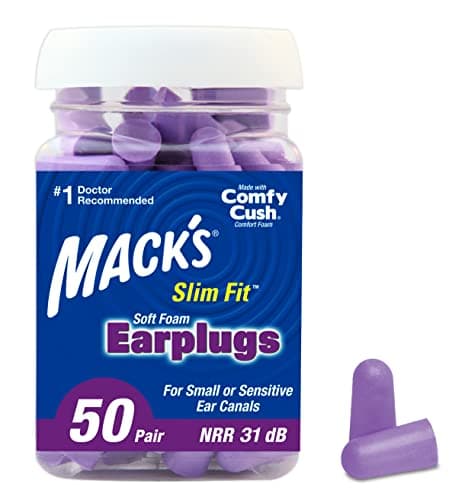 Mack's Slim Fit Soft Foam EarplugsA smaller-diameter version of the standard soft foam plug, which is exactly why it works for people whose ears ache in regular foam by 2am. | Small or sensitive ear canals that standard foam hurts | NRR 31 dB in a narrower barrel | |
| 2 | 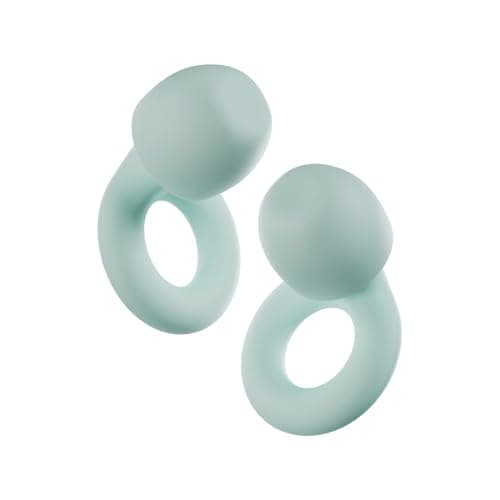 Loop Quiet 2Reusable silicone with a low profile that does not press back when your ear is against a pillow - you trade some blocking for that. | Side sleepers who reuse their plugs | 14 dB NRR / 24 dB SNR - lower than foam, and deliberately so | |
| 3 | 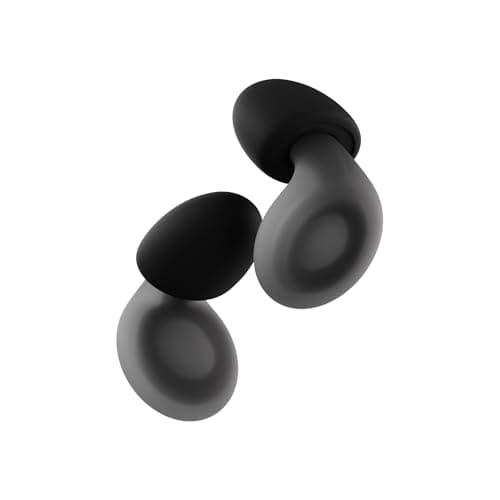 Loop DreamThe only plug here designed from scratch for bedtime rather than adapted to it - Loop's softest silicone, oval memory-foam tips and four tip sizes to get the seal right. | Side sleepers who want one plug and no compromises | 21 dB NRR / 27 dB SNR in a body shaped to be slept on | |
| 4 | 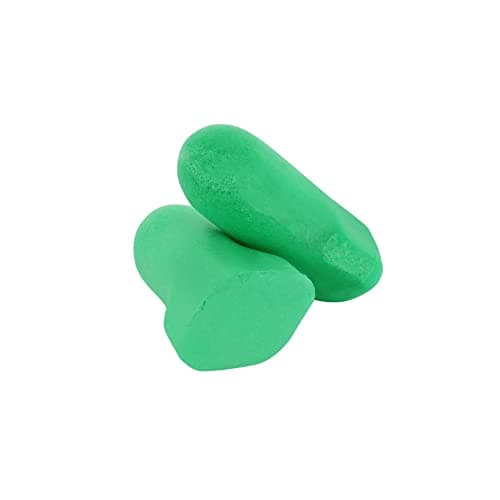 Howard Leight Maximum Lite (LPF-1)An industrial plug built around low expansion pressure instead of maximum blocking - the closest thing on the shelf to foam that does not push back. | Ears that ache in ordinary foam by 2am | NRR 30 dB in low-pressure foam, smaller barrel | |
| 5 | 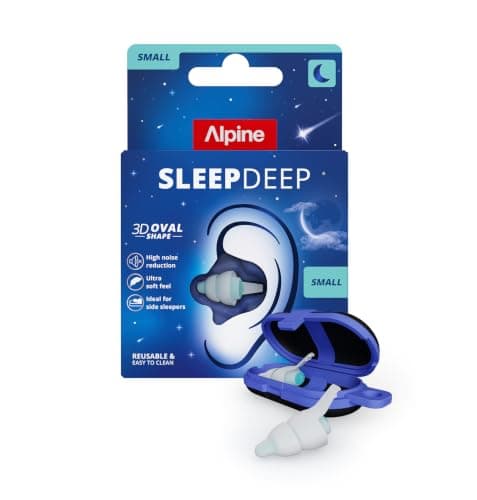 Alpine SleepDeepA silicone-free oval plug sold in three sizes, for the case where the problem is not the material but that nothing has ever fit your ear properly. | Anyone who has tried foam and silicone and found both painful | Oval body that follows the ear's contours, so it sits flat under a pillow |
Prices come straight from Amazon and are refreshed daily; the date they were checked is stamped under the buy buttons below. If a price has gone stale or a listing has no offer, the button falls back to “Check price on Amazon” rather than showing a number we cannot stand behind. As an Amazon Associate we earn from qualifying purchases.
Each row carries the price Amazon showed at the last daily check, with the check date stamped under the button. Every pick either comes in a narrower body than standard foam or ships sized tips.
#ad How we are funded · price as of November 12, 2026
Our top pick · Small or sensitive ear canals that standard foam hurts
1. Mack's Slim Fit Soft Foam Earplugs
A smaller-diameter version of the standard soft foam plug, which is exactly why it works for people whose ears ache in regular foam by 2am.
- Rating:
- NRR 31 dB (manufacturer figure)
- Material:
- Ultra-soft polyurethane foam with a smooth skin
- Fit:
- Smaller diameter than standard foam plugs
- Reuse:
- A few nights each, then discard
What it gets right
- The most blocking on this page, by a clear margin
- The narrower barrel is the specific fix for canals that standard foam presses on
- Cheap enough per pair that losing one in the sheets is a non-event
Where it falls short
- Foam still has to be rolled and inserted deep, and a deep plug puts more of itself inside the ear you are lying on
- At 31 dB you may sleep through an alarm you need to hear
- Disposable, so there is a permanent running cost and ongoing waste
Skip it if: You have to hear an alarm, a child or a smoke detector. Nothing about a high NRR is a feature on that night.
#ad How we are funded · price as of November 12, 2026
Pick 2 · Side sleepers who reuse their plugs
2. Loop Quiet 2
Reusable silicone with a low profile that does not press back when your ear is against a pillow - you trade some blocking for that.
- Rating:
- 14 dB NRR, 24 dB SNR (manufacturer figures - the same plug under the US and European standards)
- Material:
- Reusable silicone
- Fit:
- Multiple ear-tip sizes included
- Care:
- Washable, reused for months
What it gets right
- The low profile is the reason side sleepers stick with these
- Washable and reusable, so the running cost is near zero
- Multiple tip sizes solve the fit problem foam plugs create
Where it falls short
- 14 dB NRR is meaningfully less blocking than a 33 dB foam plug
- Higher up-front cost than a year of foam
- Silicone can work loose over a long night
Skip it if: Your problem is loud, low-frequency snoring. You want the foam number, not the comfort number.
#ad How we are funded · price as of November 12, 2026
Pick 3 · Side sleepers who want one plug and no compromises
3. Loop Dream
The only plug here designed from scratch for bedtime rather than adapted to it - Loop's softest silicone, oval memory-foam tips and four tip sizes to get the seal right.
- Rating:
- 21 dB NRR, 27 dB SNR (manufacturer figures)
- Material:
- Soft silicone body, foam-silicone hybrid tips
- Fit:
- Four tip sizes XS-L, plus four Double Tip sizes
- Care:
- Reusable; tips are a consumable and get replaced
What it gets right
- Low-profile body in Loop's softest compound - the pressure point most side sleepers complain about is the one thing it was designed around
- Oval memory-foam tips expand into the ear canal rather than pushing back against it
- Eight tip pieces in the box, which is the difference between a plug that seals and one that falls out
Where it falls short
- The most expensive plug on this page by a wide margin
- 21 dB NRR is low - a foam plug blocks meaningfully more, and T3's reviewer notes this is passive muffling with no active cancellation
- Memory-foam tips are a recurring cost once they stop recovering their shape
Skip it if: You want maximum blocking for the least money. A foam plug beats it on raw attenuation for a few dollars.
#ad How we are funded · price as of November 12, 2026
Pick 4 · Ears that ache in ordinary foam by 2am
4. Howard Leight Maximum Lite (LPF-1)
An industrial plug built around low expansion pressure instead of maximum blocking - the closest thing on the shelf to foam that does not push back.
- Rating:
- NRR 30 dB (Honeywell's published figure, ANSI S3.19-1974)
- Material:
- Low-pressure polyurethane foam with a smooth, soil-resistant skin
- Shape:
- Contoured T-shape, smaller-diameter body for narrower canals
- Pack:
- 200 pairs (LPF-1 box) - roughly a year of nightly use
What it gets right
- Expands gently, which is the single specification that decides whether you still have them in at 4am
- The smaller barrel suits narrow canals without dropping to a low rating
- Bought by the box, the cost per night is the lowest of anything here
Where it falls short
- Sold only in industrial box sizes, so the up-front price looks high next to a 50-pair retail pack
- Three decibels below the NRR 33 plugs, and you feel that against a snorer
- Bright safety green, which some people dislike on a nightstand
Skip it if: You want maximum attenuation. Low pressure and maximum blocking are the two ends of the same trade, and this plug is at the comfort end.
#ad How we are funded · price as of November 12, 2026
Pick 5 · Anyone who has tried foam and silicone and found both painful
5. Alpine SleepDeep
A silicone-free oval plug sold in three sizes, for the case where the problem is not the material but that nothing has ever fit your ear properly.
- Rating:
- Up to 27 dB SNR (manufacturer figure)
- Material:
- Silicone-free, hypoallergenic, with a noise-reducing core
- Fit:
- Small, medium or large, plus a multisize pack to find your size
- Care:
- Washable and reusable; the manufacturer quotes up to six months of use
What it gets right
- The oval shape follows the ear rather than plugging it, which is the design that stops pillow pressure
- Three sizes sold separately, so two differently-shaped ears can be fitted individually
- Silicone-free and hypoallergenic, which matters if silicone has irritated you before
Where it falls short
- More expensive than a bag of foam, and the multisize pack costs more again
- Three sizes is fewer options than the eight tip pieces Loop ships
- Six months of life, not a year, so the running-cost case is weaker than it looks
Skip it if: You are fighting genuinely loud noise. An SNR in the mid-20s is a comfort-first number, not a blocking-first one.
Questions people actually ask
What are the best earplugs for small ears?
Mack's Slim Fit. It is NRR 31 dB foam in a deliberately narrower barrel sold for small or sensitive canals, so you keep high blocking while losing the diameter that causes the problem. It is also the cheapest plug here. If you would rather have sized tips, the Loop Quiet 2 ships several in the box.
How do I know if my ear canals are too small for standard earplugs?
The plug will not insert far enough to seal, or it works its way back out within an hour, or it aches at the canal entrance rather than deep inside. One ear sealing and the other not is also normal and points to the same issue.
Are there earplugs for small ear canals that still block a lot?
Yes. Mack's Slim Fit is NRR 31 and the Howard Leight Maximum Lite is NRR 30, both in narrower bodies than standard foam. Giving up two or three decibels on paper to gain an actual seal is a net gain, because the published rating assumes perfect insertion.
Do Loop earplugs come in small sizes?
Yes - the Quiet 2 ships multiple ear-tip sizes in the box, and the Dream offers four tip sizes from XS to L plus four Double Tip sizes. That makes the reusable route the easiest way to find your size without buying twice.
What should I do if earplugs hurt my small ears?
Stop pushing them in further - the pain is the fit. Try a low-pressure foam that expands with less force, a narrower barrel, or a sized reusable tip. If nothing in the canal works, a fabric headband with flat speakers masks noise from outside the ear entirely.
Sources
- Mack's - Slim Fit Soft Foam Ear Plugs (manufacturer specifications: NRR 31 dB, polyurethane foam, smaller diameter for small or sensitive ear canals).
- Howard Leight by Honeywell Maximum Lite LPF-1 - distributor listing of the manufacturer's published specifications (NRR 30, low-pressure polyurethane foam with a smooth soil-resistant skin, contoured T-shape, smaller-diameter body, ANSI S3.19-1974).
- Loop (US store) - Quiet 2 earplugs (manufacturer specifications: 14 dB NRR, soft-touch silicone, four ear-tip sizes XS to L, keychain carry case, 100-day returns).
- Loop - Dream earplugs for sleeping (manufacturer specifications).
- Alpine Hearing Protection - SleepDeep earplugs for sleeping (manufacturer specifications).
- Mack's - Pillow Soft Silicone Putty Ear Plugs (manufacturer specifications and fitting instructions).
- NIOSH - Criteria for a Recommended Standard: Occupational Noise Exposure (DHHS/NIOSH 98-126), hearing protector NRR derating recommendation.
- Carillo K, Sgard F, Dazel O, Doutres O. Improving low-frequency attenuation of passive earplugs using Helmholtz resonators. Journal of the Acoustical Society of America (IRSST record).
Back to the best white noise machines.
Read next
 Earplugs that do not hurtIf pain rather than width is the problem.Read it
- Best reusable earplugs for sleepingThe sized-tip route, in full.Read it
- Best earplugs for side sleepersThe other fit constraint that matters at night.Read it
 Best earplugs for sleeping under $25Cheap enough to buy two sizes.Read it