
How this page is funded: we earn a commission if you buy through the links below, at no extra cost to you. As an Amazon Associate we earn from qualifying purchases. It does not change which products we pick or the order they appear in. Full disclosure.
How these picks were made: by comparing published specifications and clearly-credited public reporting. We do not run a laboratory, we have not measured these products, and we do not claim to have slept with them. Here is exactly how we choose.
Short answer: set it to the quietest level at which the noise you are trying to cover stops drawing your attention - and no higher. For an adult, that is typically a conversational background level, not a shower-running level. In a nursery the answer is stricter and the machine should be across the room rather than in the crib, because the clinical concern there is sound pressure measured at the baby’s ear.
Almost every machine on the market goes far louder than anyone should use, because a loud maximum is easy to advertise and the real skill is at the bottom of the dial. That is the whole argument of this page: a sound machine is the one piece of sleep gear where the useful specification is how finely it can be set quietly, not how much volume it has. Everything else about picking one is on the sound machine hub.
The principle: masking is about the gap, not the level
Masking works because a sound that is continuous and featureless stops your attention snagging on an intermittent one. What matters is the gap between the intrusive sound and the background, not the absolute level of either. If a snore is a little above the noise floor, you only need to raise the floor a little.
This is why turning it up usually makes things worse rather than better. You end up with a loud room, you have added a second sound to sleep through, and the snore is still intermittent above it. Research on how sleep responds to noise - Dang-Vu and colleagues on brain rhythms predicting sleep stability in noise - points the same way: what disturbs sleep is not simply how loud a room is.
It is also why the quietest machine settings get used most in practice. If you are fighting genuinely loud noise, more volume is the wrong lever - the honest options are blocking it at the ear or reducing it at the source, which machines against earplugs and the noisy neighbors page both go through.
How to set it in four minutes, without a meter
- Put the machine between you and the noise if you can, not on the far side of the bed. Placement buys you several decibels of effective masking for free.
- Start at zero and come up slowly while the noise you care about is actually happening. The right level is the first one where the intrusion stops pulling your attention - not the level where you cannot hear it at all.
- Lie down before you commit. A machine set while you are standing is set at the wrong height; sound level falls off quickly with distance.
- Check it with the phone app you already have. A phone sound meter is not calibrated and we would not publish a number from one. It is perfectly good for a relative check: is this the same as a normal conversation, or louder?
- Leave it there for a week. The instinct to nudge it up each night is habituation, not the machine losing effectiveness.
Babies: a different rule, and a stricter one
This section is not a softer version of the one above; it is a separate standard. Children’s Hospital of Philadelphia’s commentary on infant sleep machines discusses research that measured the output of commercially sold machines and found that, at maximum volume and at close range, they could produce sound pressure levels high enough to be a concern for an infant ear.
The practical rules that follow are simple and worth following exactly:
- Across the room, never in or on the crib. Distance is the single biggest variable, and it is free.
- Low volume, not maximum. The concerning measurements in that reporting are at maximum output.
- Use a timer if the machine has one rather than running it at volume all night.
- Never put a machine, a phone or a speaker inside the sleep space.
If you want a machine for a nursery specifically, the ones with genuinely usable low settings and a night light are covered on sound machines with a night light, and the broader question of whether these devices are harmful is on are white noise machines bad for you.
Should it run all night, or time out?
Both are defensible and they answer different problems. If the noise you are masking only happens at bedtime - a street that goes quiet by midnight, a housemate watching TV - a 30 or 60 minute timer gives you the benefit and then stops adding exposure. If the problem is a partner who snores from 1am or a neighbor on a night shift, timing out means waking up when it stops.
The thing to avoid is the middle: a machine running all night at a volume chosen for the loudest moment of the evening. If you need all-night masking, set the level for the quiet hours and accept that the loud moments will come through a little.
Machine type matters here too. A mechanical fan machine such as the Dohm produces genuinely non-repeating sound with no loop to notice, which is easier to leave on for eight hours; digital machines vary, and on quiet settings a short loop becomes audible as a seam. That trade-off is the subject of machines against an ordinary fan and the noise colors explainer.
The exposure question, for adults
A machine on a nightstand at a conversational level is not a hearing risk, and we are not going to pretend otherwise. The reason volume still deserves thought is duration: the WHO’s safe listening framing is built around level and time together, and the WHO night noise guidelines treat sustained nighttime sound as something worth reducing rather than adding to.
The practical reading is the same advice as the top of this page, which is why we are comfortable giving it plainly: use the least volume that works, put distance between you and the machine rather than turning it up, and if you need a lot of level to get anywhere, the problem is not the machine’s volume - it is that you are using a masking tool against a blocking problem. Anything played in your ears all night is a stricter version of the same arithmetic, which is covered on whether it is bad to sleep with headphones on.
Machines with volume control fine enough to get this right
Tap any row to jump to the full write-up. Each thumbnail is the product photograph from that item’s own Amazon listing, and the price in the last column is the one Amazon showed at the last check.
| # | Product | Best for | The spec that decides it | Price |
|---|---|---|---|---|
| 1 | 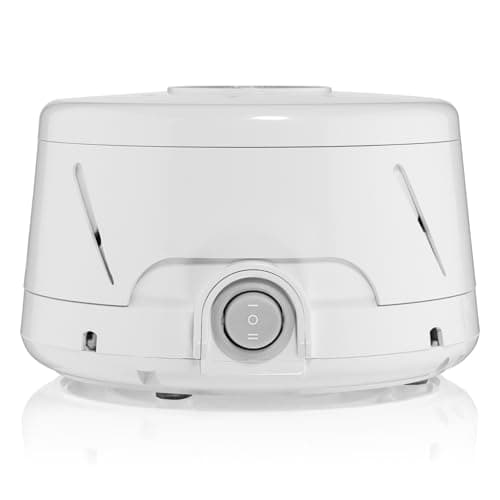 Yogasleep Dohm ClassicAn actual fan inside a shell. It cannot loop, because there is no recording - you tune the sound by twisting the housing. | People who hear the seam in a looped recording | Mechanical fan-based noise, no recording, no loop | |
| 2 | 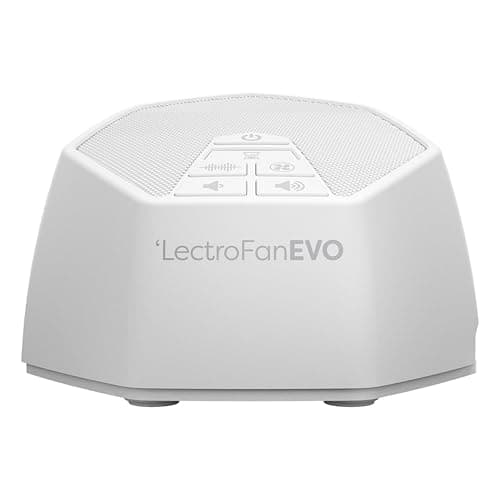 LectroFan EVOThe digital machine that solved the loop problem: 22 sounds generated rather than played back, so there is no seam to notice. | Digital variety without the loop artifact | 22 non-looping generated sounds | |
| 3 | 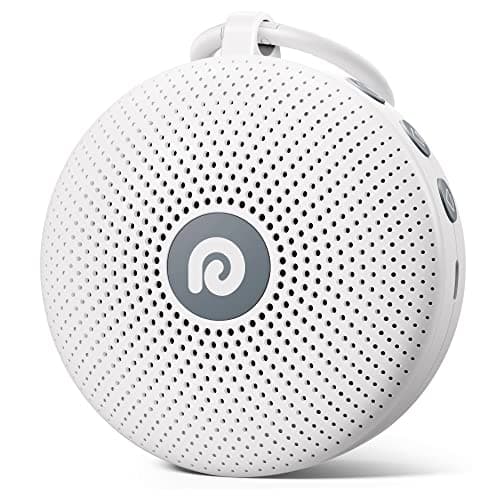 Dreamegg Lite D11 MaxAn 1800 mAh battery in a body that weighs two-thirds of a pound - the pick when the machine has to keep going through an outage, a flight or a week away. | The longest run between charges | 1800 mAh battery, 21 sounds, USB-C charging |
Prices come straight from Amazon and are refreshed daily; the date they were checked is stamped under the buy buttons below. If a price has gone stale or a listing has no offer, the button falls back to “Check price on Amazon” rather than showing a number we cannot stand behind. As an Amazon Associate we earn from qualifying purchases.
Chosen for how precisely each one can be set at the low end, where this decision is actually made. Specifications are the manufacturers' own; we have tested none of these.
#ad How we are funded · price as of November 12, 2026
Our top pick · People who hear the seam in a looped recording
1. Yogasleep Dohm Classic
An actual fan inside a shell. It cannot loop, because there is no recording - you tune the sound by twisting the housing.
- Type:
- Fan-based (mechanical), not digital
- Sounds:
- One - real moving air
- Controls:
- Two fan speeds plus a rotating tone collar
- Connectivity:
- None. It is a switch and a plug.
What it gets right
- Genuinely non-repeating sound with natural variation
- No app, no account, no subscription, no firmware
- A decade-plus service life is normal for this design
Where it falls short
- One sound only - no rain, no brown noise, no ocean
- The motor is audible as a faint mechanical hum in a silent room
- Mains powered, so it is not a travel device
Skip it if: You want variety, a timer, or an app. This machine does exactly one thing.
#ad How we are funded · price as of November 12, 2026
Pick 2 · Digital variety without the loop artifact
2. LectroFan EVO
The digital machine that solved the loop problem: 22 sounds generated rather than played back, so there is no seam to notice.
- Type:
- Digital, non-looping synthesis
- Sounds:
- 22, including white, pink and brown noise plus fan sounds
- Volume:
- Precise stepped control across a wide range
- Moving parts:
- None
What it gets right
- Gives you brown and pink noise, which a mechanical fan cannot
- No motor means no mechanical hum and nothing to wear out
- Compact enough to pack
Where it falls short
- Digital sound is still digital - some people hear it as flatter than moving air
- No app or alarm features
- More expensive than budget machines with far longer preset lists
Skip it if: You specifically want the texture of real moving air. Get the Dohm instead.
#ad How we are funded · price as of November 12, 2026
Pick 3 · The longest run between charges
3. Dreamegg Lite D11 Max
An 1800 mAh battery in a body that weighs two-thirds of a pound - the pick when the machine has to keep going through an outage, a flight or a week away.
- Sounds:
- 21
- Battery:
- 1800 mAh, USB-C rechargeable
- Timer:
- 30, 60 or 90 minutes
- Size:
- 4 x 3.7 x 1.8 in, 0.64 lb
- Safety:
- Child lock, plus a memory function
What it gets right
- Largest battery of the portable machines we cover
- Memory function returns to your sound and volume, not to a default
- Charges over USB-C from a power bank
Where it falls short
- Digital sounds loop, and on quiet settings you can hear the seam
- No night light
- No app - everything is done on the unit
Skip it if: You want a night light in the same device. This one deliberately does not have one.
Questions people actually ask
How loud should a white noise machine be?
As quiet as will do the job. Come up slowly from zero while the noise you want masked is actually happening, and stop at the first level where it stops pulling your attention - not the level where you cannot hear it at all. For an adult that is usually around a conversational background level, which is much quieter than most people choose.
How loud should a sound machine be for a baby?
Quieter, and the placement matters more than the dial. Children's Hospital of Philadelphia's commentary on infant sleep machines discusses research measuring commercial machines at maximum volume and close range and finding sound pressure levels high enough to be a concern. Put the machine across the room, never in or on the crib, run it low, and use a timer if it has one.
Does turning a white noise machine up make it work better?
Usually the opposite. Masking depends on the gap between the intrusive sound and the background, not on the absolute level, so once the intrusion stops standing out, extra volume just adds a second sound to sleep through. If you need a lot of volume to get anywhere, you are using a masking tool against a problem that needs blocking.
Should a white noise machine run all night or use a timer?
It depends on when your noise happens. A timer suits a street or a housemate that goes quiet by midnight. All night suits a partner who snores from 1am. What to avoid is running it all night at a volume you chose for the loudest moment of the evening - set it for the quiet hours instead.
Can I measure the volume with my phone?
For a relative check, yes. A phone sound meter is not calibrated and we would not publish a number taken from one, but it is perfectly good for answering whether the machine is around the level of a normal conversation or noticeably louder. Measure at your pillow, lying down, not standing over the device.
Is a white noise machine loud enough to damage hearing?
At a sensible nightstand level, no. The reason volume still deserves thought is duration, since safe-listening guidance is built around level and time together and a full night is a long exposure. Use the least volume that works and add distance rather than level.
Sources
- Children's Hospital of Philadelphia - White noise or not the right noise? (clinical commentary on Hugh SC et al., Infant Sleep Machines and Hazardous Sound Pressure Levels, Pediatrics 2014;133(4):677).
- World Health Organization - Night Noise Guidelines for Europe.
- World Health Organization - Making Listening Safe (safe listening levels and duration).
- Dang-Vu TT, McKinney SM, Buxton OM, Solet JM, Ellenbogen JM. Spontaneous brain rhythms predict sleep stability in the face of noise. Current Biology, 2010;20(15):R626-7.
- Sound of Sleep (Adaptive Sound Technologies) - LectroFan EVO sound lineup (manufacturer).
- Dreamegg - Lite D11 Max sound machine (manufacturer specifications).
Back to the best white noise machines.
Read next
- Best white noise machinesThe hub, with every machine roundup and guide.Read it
- Are white noise machines bad for you?The fuller version of the safety question.Read it
- White noise, pink noise and brown noiseWhich sound to set, once you have set the level.Read it
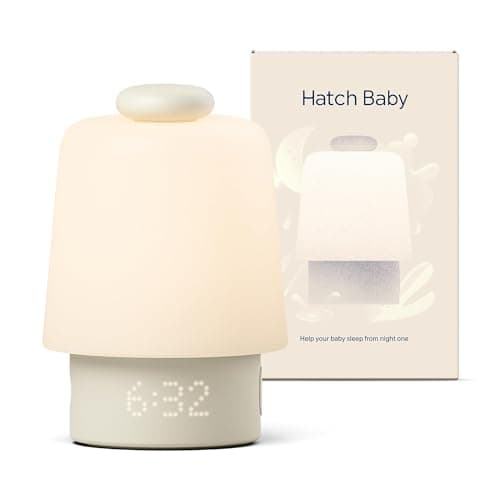 Sound machines with a night lightNursery picks, where the volume rule is strictest.Read it
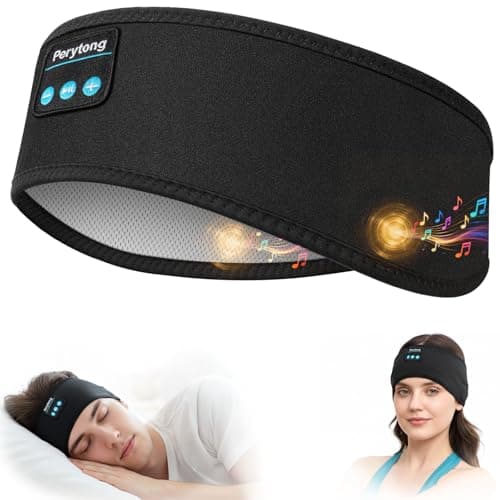 Is it bad to sleep with headphones on?The same arithmetic, applied inside your ears.Read it