
How this page is funded: we earn a commission if you buy through the links below, at no extra cost to you. As an Amazon Associate we earn from qualifying purchases. It does not change which products we pick or the order they appear in. Full disclosure.
How these picks were made: by comparing published specifications and clearly-credited public reporting. We do not run a laboratory, we have not measured these products, and we do not claim to have slept with them. Here is exactly how we choose.
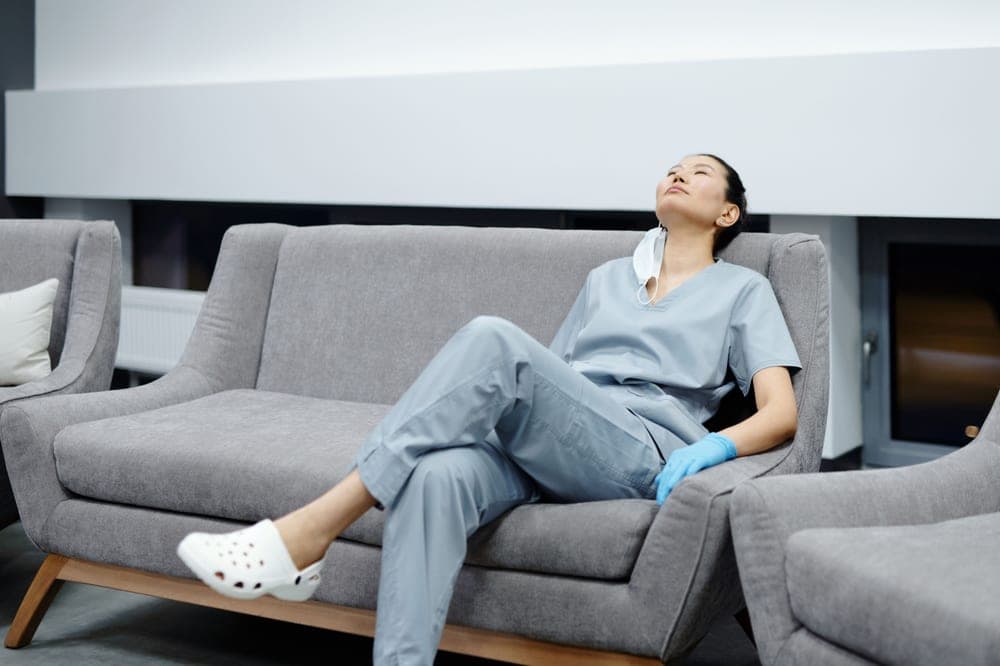
Every other sleep problem on this site is a variation on an ordinary night. Yours is structurally different: you are trying to sleep during the day, in a room daylight is getting into, while deliveries arrive and neighbors mow lawns, at the point in your body’s cycle where it most expects to be awake.
Everything below is about the environment and the equipment. Shift work and health is a large subject we are not qualified to cover, and we are not going to pretend otherwise.
What the published guidance says
CDC and NIOSH material on shift work and sleep notes that sleep experts recommend at least seven hours of sleep a day, and that over half of night shift healthcare workers surveyed reported six or fewer. It describes disrupted or insufficient sleep from irregular shifts as being associated with a range of health risks, and lists interventions including improving the sleep environment, taking a long nap before a night shift begins, and using bright light to help shift circadian timing.
Its training module for nurses goes further on scheduling, noting that night shift workers generally get less and poorer-quality sleep, and describing a compromise schedule: on nights you work, sleep as soon as you get home and sleep as long as you can; on days off, stay up until the middle of the night and sleep until early afternoon, rather than flipping fully back.
It also notes that severe, prolonged daytime insomnia or excessive sleepiness at night while awake may be a sign of shift work disorder, and suggests seeing a sleep specialist if symptoms persist for three months or longer.
Fix the room. It matters more for you than anyone.
The 2022 PLOS Biology consensus recommendations suggest keeping light at the eye under about 1 melanopic lux during sleep. A curtained daytime bedroom is orders of magnitude above that, which makes room darkness the single highest-value change available to you.
- Window coverings fitted wider and longer than the window. Almost all daylight comes in around the edges, not through the fabric. A blind inside the recess is the worst configuration there is.
- Block the gap above the rail. A pelmet, a board, or hang the curtain from the ceiling. This strip is the brightest leak in most bedrooms.
- Seal under the door. Handles daylight from the hallway and some of the household noise at once.
- Then a sealing mask, to catch what is left and cover you when you turn over. Which masks hold up against daylight.
The full free checklist is on how to make a bedroom dark for sleeping.
Then the noise, because the world is awake
Daytime noise is different in kind from night noise: more of it, more varied, and none of it considerate of someone asleep. Deliveries, traffic, construction, a doorbell, neighbors.
- Block, do not mask, the loud stuff. Foam earplugs handle a doorbell and a delivery van; a sound machine does not. Which earplugs.
- Mask the constant background. A machine playing brown noise handles the general daytime hum that earplugs leave behind.
- Tell people. A note on the door about deliveries, a word with neighbors, notifications off. Free and effective.
Waking up for your next shift
A real problem once you are wearing earplugs. A sunrise alarm is the wrong tool for a day sleeper - your room is already bright, and you have spent effort making it dark. A vibrating alarm under the pillow is the better fit, or sleep earbuds that sound the alarm inside the seal. The options, compared.
One thing worth knowing about the drive home
Bright morning light on the way home is a signal to your body that the day has started, at exactly the moment you want the opposite. Sunglasses on the commute home are a genuinely useful, nearly free intervention that a lot of shift workers use, and it follows directly from the same light logic as everything else on this site.
The three-part kit that actually holds up
Tap any row to jump to the full write-up. The photographs are licensed stock images chosen to illustrate the category - they are not photographs of these specific products, and each one’s alt text describes what is actually shown.
| # | Product | Best for | The spec that decides it | Price |
|---|---|---|---|---|
| 1 | 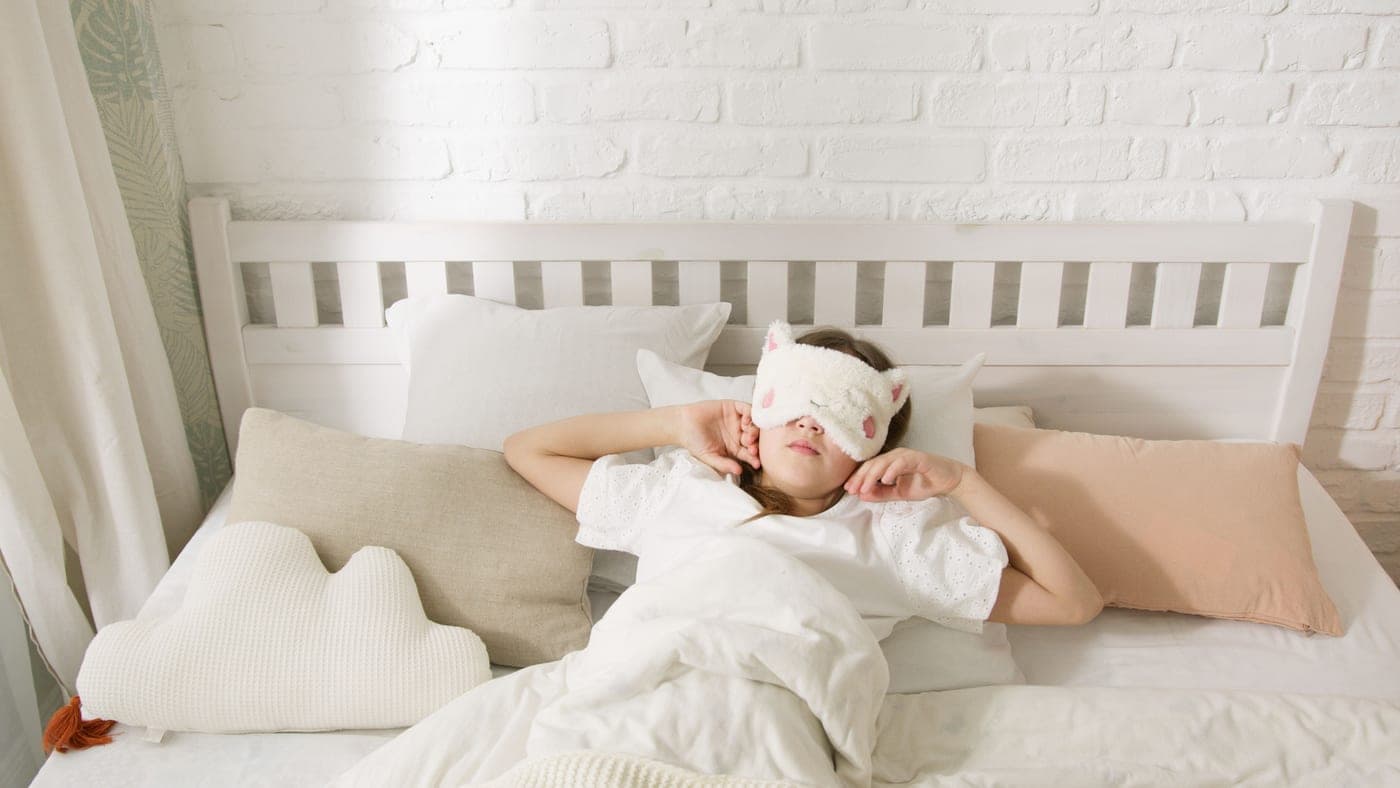 Manta Sleep Mask ProThe most adjustable mask in the category: the eye cups move independently, so you can seal a nose bridge that defeats every one-piece mask. | Total blackout on a back sleeper | Independently repositionable eye cups, zero eye pressure | |
| 2 |  Mack's Ultra Soft Foam EarplugsThe highest-rated foam plug in common retail, at a price where losing one in the sheets does not matter. | Maximum blocking for the least money | NRR 33 dB - the highest rating in this roundup | |
| 3 |  LectroFan EVOThe digital machine that solved the loop problem: 22 sounds generated rather than played back, so there is no seam to notice. | Digital variety without the loop artifact | 22 non-looping generated sounds |
We have no live price feed for this site yet, so every button reads “Check price on Amazon” rather than showing a number that could be out of date. As an Amazon Associate we earn from qualifying purchases.
Darkness, blocking and masking. Day sleepers generally need all three, which is unusual on this site - most problems need one.
Our top pick · Total blackout on a back sleeper
1. Manta Sleep Mask Pro
The most adjustable mask in the category: the eye cups move independently, so you can seal a nose bridge that defeats every one-piece mask.
- Construction:
- Modular cups on a hook-and-loop band
- Eye pressure:
- None - the cups arch over the eye socket
- Adjustment:
- Cups reposition horizontally to match your face
- Strap:
- Wide adjustable band
What it gets right
- Seals light at the nose bridge better than any fixed-shape mask once fitted
- No contact with the eyelid, so you can blink freely and sleep in contacts
- Cups and band are replaceable, so the mask outlives its fabric
Where it falls short
- The deepest profile here - the cups stand well off the face
- Fitting it correctly takes a few nights of adjustment
- Premium price
Skip it if: You sleep strictly on your side. The cups press into the pillow and then into your face.
Pick 2 · Maximum blocking for the least money
2. Mack's Ultra Soft Foam Earplugs
The highest-rated foam plug in common retail, at a price where losing one in the sheets does not matter.
- Rating:
- NRR 33 dB (manufacturer figure)
- Material:
- Slow-recovery polyurethane foam
- Reuse:
- A few nights each, then discard
- Sold as:
- Bulk packs
What it gets right
- Nothing in common retail blocks more
- Cheap enough to replace constantly, which is also more hygienic
- The soft compound is tolerable for side sleepers once compressed correctly
Where it falls short
- Only works if you roll and insert them properly - most complaints are fit, not product
- Disposable, so there is an ongoing cost and ongoing waste
- At 33 dB you will very likely sleep through a standard alarm
Skip it if: You have to hear an alarm, a child, or a smoke detector. This is the wrong tool for that night.
Pick 3 · Digital variety without the loop artifact
3. LectroFan EVO
The digital machine that solved the loop problem: 22 sounds generated rather than played back, so there is no seam to notice.
- Type:
- Digital, non-looping synthesis
- Sounds:
- 22, including white, pink and brown noise plus fan sounds
- Volume:
- Precise stepped control across a wide range
- Moving parts:
- None
What it gets right
- Gives you brown and pink noise, which a mechanical fan cannot
- No motor means no mechanical hum and nothing to wear out
- Compact enough to pack
Where it falls short
- Digital sound is still digital - some people hear it as flatter than moving air
- No app or alarm features
- More expensive than budget machines with far longer preset lists
Skip it if: You specifically want the texture of real moving air. Get the Dohm instead.
Questions people actually ask
How do you sleep during the day for night shift?
Room first, gear second. Fit window coverings wider and longer than the window, block the gap above the rail, and seal under the door - almost all daylight comes in at the edges. Then a sealing sleep mask, earplugs for loud daytime noise, and a sound machine for the constant background.
How much sleep do night shift workers need?
CDC and NIOSH material notes that sleep experts recommend at least seven hours a day, and that over half of night shift healthcare workers surveyed reported getting six or fewer. Night shift workers generally get both less and poorer-quality sleep than day workers.
Should I flip my schedule back on days off?
NIOSH training material describes a compromise rather than a full flip: on nights you work, sleep as soon as you get home and sleep as long as you can, and on days off stay up until the middle of the night and sleep until early afternoon.
Do sunglasses on the drive home actually help night shift workers?
Bright morning light is a signal that the day has started, at exactly the point you want the opposite. Reducing that exposure on the commute home is a nearly free intervention that follows directly from how light anchors the body clock.
Should night shift workers use a sunrise alarm clock?
Usually not. A sunrise alarm relies on light rising in a dark room, and you have spent real effort making yours dark. A vibrating alarm under the pillow, or sleep earbuds that sound the alarm inside the seal, fits better with earplugs.
Sources
- CDC / NIOSH - Shift Work and Sleep, NIOSH Science Blog.
- CDC / NIOSH - NIOSH Training for Nurses on Shift Work and Long Work Hours, Module 9: Coping with the Night and Evening Shifts.
- Brown TM et al. Recommendations for daytime, evening and nighttime indoor light exposure to best support physiology, sleep and wakefulness in healthy adults. PLOS Biology, 2022.
- World Health Organization - Night Noise Guidelines for Europe.
Back to what to do when you can't sleep.
Read next
- Best sleep masks for night shift workersMasks that hold up against daylight.Read it
- How to make a bedroom dark for sleepingThe free room checklist, in order.Read it
- Best earplugs for sleepingFor daytime noise that masking will not cover.Read it
- Earplugs that still let you hear your alarmWaking up for the next shift.Read it