
How this page is funded: we earn a commission if you buy through the links below, at no extra cost to you. As an Amazon Associate we earn from qualifying purchases. It does not change which products we pick or the order they appear in. Full disclosure.
How these picks were made: by comparing published specifications and clearly-credited public reporting. We do not run a laboratory, we have not measured these products, and we do not claim to have slept with them. Here is exactly how we choose.
You finally slept through the neighbor’s TV. You also slept through your alarm, your backup alarm, and the start of a meeting. This is the single most common reason people abandon earplugs, and it is entirely solvable - just not always by changing the earplugs.
Why it happens
A well-seated foam plug rated NRR 33 is attenuating across the frequency range your phone alarm occupies. That is not a fault - it is the product working. An alarm designed to be heard by an unblocked ear at a polite volume simply does not have the headroom to get through, and turning it up until it does means waking everyone else in the building.
Option 1: drop the rating, keep the plug
The simplest fix. Moving from a 33 dB foam plug to a 24 dB silicone plug gives back roughly nine decibels of audibility, which is usually enough for an alarm to get through while still killing most of what was waking you.
Best for: moderate noise - a road, a hallway, a partner turning over. Not enough for: loud snoring, which is exactly the noise that needed 33 dB in the first place.
Option 2: put the alarm inside the seal
If the alarm sounds inside your ear, the seal stops mattering. Sleep earbuds play their own alarm through the bud, so you get the isolation and the alarm from a single device and no volume in the room at all - which matters if you share a bed and your partner does not want to be woken by yours.
Best for: shared bedrooms, shift workers waking at odd hours. The catch: battery. A bud that dies at 4am is an alarm that does not go off, so this only works with buds rated to cover a full night - the sleep earbud roundup covers which.
Option 3: an alarm that is not a sound
The best answer, and the one almost nobody thinks of: stop trying to hear your alarm at all. A sunrise alarm clock wakes you with light rather than sound, so it works identically at NRR 33 and NRR 0. You keep maximum blocking and you wake up reliably.
This cross-category combination - highest-rated foam plugs plus a bright sunrise alarm - is the arrangement we would recommend to most people who land on this page, and it is the setup the two categories are best at together. Sunrise alarm clocks for heavy sleepers covers which ones are bright enough to do it, because peak brightness is the spec that decides whether a light alarm works on you.
A vibrating alarm - under the pillow or on the wrist - is the same idea by a different sense, and is the standard solution for people with hearing loss. It also works well if you sleep in a room you cannot make bright.
Which to choose
| Your situation | The fix |
|---|---|
| Moderate noise, sleep alone | Lower-rated reusable silicone plugs |
| Loud snoring, need maximum blocking | Keep the 33 dB foam, add a sunrise alarm |
| Shared bed, different wake times | Sleep earbuds with an in-bud alarm |
| Day sleeping in a dark room | Vibrating alarm under the pillow |
| You must hear a child in the night | Lower-rated plugs, never maximum NRR |
A note worth making
If you need to hear a smoke alarm, a child, or someone unwell in the house, do not solve this by buying the highest NRR you can find and hoping. Use lower-rated plugs, or a blocking method you can wake through, or a light or vibrating alarm linked to what you need to hear. This is the one place in this category where “more blocking” is actively the wrong goal.
Three routes out of this problem
Tap any row to jump to the full write-up. The photographs are licensed stock images chosen to illustrate the category - they are not photographs of these specific products, and each one’s alt text describes what is actually shown.
| # | Product | Best for | The spec that decides it | Price |
|---|---|---|---|---|
| 1 |  Loop Quiet 2Reusable silicone with a low profile that does not press back when your ear is against a pillow - you trade some blocking for that. | Side sleepers who reuse their plugs | 24 dB SNR - lower than foam, and deliberately so | |
| 2 | 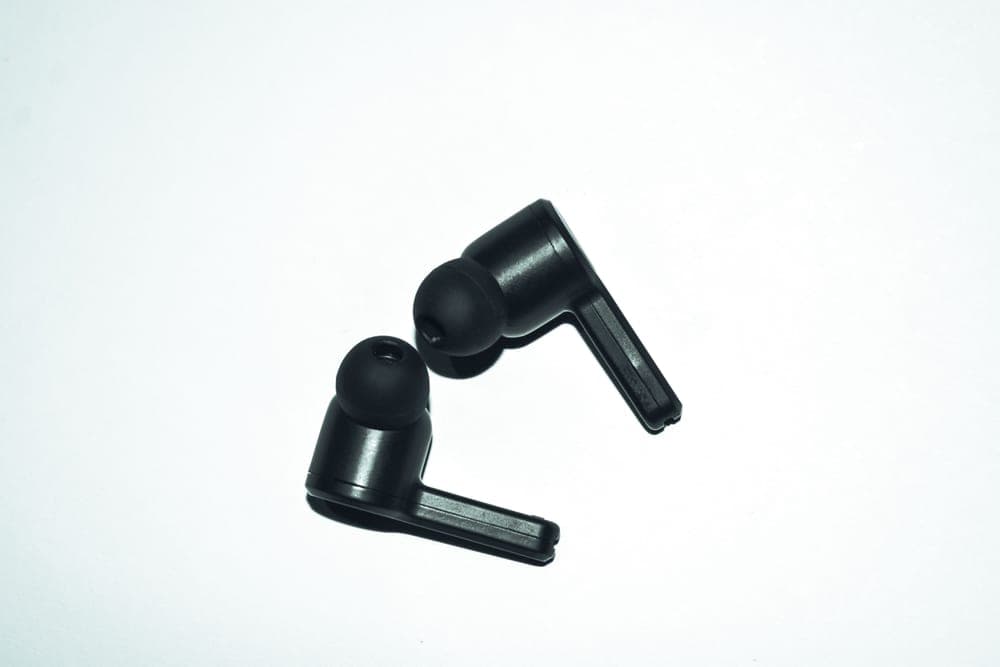 Soundcore Sleep A20Low-profile buds designed to be lain on, with the battery life to actually cover a full night plus a nap. | The value pick in sleep earbuds | 30 dB high-frequency passive noise reduction, 14 h per charge | |
| 3 |  Mack's Ultra Soft Foam EarplugsThe highest-rated foam plug in common retail, at a price where losing one in the sheets does not matter. | Maximum blocking for the least money | NRR 33 dB - the highest rating in this roundup |
We have no live price feed for this site yet, so every button reads “Check price on Amazon” rather than showing a number that could be out of date. As an Amazon Associate we earn from qualifying purchases.
Our top pick · Side sleepers who reuse their plugs
1. Loop Quiet 2
Reusable silicone with a low profile that does not press back when your ear is against a pillow - you trade some blocking for that.
- Rating:
- 24 dB SNR (manufacturer figure)
- Material:
- Reusable silicone
- Fit:
- Multiple ear-tip sizes included
- Care:
- Washable, reused for months
What it gets right
- The low profile is the reason side sleepers stick with these
- Washable and reusable, so the running cost is near zero
- Multiple tip sizes solve the fit problem foam plugs create
Where it falls short
- 24 dB is meaningfully less blocking than a 33 dB foam plug
- Higher up-front cost than a year of foam
- Silicone can work loose over a long night
Skip it if: Your problem is loud, low-frequency snoring. You want the foam number, not the comfort number.
Pick 2 · The value pick in sleep earbuds
2. Soundcore Sleep A20
Low-profile buds designed to be lain on, with the battery life to actually cover a full night plus a nap.
- Noise reduction:
- 30 dB high-frequency, passive (manufacturer figure)
- Battery:
- 14 h per charge, 80 h total with the case
- Profile:
- Low-profile shell with ear wings, built for side sleeping
- Bluetooth:
- 5.3 - streams any audio source
What it gets right
- Passive isolation plus masking audio is a stronger combination than either alone
- Battery outlasts the night, which most true-wireless buds do not
- Streams anything, so you are not locked into one app's sound library
Where it falls short
- No active noise cancellation - that is the A30
- Passive isolation is weakest exactly where snoring lives, in the low frequencies
- Anything in your ear canal all night is a hygiene commitment
Skip it if: You just want silence. Earplugs block more, cost a fraction, and never need charging.
Pick 3 · Maximum blocking for the least money
3. Mack's Ultra Soft Foam Earplugs
The highest-rated foam plug in common retail, at a price where losing one in the sheets does not matter.
- Rating:
- NRR 33 dB (manufacturer figure)
- Material:
- Slow-recovery polyurethane foam
- Reuse:
- A few nights each, then discard
- Sold as:
- Bulk packs
What it gets right
- Nothing in common retail blocks more
- Cheap enough to replace constantly, which is also more hygienic
- The soft compound is tolerable for side sleepers once compressed correctly
Where it falls short
- Only works if you roll and insert them properly - most complaints are fit, not product
- Disposable, so there is an ongoing cost and ongoing waste
- At 33 dB you will very likely sleep through a standard alarm
Skip it if: You have to hear an alarm, a child, or a smoke detector. This is the wrong tool for that night.
Questions people actually ask
How do you wake up to an alarm with earplugs in?
Three ways. Use a lower-rated plug so the alarm can get through. Use sleep earbuds that play the alarm inside the seal. Or use an alarm that is not a sound at all - a sunrise alarm clock or a vibrating alarm works identically whatever your earplugs are rated at.
Will I hear my phone alarm with 33 dB earplugs?
Often not. A well-seated NRR 33 foam plug attenuates right across the range a phone alarm occupies, and turning the alarm up far enough to get through usually means waking the rest of the household. That is the product working, not failing.
Do sunrise alarm clocks work if you wear earplugs?
Yes, and that is exactly why they suit this problem - a light alarm does not need to be heard, so it works the same at any NRR. Peak brightness is the spec that decides whether it will wake you, so buy for brightness rather than for features.
Are vibrating alarms effective?
They are the standard solution for people with hearing loss and they work well here for the same reason. Under-pillow pads and wrist devices both work; under-pillow is generally the stronger sensation.
Can I wear earplugs if I need to hear my child at night?
Use a low-rated plug rather than the highest NRR available, or use a monitor that alerts you by light or vibration. Do not buy maximum blocking and hope - this is the one case where more attenuation is the wrong goal.
Sources
Back to the best white noise machines.
Read next
- Sunrise alarm clocks for heavy sleepersThe cross-category fix, in full.Read it
- Best earplugs for sleepingThe ratings explained, and the insertion technique.Read it
- Best sleep earbudsBuds that play the alarm inside the seal.Read it
- How to stop hitting snoozeFor when you do hear it and turn it off anyway.Read it