

How this page is funded: we earn a commission if you buy through the links below, at no extra cost to you. As an Amazon Associate we earn from qualifying purchases. It does not change which products we pick or the order they appear in. Full disclosure.
How these picks were made: by comparing published specifications and clearly-credited public reporting. We do not run a laboratory, we have not measured these products, and we do not claim to have slept with them. Here is exactly how we choose.
Direct answer: green noise is not a formally defined noise color. White, pink and brown are defined by how their energy falls across the frequency spectrum; green is an informal name that people use for noise weighted toward the middle of human hearing - roughly the range that natural sounds like steady rain and distant water sit in. There is no engineering standard behind it and almost no sound machine has a green setting. If green noise clips help you sleep, the thing you actually want is a mid-weighted, low-hiss sound - which several machines produce under other names, including rain, stream and some pink noise presets.
We are starting there because the honest version of this answer is the useful one. Search results for green noise are full of pages implying it is a fourth official color with specific properties. It is not, and buying a machine on that basis means buying on a label rather than on a sound.
What the defined colors actually mean
A noise color describes the slope of its power spectrum. White noise carries equal power at every frequency, which is why it sounds bright and hissy. Pink noise reduces power as frequency rises, which people describe as softer and more like steady rain. Brown noise falls off faster still, which is why it reads as a low rumble. Those three have definitions you can measure. White noise vs pink noise vs brown noise is the full explainer, and the pink and brown noise machines is where the buying decision lives.
Green has no agreed slope. The commonest description is noise with its energy concentrated around the middle of the audible range, centered somewhere near 500 Hz, deliberately excluding both the hiss at the top and the rumble at the bottom. The Cleveland Clinic’s explainer on brown noise is a good reference point for how little hard evidence exists for any specific color being better than another for sleep, which applies here with extra force.
Why people like it anyway
Two reasons, both real, neither mysterious.
- It avoids the two things people complain about. White noise is fatiguing because of the high-frequency hiss; brown noise can feel oppressive and some people find it masks too much. Mid-weighted sound avoids both, which is exactly what you would expect from something defined as the middle.
- It resembles natural sound. Steady rain, a stream, wind in leaves. Those have most of their energy in the middle, and most people find them less machine-like than a noise generator. That is a preference, not a physiology claim, and we are not going to dress it up as one.
What the research does support is narrower. There is evidence that acoustic stimulation during sleep can interact with slow-wave activity - Papalambros and colleagues found a memory effect from precisely timed pink-noise bursts in older adults, which is not the same thing as a machine playing continuously. And there is at least one finding in the other direction: overnight pink noise exposure has been associated with reduced sleep-dependent insight in one study. Continuous noise is a trade, not a free upgrade.
What to look for if green noise is what helped you
If you found a green noise video and slept well to it, do not go looking for the word on a box. Look for these four things instead.
- A rain or stream preset, not just noise colors. These are the mid-weighted sounds in most sound libraries, and they are the closest match to what you were listening to.
- Non-looping audio. Mid-weighted sounds have more texture than flat noise, which makes a repeat far easier to notice. This is the one specification worth being fussy about - the mechanical versus digital comparison explains why.
- Tone control. Being able to shift the sound warmer or brighter matters more than the number of presets, because it lets you find the middle yourself.
- A headphone jack or low minimum volume, if you share the room. Mid-weighted sound carries further than you expect.
Where each machine gets you
| Machine | How it gets to mid-weighted sound |
|---|---|
| LectroFan EVO | 22 non-looping generated sounds spanning noise colors and fan tones |
| Hushing Brown Noise Sound Machine | 30 non-looping sounds including white, pink and brown, on the unit |
| Yogasleep Dreamcenter | 26 sounds including the three colors, plus a headphone jack |
None of these claims a green setting, and neither do we on their behalf. What they have in common is enough range to find the middle, and published non-looping audio so the texture does not betray itself at 3am.
How to test it tonight, for nothing
Before buying anything, find out whether mid-weighted sound is actually what suits you. Take a machine or an app you already have and run three nights on three settings: a bright white noise, a rain or stream preset, and a brown or low-rumble setting. Keep everything else constant - same volume, same position in the room, same bedtime. Three nights each is enough to notice a pattern and not so long that the rest of life contaminates it.
Most people find one of the three is obviously easier to fall asleep to, and a meaningful number find the difference is smaller than they expected and the real variable was volume. Either outcome saves you money. If the rain preset wins, you want a machine with good mid-weighted presets and tone control. If the brown setting wins, buy for the low end instead. And if nothing wins, the honest conclusion is that masking is not your fix, which is a useful thing to establish for the price of three nights.
The honest limits
Noise color is the least important variable in whether a sound machine works for you. Volume matters more, placement matters more, and whether the machine loops matters a great deal more. If white noise has not worked for you, the fix is usually not a different color - it is a quieter setting, a different position in the room, or accepting that masking is the wrong tool and that earplugs are the better answer for the noise you are fighting. If the noise is a snoring partner specifically, that page is blunt about what masking can and cannot do.
Anything you buy here should be judged on a few nights of actual sleep, not on the label it arrived with. The rest of the category is on the sound machine hub.
Machines that get you to the same sound
Tap any row to jump to the full write-up. Each thumbnail is the product photograph from that item’s own Amazon listing, and the price in the last column is the one Amazon showed at the last check.
| # | Product | Best for | The spec that decides it | Price |
|---|---|---|---|---|
| 1 | 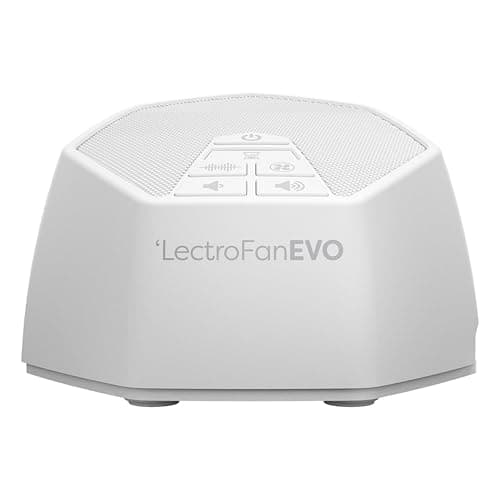 LectroFan EVOThe digital machine that solved the loop problem: 22 sounds generated rather than played back, so there is no seam to notice. | Digital variety without the loop artifact | 22 non-looping generated sounds | |
| 2 | 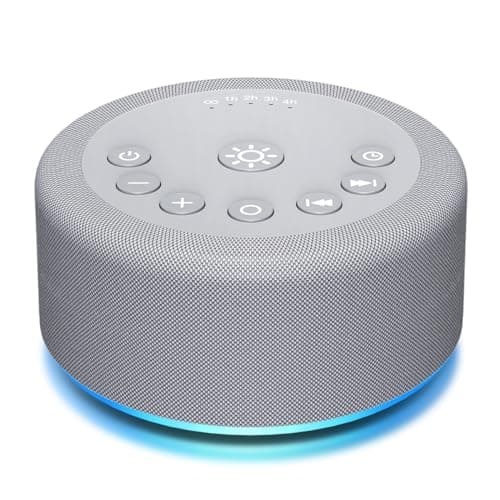 Hushing Brown Noise Sound MachineThirty non-looping sounds with white, pink and brown noise all named on the listing - the cheapest honest way to get the two quieter noise colors. | Pink and brown noise on the unit, without an app or an account | 30 non-looping sounds including white, pink and brown noise | |
| 3 | 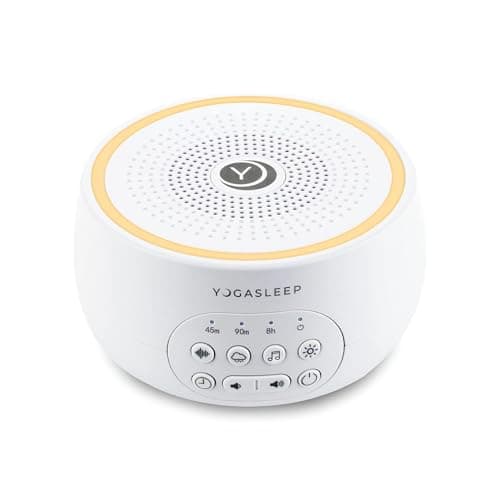 Yogasleep DreamcenterThe same white, pink and brown noise set as the Duet in a larger body, with a full-color light ring and a headphone jack for the person who needs the noise without inflicting it. | A shared room, because of the headphone jack | 26 sounds including white, pink and brown noise, plus a headphone jack |
Prices come straight from Amazon and are refreshed daily; the date they were checked is stamped under the buy buttons below. If a price has gone stale or a listing has no offer, the button falls back to “Check price on Amazon” rather than showing a number we cannot stand behind. As an Amazon Associate we earn from qualifying purchases.
No sound machine in our registry has a button labeled green noise, and we are not going to pretend otherwise. These three get you to mid-weighted sound by other means. Specifications are the manufacturers' own.
#ad How we are funded · price as of November 12, 2026
Our top pick · Digital variety without the loop artifact
1. LectroFan EVO
The digital machine that solved the loop problem: 22 sounds generated rather than played back, so there is no seam to notice.
- Type:
- Digital, non-looping synthesis
- Sounds:
- 22, including white, pink and brown noise plus fan sounds
- Volume:
- Precise stepped control across a wide range
- Moving parts:
- None
What it gets right
- Gives you brown and pink noise, which a mechanical fan cannot
- No motor means no mechanical hum and nothing to wear out
- Compact enough to pack
Where it falls short
- Digital sound is still digital - some people hear it as flatter than moving air
- No app or alarm features
- More expensive than budget machines with far longer preset lists
Skip it if: You specifically want the texture of real moving air. Get the Dohm instead.
#ad How we are funded · price as of November 12, 2026
Pick 2 · Pink and brown noise on the unit, without an app or an account
2. Hushing Brown Noise Sound Machine
Thirty non-looping sounds with white, pink and brown noise all named on the listing - the cheapest honest way to get the two quieter noise colors.
- Sounds:
- 30 non-looping, named by the maker as white, pink and brown noise plus two fan sounds and nature tracks
- Light:
- 12 night-light colors, 10 brightness steps
- Timer:
- 1, 2, 3 or 4 hours, or continuous play
- Power:
- USB powered - it has to stay plugged in, there is no battery
- Volume:
- 36 steps, with a memory function that returns to your last setting
- Size:
- 4.2 x 4.2 x 2.2 in, 9.5 oz
What it gets right
- Pink and brown noise are named on the listing itself, not inferred from a sound list
- 36 volume steps, which is finer control than most machines at any price
- Memory function returns to your sound and volume rather than to a default
Where it falls short
- Mains only - the listing is explicit that it has to be plugged in
- The 12-color light invites you to pick a blue, which is the wrong choice at bedtime
- No app control - every setting is made on the unit
Skip it if: You want app scheduling or a generated rather than recorded sound. The LectroFan EVO generates its noise rather than playing it back.
#ad How we are funded · price as of November 12, 2026
Pick 3 · A shared room, because of the headphone jack
3. Yogasleep Dreamcenter
The same white, pink and brown noise set as the Duet in a larger body, with a full-color light ring and a headphone jack for the person who needs the noise without inflicting it.
- Sounds:
- 26, named by the manufacturer as white, pink and brown noise plus fan, nature, lullabies and relaxation tracks
- Light:
- Customizable night light ring - color and brightness
- Timer:
- 45 minutes, 90 minutes or 8 hours
- Private listening:
- Headphone jack on the unit
- Size:
- 4.6 x 4.6 x 2.5 in, 14 oz
- Power:
- USB powered
What it gets right
- The headphone jack solves the shared-bed argument that masking usually starts
- Color-adjustable light ring, so it can be dialed down to amber
- Four fewer sounds than the Duet, but the same three noise colors
Where it falls short
- Bigger and heavier than the Duet for no extra sound output
- The color ring invites you to pick a blue, which is the wrong choice at bedtime
- No app, and no Bluetooth on the specification
Skip it if: You want the smallest machine on the nightstand. The Duet does the same noise colors in a smaller body.
Questions people actually ask
What is green noise?
An informal name for noise weighted toward the middle of the audible range, roughly centered near 500 Hz, with less high-frequency hiss than white noise and less low rumble than brown. Unlike white, pink and brown, it has no agreed engineering definition, which is why almost no sound machine has a green setting.
Is green noise better than white noise for sleep?
There is no evidence that it is. What is true is that mid-weighted sound avoids the two things people most often dislike - the hiss of white noise and the heaviness of brown - so if either of those has put you off, green noise clips are likely to feel more comfortable. That is a preference, not a performance claim.
Which sound machine has green noise?
Effectively none, because it is not a standard setting. The practical substitute is a machine with rain or stream presets and tone control, which gets you to the same place. Machines with non-looping audio matter more here than elsewhere, because textured sounds make a repeat easier to hear.
Does green noise help tinnitus?
Masking in general is used for tinnitus, but the color is not the variable that decides it - the match between the masking sound and your own tinnitus pitch is. That is a different page: see our guide to sound machines for tinnitus, which also covers the cautions around habitual masking.
Can I just use a green noise video instead of buying a machine?
You can, and plenty of people do. The trade-offs are the usual ones for phone audio - notifications, screen light, battery, and the file looping. The comparison is on our white noise machine versus a phone app page.
Sources
- Cleveland Clinic Health Essentials - Brown noise: what it is and whether it helps you sleep (Dr. Shivnaveen Bains).
- Papalambros NA et al. Acoustic Enhancement of Sleep Slow Oscillations and Concomitant Memory Improvement in Older Adults. Frontiers in Human Neuroscience, 2017.
- Overnight exposure to pink noise could jeopardize sleep-dependent insight and pattern detection (PMC, 2023).
- Sound of Sleep (Adaptive Sound Technologies) - LectroFan EVO sound lineup (manufacturer).
- Yogasleep - Dreamcenter sound machine specifications (manufacturer).
- Hushing - sound machine whose sound list names white, pink and brown noise (Amazon listing, specifications as published by the seller).
Back to the best white noise machines.
Read next
- White noise vs pink noise vs brown noiseThe three colors that do have definitions.Read it
- Best pink and brown noise machinesIf you want a named color on the unit itself.Read it
 Fan sound vs digital white noiseWhy non-looping matters more than color.Read it
- White noise machine vs a phone appIf the clip on your phone is already working.Read it