
How this page is funded: we earn a commission if you buy through the links below, at no extra cost to you. As an Amazon Associate we earn from qualifying purchases. It does not change which products we pick or the order they appear in. Full disclosure.
How these picks were made: by comparing published specifications and clearly-credited public reporting. We do not run a laboratory, we have not measured these products, and we do not claim to have slept with them. Here is exactly how we choose.
Short version: if you are buying for yourself, buy the Restore 3 - it is the adult device, and it is a sound machine, a sunrise alarm clock and a reading light in one body. If you are buying for a baby or a toddler’s room, buy a Rest; it is the nursery line, and its whole design assumes a child, a night light and a parent with a phone. The two get confused constantly because they look alike and share an app. And if you only want white noise, buy neither: you are paying for a screen, a schedule and a light you will never use.
Hatch is the most-searched brand in this category and also the most confusing, because the product names are near-identical and both lines have been through multiple generations. This page is the model selector. We cover the two machines individually elsewhere - the Restore as a sound machine and the Restore 3 as a sunrise alarm - and this one only answers “which one”.
The two lines, and who each is for
Everything starts here, and it is the thing the product pages do not make obvious.
| Hatch Restore 3 | Hatch Rest (nursery line) | |
|---|---|---|
| Who it is for | An adult bedside | A baby, toddler or young child’s room |
| Primary job | Sound machine plus a sunrise alarm clock | Sound machine plus a night light and a time-to-rise cue |
| Light | Sunrise ramp, deep orange through to bright white | Colored night light, set by the parent in the app |
| Alarm | Yes - the whole point | Not in the adult sense; it signals a child when to get up |
| Controls | On-device plus app | App-led, so a parent can change it without opening the door |
| Buy it if | You want one device to run your bedtime and your morning | You want one device to run a child’s bedtime routine |
The mistake we see most often is an adult buying a Rest because it was cheaper or came up first, then being annoyed that it does not wake them properly. It is not a defective product; it was never trying to. Hatch’s own Hatch Baby pages frame the Rest line as baby sleep support, and the support documentation for the Rest 2nd gen is written entirely around nursery use.
Buying for yourself: the Restore 3
The Restore 3 is the one to get if the machine is for your own nightstand. Hatch publishes it as a smart sound machine, alarm clock and light in one body - our registry entry records roughly a 30-minute sunrise running from deep orange through to bright white - and the reason to pay for it over a plain machine is that it replaces three objects.
Where it earns its keep:
- One device, three jobs. Sound at night, light in the morning, a dim reading light in between. If your nightstand currently holds a sound machine, a phone and a lamp, this is the consolidation argument.
- A real sunrise. Not a screen brightening - a light that illuminates a room, which is the mechanism sunrise alarms actually rely on.
- A routine you configure once. Scheduling is the feature people keep using after month three.
The honest cons. It is expensive for a sound machine; the premium audio content sits behind a subscription (see below); it needs an app and an account, which some people simply will not tolerate; and as a pure noise generator it is beaten by cheaper machines. If you want it ranked against the rest of the sunrise category, Hatch against Philips is the head-to-head, and sound machines with an alarm clock is the broader roundup.
Buying for a child: the Rest line
The Rest is the nursery product and it is good at being that. It combines a sound machine with a colored night light and a time-to-rise cue - the light changes to tell a child who cannot read a clock whether it is still night - and it is app-controlled so you can change the sound or dim the light without opening a bedroom door, which is the feature parents actually buy.
The honest cons. It is more expensive than a nursery sound machine needs to be; it depends on an app and a connection, so a router problem becomes a bedtime problem; and it is not an alarm clock for an adult. If you want the Hatch nursery experience compared against the obvious rivals, we have both head-to-heads: Momcozy against Hatch and Nanit against Hatch.
One safety point that applies to any nursery machine, Hatch included, and is worth more than any feature comparison: put it across the room rather than in or on the crib, and run it low. Children’s Hospital of Philadelphia’s commentary on infant sleep machines discusses research measuring commercially sold machines at maximum volume and close range and finding sound pressure levels high enough to be a concern. How loud a sound machine should be works through it properly.
The subscription question, answered specifically
This is where most of the buyer’s remorse in this brand comes from, so it is worth being precise rather than vague. Hatch operates a membership, and Hatch publishes its own breakdown of what you get with Hatch+ and what you get for free along with the membership terms.
Read those two pages before you buy, not after. The shape of it is that the device works without a subscription - the hardware is not bricked, the core sounds and the light are yours - while the expanded content library, the sleep stories and the meditations are the subscription. Hatch also documents which sounds you can wake up to, which is the specific list worth checking against your own preferences, and our page on the Restore sound library goes through what is actually in it.
Our position: treat the subscription as optional and buy the device on whether the free tier plus the hardware is worth the money to you. If the answer only becomes yes once you add a monthly fee, buy a cheaper machine instead - that is not a Hatch-specific judgment, it is how to evaluate any subscription hardware.
When to buy neither
Two cases, and between them they cover a lot of people who end up on a Hatch product page.
You only want white noise. Then you are paying for a screen, a schedule, an app and a light you will not use. The LectroFan EVO generates 22 non-looping sounds including white, pink and brown noise, has no moving parts and no app, and is the better machine at the one job. If you want the texture of real moving air instead of digital synthesis, the Dohm and the SNOOZ are the fan-based options, and machines against an ordinary fan is the cheaper question behind all of it.
You want the nursery features without the nursery price. The Momcozy smart machine covers the same ground - sound, a light, app control - and Momcozy publishes its specifications openly. It is the value pick, with the usual value-pick caveats about build and app polish.
A third case worth naming: if what keeps you awake is a snoring partner or a thin wall, no Hatch is the right answer and neither is any machine on its own. Masking and blocking are different jobs - machines against earplugs and the snoring partner page are the honest routes.
A note on generations and secondhand units
Both lines have been revised more than once, which makes shopping harder than it should be. Two practical rules.
First, check which generation a listing is actually selling. “Hatch Restore” without a number is usually an older unit, and the differences between generations are real - our Restore write-up and the Restore 3 review are deliberately separate pages for that reason. The product title on a reputable listing will name the generation; if it does not, assume the older one.
Second, be careful with secondhand. These are account-linked devices, and a used unit that is still tied to someone else’s account is a support ticket rather than a bargain. The saving is rarely worth it.
The verdict
Restore 3 for an adult bedside, Rest for a child’s room, LectroFan EVO if all you want is noise, Momcozy if you want the nursery feature set for less. Check the free-versus-subscription split on Hatch’s own pages before you spend, because that is where the disappointment lives rather than in the hardware. And if you have not decided whether you need a machine at all, the sound machine hub has the roundups and are white noise machines bad for you is the skeptical read.
The two Hatch machines, and the two alternatives
Tap any row to jump to the full write-up. Each thumbnail is the product photograph from that item’s own Amazon listing, and the price in the last column is the one Amazon showed at the last check.
| # | Product | Best for | The spec that decides it | Price |
|---|---|---|---|---|
| 1 | 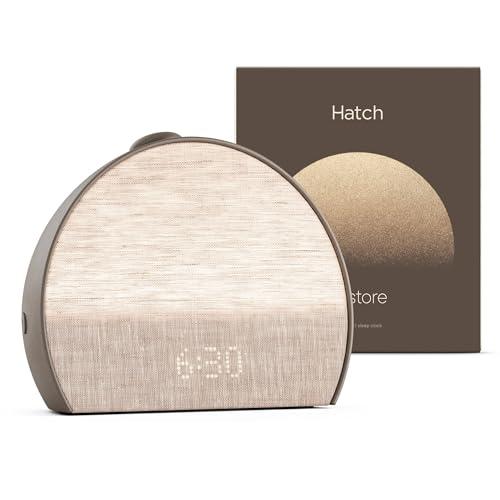 Hatch Restore 3The most complete bedside device of the group - sunrise, wind-down, sound library and alarms in one - and the only one with a subscription attached. | One device for the whole bedtime routine | Roughly 30-minute sunrise, deep orange through to bright white | |
| 2 | 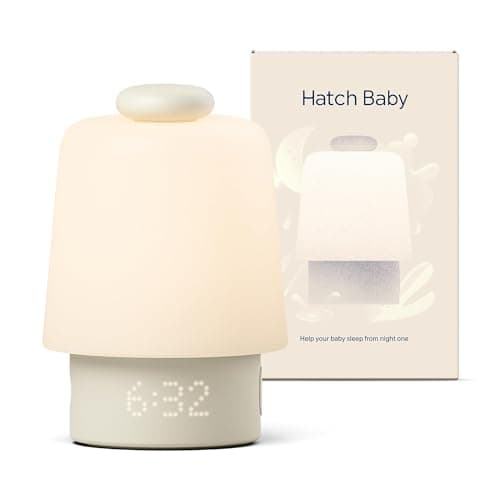 Hatch Baby Sound Machine & Night LightSound machine, night light and a time-to-rise alarm in one, with the routine programming that is the real reason people buy Hatch. | Time-to-rise, and one device a child grows into | Routine builder in the app, time-to-rise alarm, pink noise and heartbeat among the sounds | |
| 3 | 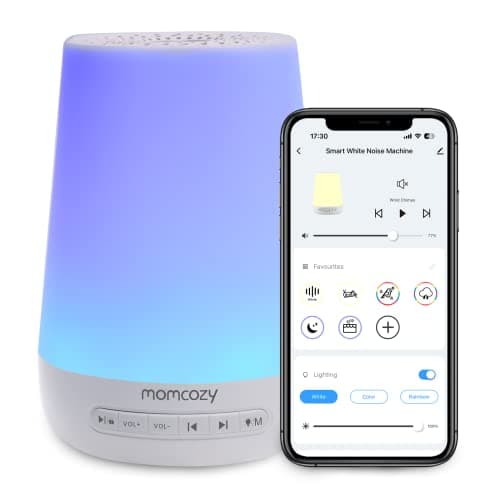 Momcozy Smart Baby Sound MachineThe clearest Hatch alternative: 34 sounds, a seven-color night light and Wi-Fi app control, for roughly what a plain machine costs. | Hatch-style features at a fraction of the price | 34 sounds - 11 white noises, 3 fan, 8 lullabies, 12 nature - plus a 7-color light and app control | |
| 4 | 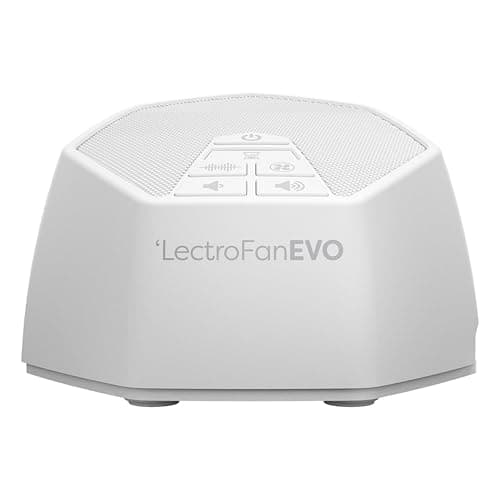 LectroFan EVOThe digital machine that solved the loop problem: 22 sounds generated rather than played back, so there is no seam to notice. | Digital variety without the loop artifact | 22 non-looping generated sounds |
Prices come straight from Amazon and are refreshed daily; the date they were checked is stamped under the buy buttons below. If a price has gone stale or a listing has no offer, the button falls back to “Check price on Amazon” rather than showing a number we cannot stand behind. As an Amazon Associate we earn from qualifying purchases.
The adult machine, the nursery machine, and the two devices we would buy instead in the cases where a Hatch is the wrong purchase. Specifications are the manufacturers' own; we have tested none of these.
#ad How we are funded · price as of November 12, 2026
Our top pick · One device for the whole bedtime routine
1. Hatch Restore 3
The most complete bedside device of the group - sunrise, wind-down, sound library and alarms in one - and the only one with a subscription attached.
- Sunrise:
- Gradual ramp beginning around 30 minutes before the alarm
- Color path:
- Deep orange warming to bright white
- Sound:
- Built-in sound library plus alarm tones
- App:
- Required for setup; premium library is subscription-gated
What it gets right
- Sunrise, wind-down and sound machine in a single footprint
- The app makes complex schedules genuinely easy to set
- The display dims properly, unlike most clock radios
Where it falls short
- The best sound content sits behind a subscription
- App dependency: no phone, no changes
- Most expensive way to buy a sunrise
Skip it if: You resent subscriptions. The Philips does the light half with no account at all.
#ad How we are funded · price as of November 12, 2026
Pick 2 · Time-to-rise, and one device a child grows into
2. Hatch Baby Sound Machine & Night Light
Sound machine, night light and a time-to-rise alarm in one, with the routine programming that is the real reason people buy Hatch.
- Sounds:
- Sleep sounds including pink noise and heartbeat, chosen in the app
- Routines:
- Custom bedtime and wake routines for infants through toddlers
- Light:
- Soothing light colors, set in the app or by the on-device button
- Control:
- Hatch companion app, plus a single button on the device
- Included:
- 3 months of Hatch+, which carries the consultant chat and sleep guides
What it gets right
- The time-to-rise cue is the feature parents keep using past the baby years
- Routines run on a schedule without anyone touching the device
- One physical button means a half-asleep adult can still turn it on
Where it falls short
- The app is the interface - there is almost nothing to set on the device itself
- Fewer sounds than much cheaper rivals
- After three months the consultant chat and most guides sit behind Hatch+
Skip it if: You want every setting on the box. This is an app-first device, and that is the whole design.
#ad How we are funded · price as of November 12, 2026
Pick 3 · Hatch-style features at a fraction of the price
3. Momcozy Smart Baby Sound Machine
The clearest Hatch alternative: 34 sounds, a seven-color night light and Wi-Fi app control, for roughly what a plain machine costs.
- Sounds:
- 34, mixing white noise, lullabies and nature
- Light:
- LED lamp in seven colors, brightness adjustable
- Control:
- 2.4 GHz Wi-Fi app, or touch controls on the unit
- Routines:
- Scheduled sleep and wake routine
- Power:
- Mains powered
What it gets right
- No subscription tier gating any feature
- Far more sounds than the Hatch Rest offers
- App and on-device controls both work, so a dead phone is not a crisis
Where it falls short
- Needs 2.4 GHz Wi-Fi - it will not join a 5 GHz-only network
- Nothing like the Hatch library of guided wind-down content
- Brand and app are built around babies, which reads oddly on an adult nightstand
Skip it if: You want the Hatch content library or the Time-to-Rise habit system. Those are what you are actually paying Hatch for.
#ad How we are funded · price as of November 12, 2026
Pick 4 · Digital variety without the loop artifact
4. LectroFan EVO
The digital machine that solved the loop problem: 22 sounds generated rather than played back, so there is no seam to notice.
- Type:
- Digital, non-looping synthesis
- Sounds:
- 22, including white, pink and brown noise plus fan sounds
- Volume:
- Precise stepped control across a wide range
- Moving parts:
- None
What it gets right
- Gives you brown and pink noise, which a mechanical fan cannot
- No motor means no mechanical hum and nothing to wear out
- Compact enough to pack
Where it falls short
- Digital sound is still digital - some people hear it as flatter than moving air
- No app or alarm features
- More expensive than budget machines with far longer preset lists
Skip it if: You specifically want the texture of real moving air. Get the Dohm instead.
Questions people actually ask
Which Hatch sound machine should I buy?
The Restore 3 if it is for an adult bedside - it is a sound machine, sunrise alarm clock and reading light in one. A Hatch Rest if it is for a baby or young child's room, because that line is built around a night light, a time-to-rise cue and parent app control. The two get confused constantly, and buying the nursery one for your own bedroom is the expensive mistake.
What is the difference between the Hatch Rest and the Hatch Restore?
They are different product lines for different people. Rest is the nursery line: sound, a colored night light and a cue that tells a child when it is time to get up, all app-controlled so a parent does not have to open the door. Restore is the adult line: sound plus a genuine sunrise alarm that lights a room, with on-device controls as well as an app.
Do you need a subscription for a Hatch sound machine?
No - the device works without one. Hatch publishes its own breakdown of what Hatch+ includes and what is free, and the shape of it is that the hardware, the light and the core sounds are yours while the expanded content library, sleep stories and meditations sit behind the membership. Read that page before buying, and if the device is only worth it with a monthly fee added, buy a cheaper machine.
Is a Hatch worth it if I only want white noise?
No. You would be paying for a screen, a schedule, an app and a light you will not use. A dedicated generator like the LectroFan EVO produces 22 non-looping sounds including white, pink and brown noise with no app and no moving parts, and it is the better machine at that single job.
Can I use a Hatch Rest as my own alarm clock?
Not well. The Rest's light is a night light and a time-to-rise signal for a child rather than a sunrise ramp designed to wake an adult, and the controls assume a parent with a phone. If you want a Hatch that wakes you, that is the Restore 3.
Should I buy a used Hatch?
We would be cautious. These are account-linked devices, so a secondhand unit still tied to a previous owner's account turns into a support ticket rather than a bargain. Also check which generation a listing is selling - 'Hatch Restore' with no number is usually an older unit, and the generational differences are real.
Where should a Hatch go in a nursery?
Across the room, never in or on the crib, and run it at a low volume. Children's Hospital of Philadelphia's commentary on infant sleep machines discusses research that measured commercial machines at maximum volume and close range and found sound pressure levels high enough to be a concern. Distance is the biggest variable and it is free.
Sources
- Hatch - Restore 3 product page (manufacturer specifications and current subscription terms).
- Hatch - Hatch Baby, the Rest nursery line (manufacturer product overview).
- Hatch - Baby sound machine and night light, routine builder and included Hatch+ period (Amazon listing, specifications as published by the seller).
- Hatch Support - What do I get with Hatch+? What do I get for free? (full free vs subscription content lists).
- Hatch - Hatch+ membership pricing and included content (manufacturer).
- Hatch Support - What sounds can I wake up to?
- Momcozy - Smart Baby Sound Machine with App Remote Control (manufacturer specifications).
- Sound of Sleep (Adaptive Sound Technologies) - LectroFan EVO sound lineup (manufacturer).
- Children's Hospital of Philadelphia - White noise or not the right noise? (clinical commentary on Hugh SC et al., Infant Sleep Machines and Hazardous Sound Pressure Levels, Pediatrics 2014;133(4):677).
Back to the best white noise machines.
Read next
- Hatch Restore reviewThe adult machine assessed as a sound machine.Read it
- Hatch Restore 3 reviewThe same device judged as a sunrise alarm clock.Read it
- Momcozy vs HatchThe nursery head-to-head on price and features.Read it
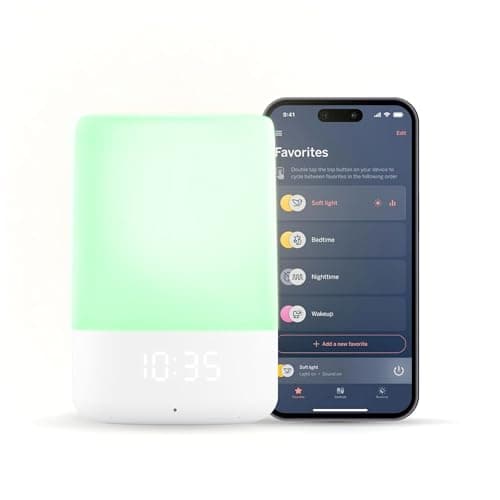 Nanit vs HatchThe other nursery comparison worth reading.Read it
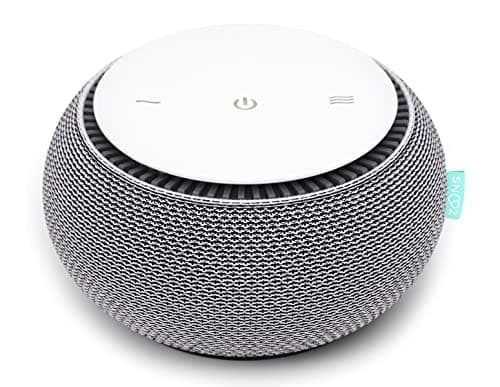 SNOOZ Original reviewWhat to buy instead if you only want the noise.Read it
- Hatch Restore sound libraryWhat is actually in the free tier and the subscription.Read it