
How this page is funded: we earn a commission if you buy through the links below, at no extra cost to you. As an Amazon Associate we earn from qualifying purchases. It does not change which products we pick or the order they appear in. Full disclosure.
How these picks were made: by comparing published specifications and clearly-credited public reporting. We do not run a laboratory, we have not measured these products, and we do not claim to have slept with them. Here is exactly how we choose.
You bought the mask everyone recommends. On your back it is superb. The moment you roll onto your side, the pillow drives one cup into your eye socket and the strap digs a line into the side of your head. Thirty minutes later you take it off and it never goes back on.
Why the popular pick fails you
Contoured and modular masks work by standing off your face. The cups arch over the eye socket so nothing presses on the eyelid, and the deeper they arch, the better the blackout - which is exactly why the highest-rated blackout masks are the deepest ones.
On your back that depth costs nothing. On your side, the depth is the problem. The side panel - the part of the mask between the cup and your temple - is now sandwiched between your face and the pillow, carrying the weight of your head. The deeper the mask, the harder it presses back.
This is not a hidden trade-off. Public reporting on the most popular modular mask repeatedly notes that it suits a still back sleeper and reads as bulky for side sleepers. It is the category’s open secret, and it is the reason this page exists.
The spec to look for: side-panel thickness
This is the number that decides it, and almost nobody puts it on a product page. As a rough guide from the masks we compared: the bulkiest contoured masks run side panels around 35 mm, which is where side sleepers start complaining. Masks deliberately designed for side sleeping use slim panels, and a flat silk mask has essentially none at all.
If a listing does not state it, look at the product photographs in profile rather than face-on. A face-on photo tells you nothing about depth; a side view tells you everything.
Three routes out of this
1. A contoured mask with slim side panels
The best of both, and our top pick here. You keep the no-eye-pressure benefit and the better nose-bridge seal of a molded cup, without the depth that makes it unbearable on a pillow. If you want blackout and side sleeping, this is the compromise that actually works.
2. A flat silk mask
Almost nothing to feel. A flat mask has no depth to press back, so the pillow cannot drive it into your face at all. The trade-offs are real: it touches your eyelids so you cannot open your eyes underneath, and it leaks more light at the nose. For overnight sleeping in a normally dark room, that is often fine - and it is the cheapest option by a wide margin.
3. An oversized silk mask with a wide band
The travel answer. Extra coverage seals the temples where narrow masks leak, and the wide band spreads pressure instead of cutting a line into the side of your head - which is the second most common side-sleeper complaint after the cups.
The strap is half the problem
Everybody focuses on the cups and forgets the strap. On your side, the strap is also between your head and the pillow, and a thin elastic band under that pressure becomes a groove you can feel in the morning.
- Wide bands beat thin elastic for exactly this reason - the same tension spread over more area.
- Avoid plastic buckles and sliders if you can. A hard component positioned where your head meets the pillow is the worst possible place for one.
- Hook-and-loop closures are adjustable but bulky. Fine at the back of the head, uncomfortable if it ends up at the side.
- Rotate the strap so the closure sits at the crown or the back, not on the side you sleep on. Free, and it fixes a lot of complaints.
The same problem, one category over
Side sleeping constrains everything you can wear or lie under. Weighted blankets concentrate their load on a shoulder and a hip instead of spreading across your back, and earplugs get pressed into the ear canal by your own head weight. If side sleeping is the constant across your gear problems, what your sleeping position means for what you buy pulls all three together.
Three masks you can actually lie on
Tap any row to jump to the full write-up. The photographs are licensed stock images chosen to illustrate the category - they are not photographs of these specific products, and each one’s alt text describes what is actually shown.
| # | Product | Best for | The spec that decides it | Price |
|---|---|---|---|---|
| 1 | 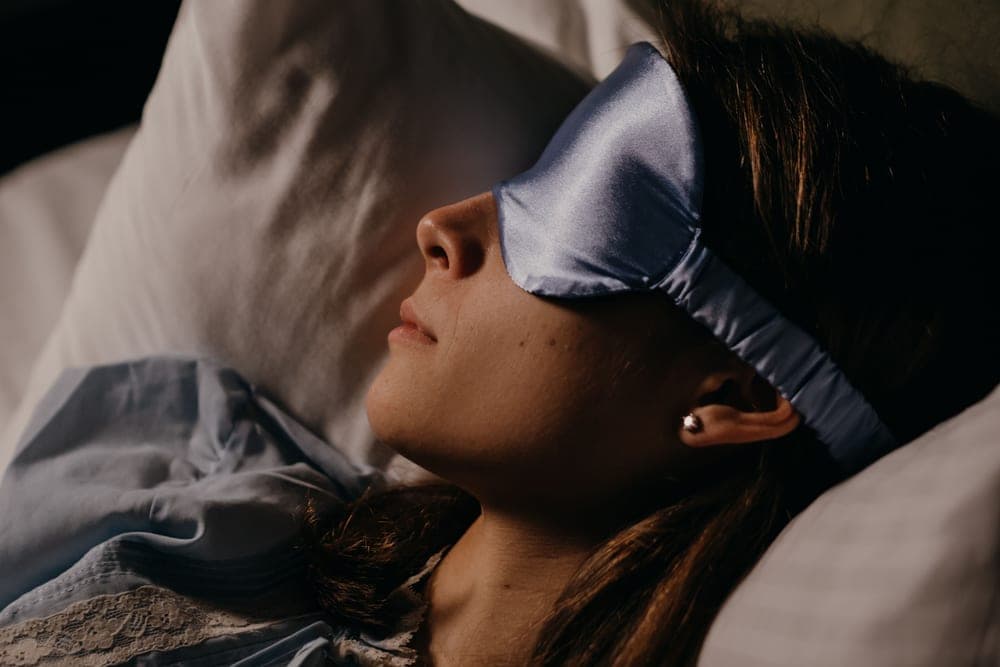 Nidra Deep Rest Sleep MaskMolded eye cups with slim side panels - it keeps the no-pressure benefit of a contoured mask without the depth that ruins side sleeping. | Side sleepers who still want contoured blackout | Molded cups with deliberately slim side panels | |
| 2 |  Alaska Bear Natural Silk Sleep MaskA flat silk mask that costs less than lunch and blocks a surprising amount of light - the honest default before you spend more. | The cheapest mask genuinely worth owning | Flat mulberry silk, no cups, no bulk | |
| 3 |  Drowsy Silk Sleep MaskAn oversized silk mask with a wide wrap-around band - the extra coverage seals the temples where narrow masks leak. | Travel, and anyone who finds standard masks too narrow | Oversized silk body with a wide wrap band |
We have no live price feed for this site yet, so every button reads “Check price on Amazon” rather than showing a number that could be out of date. As an Amazon Associate we earn from qualifying purchases.
Our top pick · Side sleepers who still want contoured blackout
1. Nidra Deep Rest Sleep Mask
Molded eye cups with slim side panels - it keeps the no-pressure benefit of a contoured mask without the depth that ruins side sleeping.
- Construction:
- Molded contoured cups
- Side panels:
- Slim, for pillow contact
- Eye pressure:
- None - the cups clear the lashes
- Strap:
- Adjustable
What it gets right
- The best blackout-to-bulk ratio in this roundup
- Cheap relative to the premium contoured masks
- Lash clearance is real, which matters if you wear eye makeup or lash extensions
Where it falls short
- Less adjustable than a modular mask - the fit is the fit
- Nose-bridge sealing depends on your face shape
- Fabric wears faster than the premium options
Skip it if: Your light leak is at a high nose bridge. Buy adjustable cups instead.
Pick 2 · The cheapest mask genuinely worth owning
2. Alaska Bear Natural Silk Sleep Mask
A flat silk mask that costs less than lunch and blocks a surprising amount of light - the honest default before you spend more.
- Material:
- Natural mulberry silk shell
- Profile:
- Flat - sits against the face
- Strap:
- Elasticated, adjustable
- Packability:
- Folds to nothing
What it gets right
- Almost nothing to feel against a pillow, so side sleepers get on with it
- Silk is kinder to skin and lashes than a foam contact surface
- Cheap enough to keep a spare in a bag
Where it falls short
- Flat masks touch the eyelid, so you cannot open your eyes underneath
- Light leaks around the nose on most faces
- Silk stains and is easily damaged in a hot wash
Skip it if: You need genuine blackout for daytime sleep. A flat mask will not get you there.
Pick 3 · Travel, and anyone who finds standard masks too narrow
3. Drowsy Silk Sleep Mask
An oversized silk mask with a wide wrap-around band - the extra coverage seals the temples where narrow masks leak.
- Material:
- Mulberry silk with a padded interior
- Coverage:
- Oversized - extends past the temples
- Strap:
- Wide band, adjustable
- Profile:
- Soft and low, though bulkier than a plain silk mask
What it gets right
- Temple coverage is the reason it outperforms cheaper silk masks
- The wide band spreads pressure instead of cutting a line into your head
- Comfortable enough for a long-haul flight
Where it falls short
- Premium price for a mask without molded cups
- Bulkier than a plain silk mask in a bag
- Contacts the eyelid, so no blinking underneath
Skip it if: You want zero eyelid contact. Buy a contoured mask with cups instead.
Questions people actually ask
Does the Manta sleep mask work for side sleepers?
It is the strongest blackout mask we compared and the deepest, which is the trade-off. Public reporting consistently notes it suits a still back sleeper and reads as bulky on the side, because the cups get pressed into the face by the pillow. A slimmer contoured mask keeps most of the blackout without that.
What sleep mask is best for side sleepers?
A contoured mask with deliberately slim side panels, which keeps the no-eye-pressure benefit without the depth. A flat silk mask is the cheaper alternative if you can accept eyelid contact and slightly more light leak.
How thick should a sleep mask be for side sleeping?
As slim as you can get while keeping the cups. The bulkiest contoured masks run side panels around 35 mm, which is where side-sleeper complaints start. Judge it from a profile photograph rather than a face-on one - face-on tells you nothing about depth.
Why does my sleep mask hurt my head on the side?
Usually the strap rather than the mask. A thin elastic band sandwiched between your head and the pillow becomes a groove. Use a wide band, avoid hard buckles and sliders, and rotate the closure round to the crown or the back of your head - that last one is free.
Can side sleepers get true blackout from a mask?
Close to it, with a slim contoured mask fitted properly, and it is easier if you also darken the room. Absolute blackout comes from the deepest masks, and those are the ones side sleepers cannot tolerate - so for daytime sleeping, combine a slim mask with blackout curtains.
Sources
Back to the best sleep masks.
Read next
- Sleeping positions and the gear that suits themSide sleeping constrains blankets and earplugs too.Read it
- Manta vs Alaska BearPremium modular against the cheap flat silk mask.Read it
- Best weighted sleep masksThe other side-sleeper-adjacent fit problem.Read it
- Best sleep masks, overallThe full shortlist and the three mask shapes.Read it