
How this page is funded: we earn a commission if you buy through the links below, at no extra cost to you. As an Amazon Associate we earn from qualifying purchases. It does not change which products we pick or the order they appear in. Full disclosure.
How these picks were made: by comparing published specifications and clearly-credited public reporting. We do not run a laboratory, we have not measured these products, and we do not claim to have slept with them. Here is exactly how we choose.
Short answer: sleeping with headphones on is not inherently bad, and tens of millions of people do it nightly. Four things make it bad, and all four are choices: the volume you set, how much of the device goes into your ear, whether there is a cable, and whether it is clean. Fix those and overnight audio is unremarkable. Ignore the first one and you are running an eight-hour listening session every night of your life.
We are a gear site, so this is the equipment-side answer rather than a medical one: what the recognized guidance says about level and duration, which failure modes are real, and which product designs eliminate them. If you have already decided you want overnight audio and just want the hardware ranked, best sleep headphones and best sleep earbuds are the roundups.
The one that matters most: volume times duration
Hearing risk is not about loudness alone - it is loudness multiplied by time. That is the entire basis of the WHO’s Make Listening Safe work, and NIDCD’s explanation of noise-induced hearing loss describes the same mechanism: sustained exposure damages the hair cells in the inner ear, and the damage does not come back.
Eight hours is a very long exposure. Most people set sleep audio at the volume they would use walking down a street, because that is the volume that masks the noise they are annoyed by, and then it plays for the whole night at that level.
The fixes are easy and all of them work:
- Set the volume while the room is quiet, not while the neighbor’s TV is on. You will choose a far lower level.
- Use a sleep timer. If audio is a falling-asleep aid rather than an all-night mask, 30 to 60 minutes removes seven hours of exposure.
- Improve the seal instead of the volume. A well-sealing bud needs less level to cover the same intrusion. This is the single most useful trick in the category.
- Use your device’s volume limit. Both major phone platforms have one, and a cap you set once is better than a decision you make at midnight.
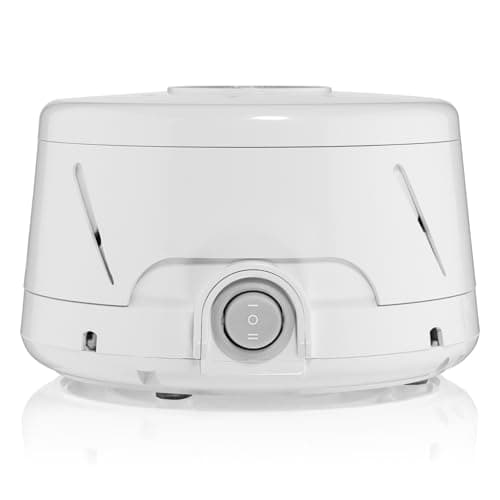
The same arithmetic applies to a machine on the nightstand, and we work through actual levels on how loud a white noise machine should be.
Risk two: what is in your ear canal all night
An earbud is a warm, sealed object in a moist canal for eight hours, which is the same hygiene situation as an earplug and is the argument for wiping tips down regularly and letting them dry out of the case. It is also a pressure situation: a rigid shell with your ear pressed into a pillow is how people end up with a sore canal by morning.
The design answer is to leave the canal alone entirely. A flat-speaker headband - the Perytong is the cheap, well-known version - puts ultra-thin drivers outside the ear, which is why it is the pick for anyone who cannot tolerate buds. The cost is real and worth stating: a headband blocks essentially nothing, so it masks rather than reduces. If blocking is what you need, read machines against earplugs first.
If you do want buds, the ones designed for sleep are a genuinely different shape from ordinary true-wireless buds - low-profile shells meant to be lain on, with battery life that covers a night. Our do sleep headphones actually work page is the skeptic’s version of that claim.
Risk three: the cable, which is the only acute hazard
Everything else on this page is cumulative and mild. A cable is not. A wired set of headphones worn while unconscious can wrap around a neck or a wrist, and this is the one failure mode we would call a genuine hazard rather than a drawback - particularly for children.
The answer is simply: do not sleep in wired headphones. Every pick on this page is wireless, and that is not a coincidence. If you want audio for a child overnight, put the sound in the room rather than on the child - a machine with a night light is the right product category.
Over-ear, on-ear, in-ear or headband
| Type | Overnight verdict | Main failure |
|---|---|---|
| Flat-speaker headband | The most comfortable option by a wide margin | Blocks almost nothing; band can ride up |
| Purpose-built sleep earbuds | Workable, and the only ones that both seal and play | Canal hygiene, pressure on a side sleeper |
| Ordinary true-wireless earbuds | Poor - too tall, and the battery rarely lasts a night | Falls out, or dies at 3am |
| Over-ear headphones | Fine on your back, impossible on your side | The cup levers against the pillow |
Does overnight audio help at all?
Masking has a real rationale: raising the noise floor means an intrusive sound no longer stands out against silence, and research on acoustic stimulation during sleep - such as Papalambros and colleagues in 2017 - shows sound during sleep is not inert. But that study is about carefully timed acoustic stimulation in a lab, not about leaving a podcast running, and we are not going to stretch it into a claim it does not make.
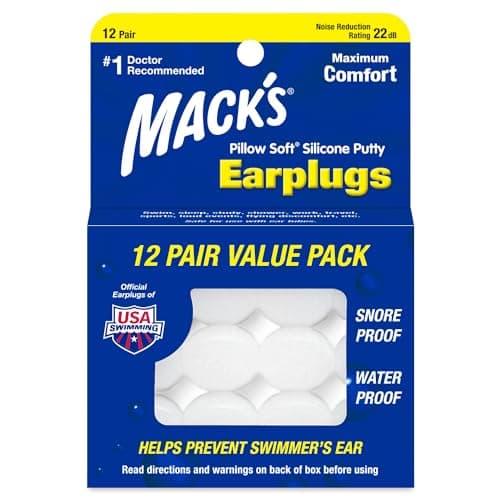
The honest position: if audio helps you fall asleep, use it, keep it quiet, and time it out if you can. If you are using it to cover a specific noise, consider whether a machine on the nightstand does the job without anything on your head - that comparison is on machines against phone apps, and the whole category sits on the sound machine hub. And if what you actually want is silence, earplugs block more, cost less and never need charging - with the caveats on whether nightly earplug use is a problem.
Three designs actually built to be slept in
Tap any row to jump to the full write-up. Each thumbnail is the product photograph from that item’s own Amazon listing, and the price in the last column is the one Amazon showed at the last check.
| # | Product | Best for | The spec that decides it | Price |
|---|---|---|---|---|
| 1 | 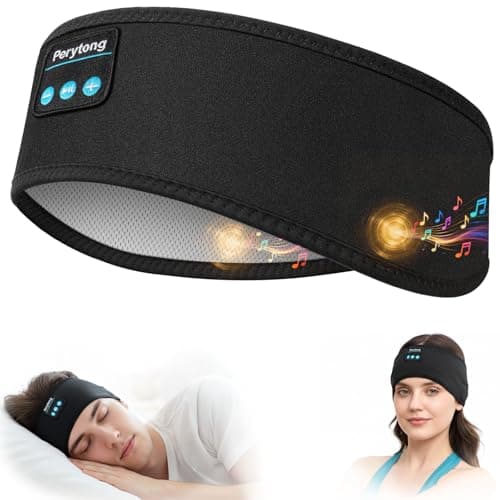 Perytong Sleep Headphones HeadbandFlat speakers in a stretch headband. Nothing enters the ear canal, which is the entire reason to buy it. | Side sleepers who cannot tolerate anything in the ear | Ultra-thin flat speakers inside a stretch fabric band | |
| 2 | 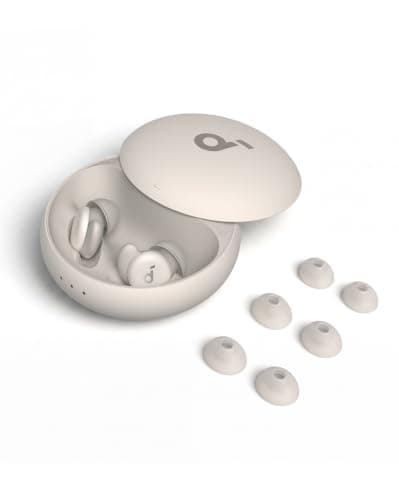 Soundcore Sleep A20Low-profile buds designed to be lain on, with the battery life to actually cover a full night plus a nap. | The value pick in sleep earbuds | 30 dB high-frequency passive noise reduction, 14 h per charge | |
| 3 | 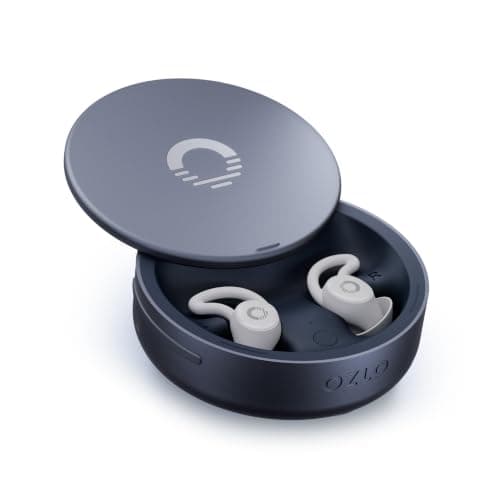 Ozlo Sleepbuds 2Built by ex-Bose engineers around passive sealing and tuned masking soundscapes rather than raw volume - and the only pick here whose case measures the room you are trying to sleep in. | Light sleepers who want a sealed-room feeling | 1.6 g per bud, flush to the ear, with a 14-hour battery |
Prices come straight from Amazon and are refreshed daily; the date they were checked is stamped under the buy buttons below. If a price has gone stale or a listing has no offer, the button falls back to “Check price on Amazon” rather than showing a number we cannot stand behind. As an Amazon Associate we earn from qualifying purchases.
One headband with nothing in the canal, one low-profile earbud, one sealed masking bud. Chosen for overnight wear rather than sound quality; specifications are the manufacturers' own.
#ad How we are funded · price as of November 12, 2026
Our top pick · Side sleepers who cannot tolerate anything in the ear
1. Perytong Sleep Headphones Headband
Flat speakers in a stretch headband. Nothing enters the ear canal, which is the entire reason to buy it.
- Type:
- Bluetooth headband with removable flat speakers
- In-ear:
- No - speakers sit outside the canal
- Blocking:
- Essentially none; this masks rather than blocks
- Care:
- Band washes after removing the speaker modules
What it gets right
- Genuinely comfortable against a pillow - flatter than any earbud
- Cheapest route into sleep audio by a wide margin
- Doubles as a light eye cover if you pull it down
Where it falls short
- Blocks almost no external noise on its own
- Sound quality is adequate, not good
- The band rides up over a long night for some people
Skip it if: You need noise blocked, not covered. This adds sound, it does not remove any.
#ad How we are funded · price as of November 12, 2026
Pick 2 · The value pick in sleep earbuds
2. Soundcore Sleep A20
Low-profile buds designed to be lain on, with the battery life to actually cover a full night plus a nap.
- Noise reduction:
- 30 dB high-frequency, passive (manufacturer figure)
- Battery:
- 14 h per charge, 80 h total with the case
- Profile:
- Low-profile shell with ear wings, built for side sleeping
- Bluetooth:
- 5.3 - streams any audio source
What it gets right
- Passive isolation plus masking audio is a stronger combination than either alone
- Battery outlasts the night, which most true-wireless buds do not
- Streams anything, so you are not locked into one app's sound library
Where it falls short
- No active noise cancellation - that is the A30
- Passive isolation is weakest exactly where snoring lives, in the low frequencies
- Anything in your ear canal all night is a hygiene commitment
Skip it if: You just want silence. Earplugs block more, cost a fraction, and never need charging.
#ad How we are funded · price as of November 12, 2026
Pick 3 · Light sleepers who want a sealed-room feeling
3. Ozlo Sleepbuds 2
Built by ex-Bose engineers around passive sealing and tuned masking soundscapes rather than raw volume - and the only pick here whose case measures the room you are trying to sleep in.
- Approach:
- Passive seal plus a steady masking sound shield, tuned for snoring
- Battery:
- 14 hours, with a private in-ear alarm at a volume you set
- Profile:
- 1.6 g, sits flush to the ear; four soft ear-tip sizes
- Sounds:
- 50+ sleep sounds, or anything you stream over Bluetooth
- Extras:
- Smart Case logs bedroom noise, light and temperature; app on iOS and Android
What it gets right
- The seal is the strongest passive isolation among the buds we shortlisted
- Masking soundscapes are tuned for the job rather than repurposed music presets
- 1.6 g and flush to the ear, which is why it survives a night of rolling over
Where it falls short
- Premium price for what is, functionally, a masking device
- The Smart Case insights are the reason for a chunk of that price, and you may not want them
- Small ecosystem compared with the Anker line
Skip it if: You want to fall asleep to your own podcasts and audiobooks all night. The battery is sized for a night of masking, not a night of streaming.
Questions people actually ask
Is it bad to sleep with headphones on?
Not inherently. Four things make it bad and all four are choices: the volume, how much of the device sits in your ear canal, whether there is a cable, and whether it is clean. Volume times duration is the one that matters most, because a full night is a very long listening session.
Can sleeping with headphones damage your hearing?
It can if the volume is high, because hearing risk is loudness multiplied by time and eight hours is a long exposure. The WHO's safe listening guidance is built on exactly that relationship. Set the level in a quiet room, use a sleep timer where you can, and improve the seal rather than the volume.
Are sleep headphones safer than earbuds for overnight use?
A flat-speaker headband keeps everything outside the ear canal, which removes both the hygiene and the pressure problem, so for overnight comfort it is the easiest option. The trade is that it blocks essentially no external noise, so you are masking rather than reducing.
Is it dangerous to sleep with wired headphones?
This is the one acute hazard on the list rather than a cumulative drawback. A cable worn while you are unconscious can wrap around a neck or a wrist, and that risk is particularly serious for children. Use wireless, or put the sound in the room instead of on the person.
Can sleeping with earbuds cause ear infections?
A warm, sealed object in a moist canal for eight hours is the same hygiene situation as a reused earplug, so it is a plausible contributor. Wipe tips down regularly, let them dry outside the case, and replace foam or silicone tips when they stop recovering their shape.
Should my child sleep with headphones on?
We would not. The cable risk is most serious for children, and volume control is harder to supervise overnight. Put the audio in the room instead - a sound machine, ideally one with a night light, does the same job with nothing worn and nothing in anyone's ear.
Sources
- World Health Organization - Making Listening Safe (safe listening levels and duration).
- NIDCD (National Institute on Deafness and Other Communication Disorders, NIH) - Noise-Induced Hearing Loss.
- CNN Underscored - The best headphones for sleeping, tried and tested.
- SoundGuys - Best earbuds and headphones for sleeping.
- Anker soundcore - Sleep A20 sleeping earbuds (manufacturer specifications).
- Papalambros NA et al. Acoustic Enhancement of Sleep Slow Oscillations and Concomitant Memory Improvement in Older Adults. Frontiers in Human Neuroscience, 2017.
Back to the best white noise machines.
Read next
- Best sleep headphonesThe headband and over-ear options, ranked.Read it
- Best sleep earbudsIn-ear designs built to be slept on.Read it
- Do sleep headphones work?The skeptical read on what overnight audio delivers.Read it
 How loud should a white noise machine be?The same volume arithmetic, applied to the nightstand.Read it
 Is it bad to sleep with earplugs?If silence rather than sound is what you want.Read it