
How this page is funded: we earn a commission if you buy through the links below, at no extra cost to you. As an Amazon Associate we earn from qualifying purchases. It does not change which products we pick or the order they appear in. Full disclosure.
How these picks were made: by comparing published specifications and clearly-credited public reporting. We do not run a laboratory, we have not measured these products, and we do not claim to have slept with them. Here is exactly how we choose.
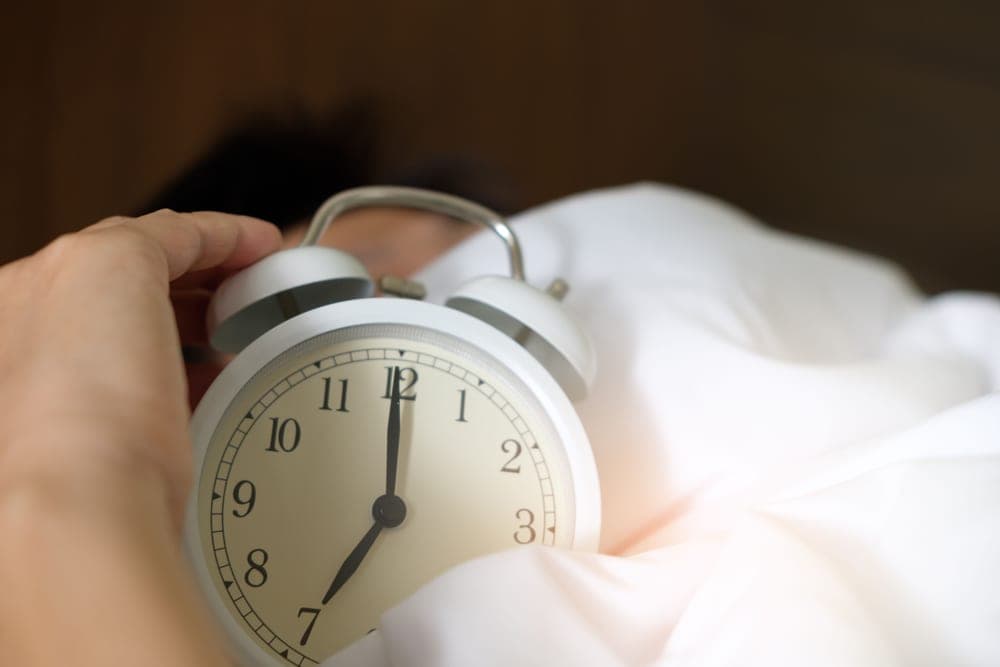
You set the alarm for six and got up at seven, in nine-minute installments, none of which was actual sleep. The self-recrimination that follows is misplaced - this is a predictable response to a specific situation, and it has specific fixes.
Why snooze is so hard to resist
Two things are happening. The first is that an alarm going off is an abrupt interruption, and depending on where in your sleep cycle it catches you, the few seconds afterwards can be genuinely disorientating - and a disorientated person reliably takes the option that requires no decision.
The second is that the nine-minute sleep you get afterwards is not restorative. You are not catching up on anything. You are starting and interrupting a sleep cycle repeatedly, which is why an hour of snoozing leaves you feeling worse than getting up at the first alarm.
The eight things that work
- Set the alarm for when you actually get up. If you set it for six and always rise at seven, set it for seven. You lose nothing - you were not sleeping properly in that hour anyway - and you remove the whole ritual at a stroke.
- Move the alarm out of arm’s reach. Old advice, still the most effective single change. Standing up is most of the battle, and you cannot hit a button you have to walk to.
- Turn the snooze function off entirely. Most phones and clocks let you. If the button is not there, the decision is not there.
- Wake to light instead of sound. The core of it. A gradual light wake-up means you are already partly surfaced when the alarm time arrives, rather than being jolted out of a deep stage - which is what these devices are for.
- Get real light on your face within a few minutes. Curtains open, outside if possible. The 2022 PLOS Biology recommendations suggest at least 250 melanopic lux at the eye during the day, and the morning end of that is what tells your body clock the day has started.
- Put something at the other end of getting up. Coffee, a shower, the dog. Not discipline - a reason.
- Go to bed earlier, honestly. Chronic snoozing is very often a bedtime problem wearing a morning costume. If you need seven hours and are giving yourself six, the alarm is not the thing to fix.
- Keep the wake time constant, including weekends. A consistent rise time does more for how easy mornings feel than anything else on this list, and it is free.
The one purchase worth making
Everything above except number four is free, and you should try the free ones first. The piece of gear that genuinely changes the equation is a sunrise alarm, because it attacks the cause rather than the symptom: if you are already surfacing when the alarm time arrives, the disorientation that makes snooze irresistible never happens.
Two practical notes. Buy for brightness - a dim unit will not wake you and you will snooze the backup sound instead. And position it at pillow height on the side you face, not on a low table behind your head.
If none of it works
If you are getting a full night, doing all of the above, and still cannot get out of bed, stop treating it as a morning problem. Persistent difficulty waking and daytime sleepiness despite adequate time in bed is worth raising with a doctor - it is not something a lamp or a louder alarm addresses, and it is not a character flaw either.
If the issue is that you cannot get to sleep at a sensible hour in the first place, the guide to being exhausted but unable to drop off is the page that matches your actual problem.
The one purchase that removes the button from the equation
Tap any row to jump to the full write-up. The photographs are licensed stock images chosen to illustrate the category - they are not photographs of these specific products, and each one’s alt text describes what is actually shown.
| # | Product | Best for | The spec that decides it | Price |
|---|---|---|---|---|
| 1 |  Philips SmartSleep Wake-Up Light HF3520The reference sunrise. No account, no app, no monthly fee - a dial, twenty brightness steps, and a light that ramps properly. | Sunrise quality with no app and no subscription | 20 light-intensity settings, no app or subscription | |
| 2 |  Hatch Restore 3The most complete bedside device of the group - sunrise, wind-down, sound library and alarms in one - and the only one with a subscription attached. | One device for the whole bedtime routine | Roughly 30-minute sunrise, deep orange through to bright white |
We have no live price feed for this site yet, so every button reads “Check price on Amazon” rather than showing a number that could be out of date. As an Amazon Associate we earn from qualifying purchases.
Our top pick · Sunrise quality with no app and no subscription
1. Philips SmartSleep Wake-Up Light HF3520
The reference sunrise. No account, no app, no monthly fee - a dial, twenty brightness steps, and a light that ramps properly.
- Light settings:
- 20 intensity levels
- Sunrise:
- Colored sunrise simulation before the alarm
- Sound:
- Natural wake-up sounds plus FM radio
- Account:
- None required
What it gets right
- Nothing to sign up for and nothing to update - it is an appliance
- Twenty brightness steps means you can actually find a comfortable display level
- Long-standing design with a well-understood service life
Where it falls short
- No app, so scheduling is manual
- The sound library is small and dated
- Larger footprint than the smart units
Skip it if: You want a sound machine and a sunrise in one device. This is a light first and foremost.
Pick 2 · One device for the whole bedtime routine
2. Hatch Restore 3
The most complete bedside device of the group - sunrise, wind-down, sound library and alarms in one - and the only one with a subscription attached.
- Sunrise:
- Gradual ramp beginning around 30 minutes before the alarm
- Color path:
- Deep orange warming to bright white
- Sound:
- Built-in sound library plus alarm tones
- App:
- Required for setup; premium library is subscription-gated
What it gets right
- Sunrise, wind-down and sound machine in a single footprint
- The app makes complex schedules genuinely easy to set
- The display dims properly, unlike most clock radios
Where it falls short
- The best sound content sits behind a subscription
- App dependency: no phone, no changes
- Most expensive way to buy a sunrise
Skip it if: You resent subscriptions. The Philips does the light half with no account at all.
Questions people actually ask
Why do I hit snooze so much?
Because being woken abruptly by a sound can leave you briefly disorientated, and a disorientated person takes the option that needs no decision. It is a predictable response to how you were woken rather than a willpower failure.
Is hitting snooze bad for you?
The sleep you get in between is not restorative - you are repeatedly starting and interrupting a cycle, which is why an hour of snoozing leaves you feeling worse than getting up at the first alarm.
How do I stop hitting snooze in my sleep?
Move the alarm out of arm's reach so you have to stand up, and turn the snooze function off entirely if your device allows. If you dismiss alarms without remembering it, a light-based wake-up helps because there is no button involved in the light phase at all.
Do sunrise alarm clocks stop you snoozing?
They attack the cause rather than the symptom. If rising light has you partly surfaced by the time the alarm time arrives, the disorientation that makes snooze irresistible does not happen. A dim unit will not achieve this, so buy for brightness.
Should I just set my alarm later?
If you reliably get up an hour after your first alarm, yes - set it for when you actually rise. You were not getting real sleep in that hour, and you remove the whole ritual at a stroke.
Sources
Back to the best sunrise alarm clocks.
Read next
- Sunrise alarm clocks for heavy sleepersIf you snooze because you barely woke at all.Read it
- Best sunrise alarm clocksThe purchase that attacks the cause.Read it
- Can't fall asleep but exhaustedWhen the morning problem starts the night before.Read it
- Are sunrise alarm clocks worth it?The honest verdict before you spend.Read it