
How this page is funded: we earn a commission if you buy through the links below, at no extra cost to you. As an Amazon Associate we earn from qualifying purchases. It does not change which products we pick or the order they appear in. Full disclosure.
How these picks were made: by comparing published specifications and clearly-credited public reporting. We do not run a laboratory, we have not measured these products, and we do not claim to have slept with them. Here is exactly how we choose.
Short version: the Casper Glow Light is the only pick here that genuinely travels, because it runs off a wireless charging base rather than needing to be plugged in while it works - so it can sit on a hotel nightstand with no outlet behind it. If you want a sunrise and a sound machine in one cheap box, the HoMedics SoundSpa Sunrise is the practical choice. The JALL is the cheap one to risk in a bag, and the Dekala Arches is the pick if your trips are long enough that you want a real lamp.
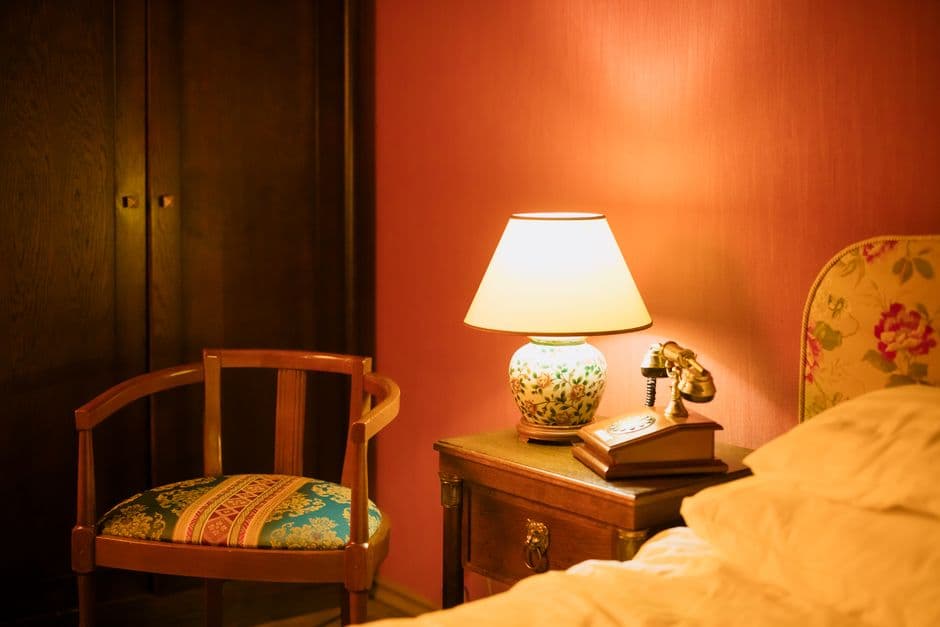
Before the picks, the honest part. Travel is the hardest environment for this category, and most of the reason has nothing to do with the clock. The whole point of a sunrise alarm is a light that ramps while you are still asleep, and hotel rooms are built to be dark and furnished for someone else’s habits. Add a different time zone and you are asking a lamp to do a job that daylight normally does. The category overview is on the sunrise alarm hub; this page is the travel cut of it.
What makes a sunrise clock travel-capable
- Power independence. The real discriminator. Most sunrise clocks are mains devices that must stay plugged in to run - fine at home, awkward in a room where the only free outlet is across from the bed.
- Weight and shape. A dome-shaped lamp is an inefficient thing to pack. Flat or small wins.
- Setup without a manual. You are configuring this in an unfamiliar room at 11pm. A clock that needs a Wi-Fi network you do not control is a bad travel clock.
- Dual use. A device that is also a sound machine or a reading lamp justifies the bag space twice, which matters more on the road than at home.
- Nothing to break. Glass diffusers and delicate touch surfaces do not enjoy luggage.
The four, by how they handle power
| Device | Power | Travel verdict |
|---|---|---|
| Casper Glow Light | Wireless charging base; runs off the base | The only properly cordless option here |
| HoMedics SoundSpa Sunrise | Mains | Small, cheap, and doubles as a sound machine |
| JALL Wake Up Light | Mains (USB adapter) | Cheap enough to risk in a bag |
| Dekala Arches | Mains, Wi-Fi app | For long stays, not weekends |
The Casper is the pick for one specific published detail: Casper’s own specifications describe gesture control and a wireless charging base, which means the unit itself is not tethered while in use. It is also the weakest sunrise on this page in absolute terms - it is a wind-down light that does mornings, rather than the other way around. That is a fair trade for a device that works on a nightstand with no socket.
The HoMedics is the pragmatist’s pick, and the reason is dual use: its published specification is four sleep sounds, four wake sounds, a sunrise ramp, a seven-color night light and a Bluetooth speaker. One small box that masks a corridor and wakes you with light is better value in a suitcase than two devices. If sound is the main reason you pack anything, read travel sound machines instead - that is the category built for it.
How we chose
We shortlisted sunrise devices currently sold in the US whose manufacturers publish a sunrise specification, then sorted on power independence, size, setup friction and dual use, with sunrise quality as the tiebreak. We have not traveled with any of them, we measure no light output, and we publish no scores or star ratings - the method is on how we choose what to recommend.
Why a hotel room fights you
Three things are different, and knowing them changes how you set the clock up.
The room is darker than your bedroom. Blackout curtains in hotels are genuinely good, which removes the dawn that normally does half the work. Your lamp is the only light in the room, so place it high and facing the pillow rather than low on a nightstand.
The outlets are wrong. Hotel nightstand sockets are often behind the bed, already occupied, or absent. This is why cordless matters more on the road than any feature.
Your body clock is not where the clock is. If you have crossed time zones, you are trying to wake at a time your body considers the middle of the night, and a 30-minute lamp ramp is a small lever against that. Getting outside into real daylight as soon as you are up is the stronger move, for the reasons set out in the PLOS Biology light-exposure recommendations.
When not to pack one at all
We would rather tell you to leave it at home than sell you a lamp for a weekend. For one or two nights, the honest answer is usually your phone plus the curtains left slightly open, because a crack of real daylight outperforms any lamp in this roundup.
A sunrise clock earns its bag space on longer trips, on work travel with a fixed early start, and for anyone who crosses time zones often enough that mornings are a recurring problem. If you are packing for light control rather than light delivery, you want the opposite product - a travel sleep mask - and if the real problem is corridor noise and a thin wall, that is a travel sound machine. The app-controlled clocks page is worth reading too if you want to set alarms from a phone in a hotel; several of them need a home network to work properly, which is exactly the trap.
And if the mornings are fine but the nights are not, why you cannot sleep in hotel rooms works through the four failures in a hotel room and the flat-packing kit that covers three of them.
Four that travel, in order of how well they do it
Tap any row to jump to the full write-up. Each thumbnail is the product photograph from that item’s own Amazon listing, and the price in the last column is the one Amazon showed at the last check.
| # | Product | Best for | The spec that decides it | Price |
|---|---|---|---|---|
| 1 | 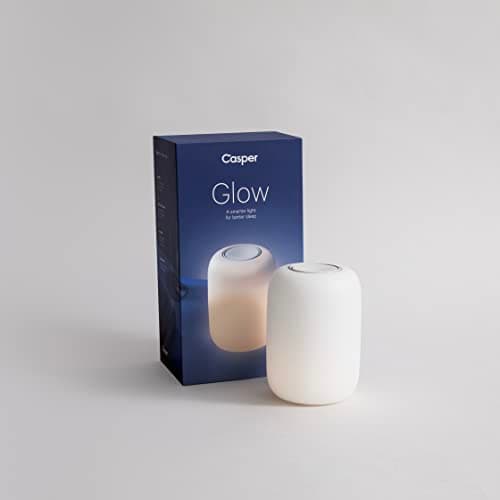 Casper Glow LightThe gesture light: twist the body to set the brightness, lift it off its base and carry it anywhere, and schedule the lighting in the app. | Winding down, more than waking up | Gyroscope brightness control, wireless charging base, iOS app scheduling | |
| 2 | 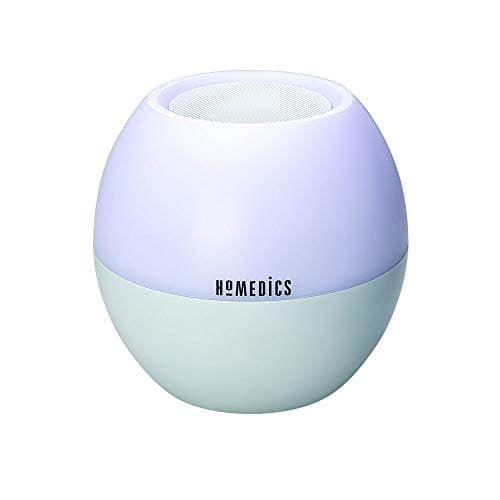 HoMedics SoundSpa SunriseThe budget crossover: four sleep sounds, four separate wake sounds, a sunrise ramp and a Bluetooth speaker in a single unit. | A sound machine and a sunrise alarm in one cheap box | 4 sleep sounds + 4 wake sounds + sunrise ramp + Bluetooth speaker | |
| 3 | 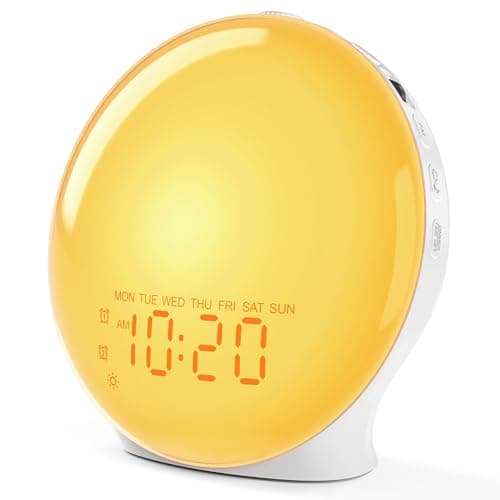 JALL Wake Up LightThe cheap way to test the idea. The light is dimmer than the premium units, but the mechanism is the same. | Finding out whether sunrise waking works for you | Full-screen display with colored sunrise, at entry-level pricing | |
| 4 | 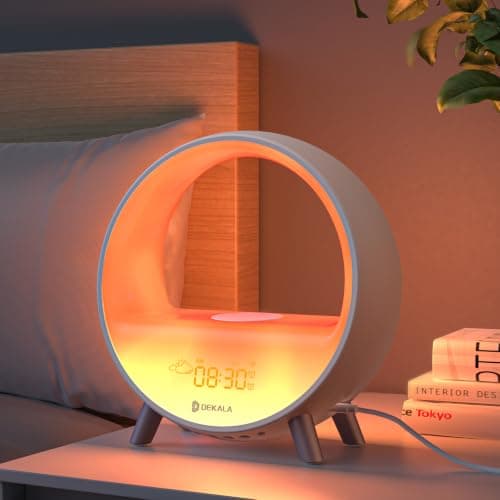 Dekala ArchesA lamp first and an alarm second: the whole wake routine - noise, volume, light color, brightness - is built in the app, and the arch itself is the only thing on show. | A real bedside object that happens to do sunrises | App, voice or button control over 2.4 GHz Wi-Fi, with a wireless charging base |
Prices come straight from Amazon and are refreshed daily; the date they were checked is stamped under the buy buttons below. If a price has gone stale or a listing has no offer, the button falls back to “Check price on Amazon” rather than showing a number we cannot stand behind. As an Amazon Associate we earn from qualifying purchases.
Ranked on portability first - weight, power source and whether the thing survives a bag - then on sunrise quality. Specifications are the manufacturers' own; we have tested none of these.
#ad How we are funded · price as of November 12, 2026
Our top pick · Winding down, more than waking up
1. Casper Glow Light
The gesture light: twist the body to set the brightness, lift it off its base and carry it anywhere, and schedule the lighting in the app.
- Controls:
- Built-in gyroscope - twist the light itself to set brightness
- App:
- Designed for Apple iOS; schedule, customize and fine-tune the lighting
- Power:
- Charges wirelessly on its base, then runs unplugged
- Size:
- 5.5 x 5.5 x 3.7 in
- Sound:
- None
What it gets right
- Genuinely portable - lift it off the base and carry it through the house
- A twist of the whole object is the one bedtime control people actually use
- Made for the wind-down half of the day, which most sunrise devices treat as an afterthought
Where it falls short
- App support is iOS-first; Android is limited
- No sound and no radio, so it cannot be your only alarm
- Expensive for a light with no speaker
Skip it if: You are on Android and want full app control, or you need an audible alarm as a backstop.
#ad How we are funded · price as of November 12, 2026
Pick 2 · A sound machine and a sunrise alarm in one cheap box
2. HoMedics SoundSpa Sunrise
The budget crossover: four sleep sounds, four separate wake sounds, a sunrise ramp and a Bluetooth speaker in a single unit.
- Sounds:
- 4 for sleep, plus 4 separate wake-up sounds
- Light:
- Sunrise simulation, plus a 7-color night light
- Bluetooth:
- Yes - streams from a phone
- Timer:
- 30, 60 or 90 minute auto shut-off
- Power:
- 120V adapter included
What it gets right
- Does two jobs for the price of a cheap version of either
- Separate wake sounds, so the alarm is not just the sleep sound turned up
- Bluetooth makes it the only speaker the nightstand needs
Where it falls short
- Only four sleep sounds, and they loop
- The sunrise is dimmer and shorter than a dedicated wake-up light
- No app, and no scheduling beyond the alarm
Skip it if: The sunrise is the main event for you. A dedicated wake-up light puts far more light in the room.
#ad How we are funded · price as of November 12, 2026
Pick 3 · Finding out whether sunrise waking works for you
3. JALL Wake Up Light
The cheap way to test the idea. The light is dimmer than the premium units, but the mechanism is the same.
- Sunrise:
- Configurable ramp before the alarm
- Colors:
- Multiple selectable light colors
- Sound:
- Built-in nature sounds plus FM radio
- Extras:
- Dual alarms, snooze, USB charging port
What it gets right
- A fraction of the price of the Philips or the Hatch
- Includes dual alarms and a USB port the premium units often omit
- Low risk if you are not sure the approach suits you
Where it falls short
- Peak brightness is well below the premium units, and that is the spec that matters most
- Build quality is what the price suggests
- Display dimming is coarser than the Philips
Skip it if: You are a genuinely heavy sleeper. Buy brightness - it is the one spec you cannot compromise on.
#ad How we are funded · price as of November 12, 2026
Pick 4 · A real bedside object that happens to do sunrises
4. Dekala Arches
A lamp first and an alarm second: the whole wake routine - noise, volume, light color, brightness - is built in the app, and the arch itself is the only thing on show.
- Control:
- Dekala app, voice control, or buttons with spoken prompts
- Sounds:
- White noise, brown noise, fan, waves, frog, lullaby and light music
- Light:
- 9 dynamic lighting effects, 16 million colors
- Also does:
- Bluetooth speaker, wireless phone charger, weather display
- Size:
- 6.5 x 6.5 x 1.5 in, 1.76 lb; 365-day warranty
What it gets right
- Looks like an object rather than a gadget - the only pick here you would leave out in a guest room
- Brown noise is named on the listing, which is rare on a sunrise device
- The buttons speak their own prompts, so it still works when the Wi-Fi does not
Where it falls short
- Among the more expensive sunrise devices sold
- Mains-powered with a charging base - this is bedside furniture, not luggage
- Sixteen million colors is sixteen million chances to pick a blue at bedtime
Skip it if: You want to set it without a phone in your hand. The app is where the routine actually gets built.
Questions people actually ask
What is the best sunrise alarm clock for travel?
The Casper Glow Light, because it is the only pick here that is not tethered while in use - Casper's specifications describe a wireless charging base and gesture control, so it works on a hotel nightstand with no socket behind it. Its sunrise is the weakest of the four in absolute terms, which is the trade for being cordless.
Are there battery-powered sunrise alarm clocks?
Very few, and that is the category's main gap. Almost all sunrise clocks are mains devices that must stay plugged in to run the ramp, because a bright light for 30 minutes is a real power draw. Devices that charge on a base and then run off it are the closest thing to cordless on the market.
Is a sunrise alarm clock worth packing for a short trip?
Usually not. For one or two nights, your phone plus the curtains left slightly open does the job, and a crack of real daylight beats any lamp in this roundup. A sunrise clock earns its bag space on longer trips, fixed early starts, and frequent time-zone changes.
Why do sunrise alarms work less well in hotels?
Three reasons. Hotel blackout curtains are genuinely effective, so the dawn that normally does half the work is absent. Nightstand outlets are often behind the bed or already occupied. And if you have crossed time zones, you are asking a lamp to end a night your body thinks is only half over.
Can one device be a travel sound machine and a sunrise alarm?
Yes, and it is good value in a suitcase. The HoMedics SoundSpa Sunrise publishes four sleep sounds, four wake sounds, a sunrise ramp and Bluetooth in one small mains-powered box. If sound is the main reason you are packing anything, a dedicated portable sound machine will mask better.
Where should I put a sunrise alarm clock in a hotel room?
High and facing the pillow, rather than low on a nightstand, because your lamp is the only light source in a properly blacked-out room. Then get into real daylight as soon as you are up - outdoor light does far more for a shifted body clock than any bedside device.
Sources
- Casper - Glow Light product specifications (manufacturer).
- HoMedics - SoundSpa Sunrise sound machine (manufacturer specifications).
- Dekala - Arches sunrise alarm clock, app control and sound list (Amazon listing, specifications as published by the seller).
- Brown TM et al. Recommendations for daytime, evening and nighttime indoor light exposure to best support physiology, sleep and wakefulness in healthy adults. PLOS Biology, 2022.
- Sleep Foundation - Best Sunrise Alarm Clocks.
- Tom's Guide - The best sunrise alarm clocks, tested and ranked.
Back to the best sunrise alarm clocks.
Read next
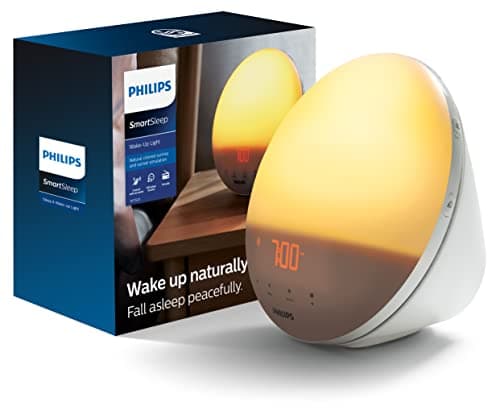 Best sunrise alarm clocksThe main roundup, for a bedside you control.Read it
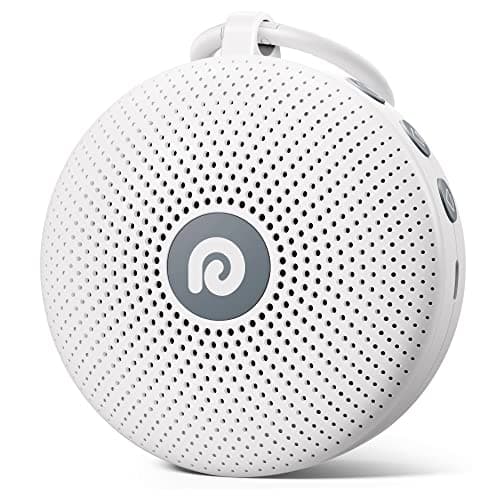 Best travel sound machinesIf noise rather than light is the travel problem.Read it
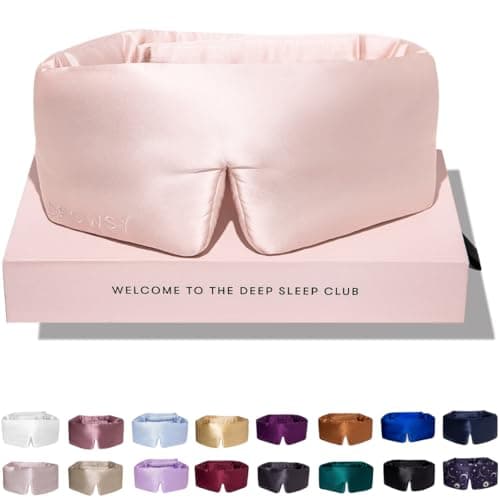 Best travel sleep masksBlocking light instead of delivering it.Read it
 Sunrise alarms with an appWhich app-controlled clocks need a home network.Read it
- Best sunrise alarms under $50The cheap ones worth risking in a bag.Read it