
How this page is funded: we earn a commission if you buy through the links below, at no extra cost to you. As an Amazon Associate we earn from qualifying purchases. It does not change which products we pick or the order they appear in. Full disclosure.
How these picks were made: by comparing published specifications and clearly-credited public reporting. We do not run a laboratory, we have not measured these products, and we do not claim to have slept with them. Here is exactly how we choose.
Short version: a bedroom that works is dark enough that you cannot read by it, quiet enough that nothing intrudes, cool enough that your body temperature can fall, and dull enough that there is nothing in it competing for your attention. Those are the four variables. Diagnose which one is failing before you buy anything - most people spend money on the wrong one, because the variable you notice is rarely the variable that is waking you.
There is a version of this advice that is a list of thirty habits, and it is not useful, because a room is not thirty things. It is four, and each one has a specific failure signature you can recognize.
Start by finding out which one is yours
| What you notice | The variable failing | Where to go |
|---|---|---|
| Waking at dawn in summer, or sleeping better in hotels | Light | Blackout at the window, or a mask |
| Waking at a specific sound and not getting back down | Noise | Masking, or blocking |
| Falling asleep fine, waking at 2 to 3am, kicking off bedding | Temperature | The room first, the bedding second |
| Lying awake with a busy head, no obvious trigger | Stimulation | What happens in the hour before bed |
If more than one row describes you, work top to bottom: light is the cheapest to fix and the most commonly underestimated.
1. Light: darker than you think
The threshold is low. The PLOS Biology consensus recommendations on evening and nighttime indoor light exposure set a bar that most bedrooms fail without anyone noticing - and the offenders are almost never the window. They are a router, a television standby light, a charging indicator, a smoke alarm, the hall, and a clock face.
Do this: stand in the room at night with the lights off, let your eyes adjust for two full minutes, then look around. Everything you can see is a light source. Tape over the small ones, move the clock, and deal with the window - blackout at the window is better than a mask, because it needs no cooperation from you at 4am. If the window cannot be fixed, a mask is the answer and sleep mask versus blackout curtains is the honest comparison. The full room version is on how to make a bedroom dark for sleeping.
Screens are the same variable from the other end - Harvard Health on blue light is the short reference, and the practical answer is less about blue specifically than about brightness and timing.
2. Noise: masking and blocking are different jobs
You do not need silence. You need an absence of events - noises that start, change or stop, because those are what the sleeping brain reacts to. A constant sound is almost invisible; a door closing three streets away is not.
That is why masking works: raising the floor makes the events smaller relative to the background, so they stop registering. The WHO’s night noise guidance covers the health framing, and research on why some people tolerate noise better than others points at sleep spindles - Dang-Vu and colleagues found spindle rate predicts sleep stability in noise, which is not something you can change.
Two tools, two jobs. A sound machine raises the floor and is the right answer for traffic, hallways, and a partner moving around - the sound machine roundup ranks them by the noise you are fighting, and fan sound versus digital white noise is the technology choice. Earplugs remove sound and are the right answer when the noise is loud and intermittent - best earplugs for sleeping. For a snoring partner specifically you usually need both, which is the argument on your partner snores and you can’t sleep.
3. Temperature: the room, then the bedding
Sleep onset depends on core body temperature falling, and staying down - the physiology is summarized in Harding, Franks and Wisden on sleep and thermoregulation. That is why the classic 2 to 3am wake in a too-warm room happens at the same time every night: it is the point at which the thermal balance tips.
Fix the room before the bedding. A cooler room with warmer bedding beats a warm room with thin bedding, because the room sets the ceiling and the bedding only moves you around underneath it. Then look at what is on the bed: synthetic shells hold moisture, lofted duvets trap it, and a weighted blanket adds thermal mass most people do not account for - weighted blankets for hot sleepers exists because of exactly that. The whole-problem page is too hot to sleep.
4. Stimulation: what the room is for
The fourth variable is not a measurement, it is what the room means. A bedroom that is also an office, a television room and a place where difficult conversations happen is a room your nervous system has learned to be alert in.
The practical moves are small and dull, which is why people skip them. Move the work out if you possibly can. Put the phone across the room so that checking it requires standing up. Give yourself a consistent wind-down of thirty to sixty minutes with the overhead lights off - a fading lamp or a sunset function does this without requiring discipline. And keep the wake time fixed, including at weekends: the wake time anchors the whole system, which is why waking up without an alarm is downstream of it rather than a trick.
If this is your variable, when your brain will not shut off and exhausted all day, wide awake at midnight are the two pages that go deeper, and the CDC’s sleep habits guidance is the plain reference for the behavioral side.
The order to spend money in
- Nothing. Tape over the LEDs, move the clock, drop the thermostat two degrees, put the phone across the room. A week of that tells you which variable is actually left.
- Light, if the window is the problem. Blackout at the window if you own the place, a mask if you do not - the mask roundup ranks them by fit problem.
- Noise, if something specific is waking you. A sound machine for constant intrusion, earplugs for intermittent.
- Temperature, if you wake at the same time every night. Bedding after the room.
- The morning, last. A gentler wake does not fix a bad night, but it changes how the day after one feels - sunrise alarm clocks.
The cross-category buying order, with prices and priorities, is on the sleep gear buyer’s guide. And if you already know which problem is yours, start from the problem is the faster route than this page.
One fix per variable
Tap any row to jump to the full write-up. Each thumbnail is the product photograph from that item’s own Amazon listing, and the price in the last column is the one Amazon showed at the last check.
| # | Product | Best for | The spec that decides it | Price |
|---|---|---|---|---|
| 1 | 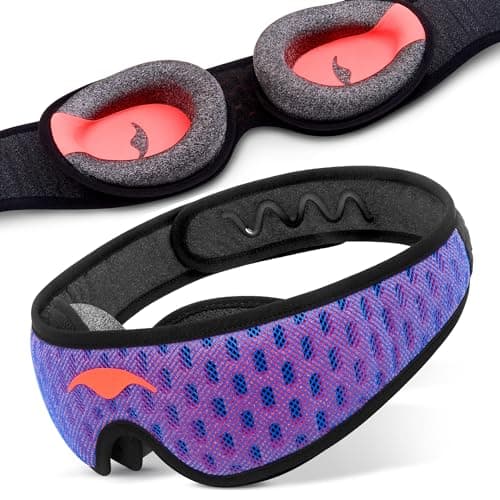 Manta Pro Sleep MaskThe most adjustable mask in the category: the eye cups move independently, so you can seal a nose bridge that defeats every one-piece mask. | Total blackout with room for long lashes | Independently repositionable eye cups, zero eye pressure | |
| 2 | 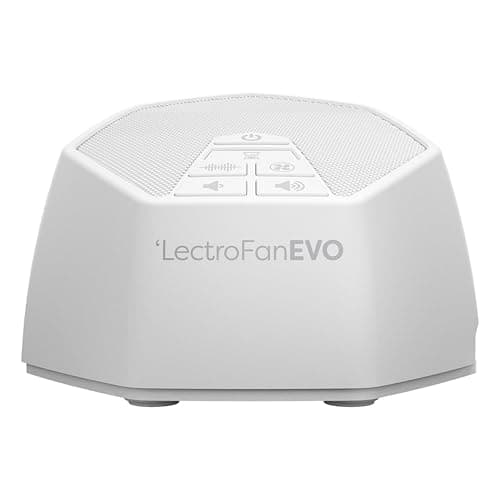 LectroFan EVOThe digital machine that solved the loop problem: 22 sounds generated rather than played back, so there is no seam to notice. | Digital variety without the loop artifact | 22 non-looping generated sounds | |
| 3 | 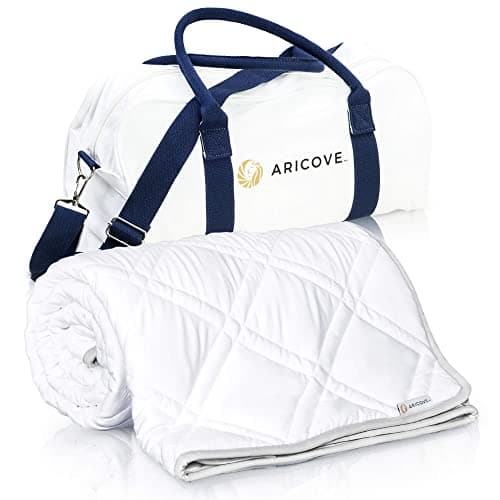 Aricove Cooling Weighted BlanketA cooling blanket that attacks heat at the surface: the face is twill-woven bamboo viscose, which feels cold to the touch and keeps feeling that way longer than cotton does. | Hot sleepers who still want real weight | Twill-woven bamboo viscose face, 15 lb at 48 x 72 in | |
| 4 | 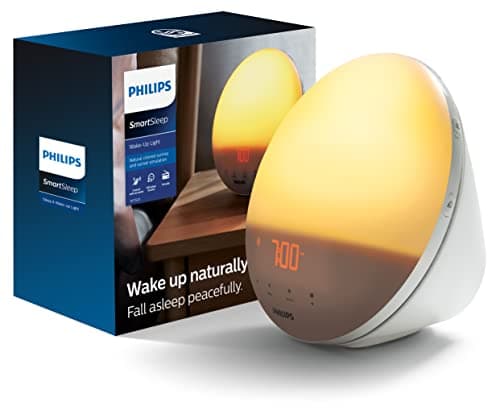 Philips SmartSleep Wake-Up Light HF3520The reference sunrise. No account, no app, no monthly fee - a dial, twenty brightness steps, and a light that ramps properly. | Sunrise quality with no app and no subscription | 20 light-intensity settings, no app or subscription |
Prices come straight from Amazon and are refreshed daily; the date they were checked is stamped under the buy buttons below. If a price has gone stale or a listing has no offer, the button falls back to “Check price on Amazon” rather than showing a number we cannot stand behind. As an Amazon Associate we earn from qualifying purchases.
One product for each of the four variables below, in the order most rooms fail them. You almost certainly do not need all four - work out which variable is yours first.
#ad How we are funded · price as of November 12, 2026
Our top pick · Total blackout with room for long lashes
1. Manta Pro Sleep Mask
The most adjustable mask in the category: the eye cups move independently, so you can seal a nose bridge that defeats every one-piece mask.
- Construction:
- Modular cups on a hook-and-loop band
- Eye pressure:
- None - the cups arch over the eye socket
- Adjustment:
- Cups reposition horizontally to match your face
- Strap:
- Wide adjustable band; the maker rates it for side sleeping
What it gets right
- Seals light at the nose bridge better than any fixed-shape mask once fitted
- No contact with the eyelid, so you can blink freely and sleep in contacts
- Spacious cups are the reason this is the lash-extension pick
Where it falls short
- The deepest profile here - the cups stand well off the face
- Fitting it correctly takes a few nights of adjustment
- Much the most expensive mask we cover
Skip it if: You want something you can throw in a bag and forget. This is a mask you fit to your face first.
#ad How we are funded · price as of November 12, 2026
Pick 2 · Digital variety without the loop artifact
2. LectroFan EVO
The digital machine that solved the loop problem: 22 sounds generated rather than played back, so there is no seam to notice.
- Type:
- Digital, non-looping synthesis
- Sounds:
- 22, including white, pink and brown noise plus fan sounds
- Volume:
- Precise stepped control across a wide range
- Moving parts:
- None
What it gets right
- Gives you brown and pink noise, which a mechanical fan cannot
- No motor means no mechanical hum and nothing to wear out
- Compact enough to pack
Where it falls short
- Digital sound is still digital - some people hear it as flatter than moving air
- No app or alarm features
- More expensive than budget machines with far longer preset lists
Skip it if: You specifically want the texture of real moving air. Get the Dohm instead.
#ad How we are funded · price as of November 12, 2026
Pick 3 · Hot sleepers who still want real weight
3. Aricove Cooling Weighted Blanket
A cooling blanket that attacks heat at the surface: the face is twill-woven bamboo viscose, which feels cold to the touch and keeps feeling that way longer than cotton does.
- Fill:
- Superfine glass beads quilted between plush microfiber layers
- Fabric:
- Bamboo viscose twill, described by the maker as crisp and cooling
- Size:
- 48 x 72 in (twin/full), 15 lb - sized for one adult
- Care:
- Pre-washed, machine washable at 110F, wash on its own
What it gets right
- Bamboo viscose is the coolest-feeling face fabric in this roundup
- Beads are quilted between inner layers rather than loose in the shell, so nothing migrates
- Arrives pre-washed and plastic-free, ready to use the night it lands
Where it falls short
- Premium price for a 15 lb blanket
- Viscose needs a gentle wash - it is not a tumble-and-forget blanket
- One weight per size, so the ladder is narrower than the budget blankets
Skip it if: You share the blanket with a partner - 48 x 72 in is a one-person blanket, and the weight is distributed for one body.
#ad How we are funded · price as of November 12, 2026
Pick 4 · Sunrise quality with no app and no subscription
4. Philips SmartSleep Wake-Up Light HF3520
The reference sunrise. No account, no app, no monthly fee - a dial, twenty brightness steps, and a light that ramps properly.
- Light settings:
- 20 intensity levels
- Sunrise:
- Colored sunrise simulation before the alarm
- Sound:
- Natural wake-up sounds plus FM radio
- Account:
- None required
What it gets right
- Nothing to sign up for and nothing to update - it is an appliance
- Twenty brightness steps means you can actually find a comfortable display level
- Long-standing design with a well-understood service life
Where it falls short
- No app, so scheduling is manual
- The sound library is small and dated
- Larger footprint than the smart units
Skip it if: You want a sound machine and a sunrise in one device. This is a light first and foremost.
Questions people actually ask
How should a bedroom be set up for good sleep?
Dark enough that you cannot read by it, quiet enough that nothing intrudes, cool enough that your body temperature can fall, and dull enough that nothing in the room is competing for your attention. Those four variables cover almost everything. Most rooms fail two of them, and the one you notice is usually not the one waking you.
What temperature should a bedroom be?
Cooler than most people keep it, because sleep onset depends on core body temperature falling. Fix the room before the bedding: a cooler room with warmer bedding works better than a warm room with thin bedding, because the room sets the ceiling. Waking at the same time in the small hours is the classic signature of a room that is too warm.
How dark does a bedroom need to be?
Dark enough that after two minutes of adjustment you cannot pick out objects. The usual offenders are not the window - they are standby LEDs, chargers, a router, a smoke alarm and a clock face. Stand in the room at night with the lights off and look around; everything you can see is a light source.
Is white noise or silence better for sleep?
For most people with a noise problem, masking beats silence. The sleeping brain reacts to events - sounds that start, change or stop - rather than to steady background level, so raising the floor makes those events smaller relative to the background. True silence only helps if there is nothing to intrude in the first place.
What should I change first if I can't sleep?
The free things. Tape over the standby lights, move the clock, drop the thermostat, and put the phone across the room so checking it needs standing up. Give it a week. Whichever variable is still failing after that is the one worth spending money on, and you will know which it is.
Does a consistent wake time matter more than bedtime?
It is the more useful anchor of the two, because it is the one you can actually control - you cannot decide to fall asleep, but you can decide to get up. Keeping it fixed at weekends is the part people skip and the part that does the most work.
Sources
- Brown TM et al. Recommendations for daytime, evening and nighttime indoor light exposure to best support physiology, sleep and wakefulness in healthy adults. PLOS Biology, 2022.
- Harvard Health Publishing - Blue light has a dark side.
- World Health Organization - Night Noise Guidelines for Europe.
- Dang-Vu TT, McKinney SM, Buxton OM, Solet JM, Ellenbogen JM. Spontaneous brain rhythms predict sleep stability in the face of noise. Current Biology, 2010;20(15):R626-7.
- Harding EC, Franks NP, Wisden W. Sleep and thermoregulation. Current Opinion in Physiology, 2020 (PMC7323637).
- CDC - About Sleep: recommended hours of sleep by age and sleep habits.
- National Heart, Lung, and Blood Institute (NIH) - Sleep Phases and Stages.
Back to what to do when you can't sleep.
Read next
 How to make a bedroom dark for sleepingThe light variable, in full.Read it
- Too hot to sleepThe temperature variable, in full.Read it
- The sleep gear buyer's guideWhat to buy first, across all four categories.Read it
 Can't sleep? Start with what is keeping you awakeThe faster route if you already know the problem.Read it