

How this page is funded: we earn a commission if you buy through the links below, at no extra cost to you. As an Amazon Associate we earn from qualifying purchases. It does not change which products we pick or the order they appear in. Full disclosure.
How these picks were made: by comparing published specifications and clearly-credited public reporting. We do not run a laboratory, we have not measured these products, and we do not claim to have slept with them. Here is exactly how we choose.
Short version: if you and your partner are close in body weight, sleep fairly still and run at similar temperatures, share a king - the Baloo King at 80 by 87 inches and 25 pounds is the cleanest published option, and YnM goes wider still if your bed is larger. If any one of those three things is not true, buy one each. It costs more up front and it is the answer that actually works, because a shared blanket has to satisfy two different bodies and can only be one weight.
Every sizing guide in this category, including ours on how heavy to go, is written for one person. Ten percent of body weight, pick the nearest size, done. The moment there are two of you under it, that arithmetic quietly stops working, and none of the standard advice tells you what to do instead.
So this page answers the question in the order it actually arrives: should you share one at all, and then which one.
Which route you are on
We have argued the share-or-not question at length already, on what size weighted blanket to buy - a shared king cannot be correctly weighted for two different bodies, it transmits your partner’s movement instead of absorbing it, and it is a two-person object to strip and wash. We are not going to re-run that case here. This page assumes you have made the call and want to know what to actually buy.
The manufacturers do not dodge the choice either, to their credit. Baloo lays out both routes on its own site - couples can buy either one large blanket to share, or two smaller ones so that you each have your own - and when partners want different weights its advice is to go with the lighter option. That is an admission, from a company selling both, that one blanket cannot be two weights.
So: three questions, and if you answer no to any of them, you are on the one-each route and should skip to the last three picks.
- Are you within about 30 pounds of each other? The weight convention follows body weight, and no size resolves a 60-pound gap.
- Do you both sleep fairly still? Twenty-five pounds does not travel with whoever turns over.
- Do you run at similar temperatures? One shared blanket is one fabric, and most couples have one hot sleeper and one cold one.
The weight math, done properly
Here is where couples get it wrong. People assume a 25-pound blanket over two people is 12.5 pounds each, and reason from there. It is not. Weight sits wherever the blanket lies, so your share depends on how much of it is on you - which changes every time either of you moves. You cannot divide the number; you can only choose a number that is tolerable for the lighter person.
YnM publishes an explicit table for exactly this, keyed to the lighter partner rather than to a combined weight. In its own size guide, the brand recommends 15 pounds for 70 to 140 pounds, 20 pounds for 90 to 160, 25 pounds for 110 to 190 and 30 pounds for 140 to 240 - alongside the single-sleeper rule of ten percent of body weight plus one pound.
Read those two rules side by side and the structural problem is obvious. The single-person rule for a 140-pound adult lands at 15 pounds. The shared table puts a couple whose lighter half is 140 pounds somewhere between 15 and 30, depending which row you read yourself into. The heavier partner is being under-weighted, the lighter one over-weighted, and both are being asked to accept a compromise. If that compromise sounds fine to you, share. If it sounds like the start of an argument, buy two.
The sizes that actually exist
Shared blankets fail on coverage as often as on weight, and this is where published dimensions matter more than marketing language. “King” in weighted blankets does not mean what it means in bedding.
| Published size | Dimensions | What it really covers |
|---|---|---|
| Full / queen weighted blanket | 60 x 80 in (YnM) | One adult. This is the standard single-sleeper size, not a couple’s size |
| King weighted blanket | 80 x 87 in (Baloo, YnM) | Two adults, covering the top of the bed with little overhang |
| California king | 88 x 104 in (YnM) | Two adults with enough left to tuck in on both sides |
| King weighted comforter | 92 x 108 in (Baloo) | Full duvet-style coverage rather than a throw on top |
The trap in that table is the first row. A 60 by 80 inch blanket is sold as full/queen and reads like a couple’s size, but it is the standard one-adult size in this category - it is 80 inches long and only 60 wide, which is narrower than the bed it is named after. Buy that to share and you will spend every night pulling it toward your own side.
The other thing worth knowing: 80 by 87 inches is the most common “king” and it is designed to sit on top of the mattress rather than drape over the edges. If you are the kind of couple who likes to tuck a blanket under on both sides, you want the 88 by 104 inch size or a comforter cut, not the standard king. Our page on choosing a size goes through the one-person version of this.
How we chose
We started from weighted blankets currently sold in the US whose manufacturers publish dimensions and weights, then ranked them against these criteria, in this order.
- Published two-person dimensions. A brand that states 80 by 87 inches is making a checkable claim. A brand that says “king-size” and nothing else is not. First criterion, every time.
- Whether the weight range reaches both of you. The useful range for a shared blanket runs from about 15 to 30 pounds. A brand offering two weights is making the choice for you.
- Bead migration over a large span. The wider the blanket, the further the fill has to travel before it pools. Small sewn compartments and bead-free knits both solve this; loose quilting does not.
- Washability at weight. A 25-pound blanket is a laundry problem. A removable cover turns a 25-pound wash into a 3-pound one.
- Whether both temperature preferences can be served. On the one-each route this is free - you each pick your own fabric. On the shared route it is the compromise nobody mentions until July.
We have not slept under these, we have measured nothing ourselves, and we assign no scores or star ratings. We read the published specifications, name which figure came from where, and say what each pick gives up. The full method is on how we choose what to recommend.
How to buy two, without buying two kings
The one-each route has a purchasing trap in it: people price it as two king blankets, decide it is too expensive, and go back to sharing. You do not buy two kings. You buy two single-sleeper sizes, which is the best-stocked size in the category and usually the cheapest per blanket - so two of them often lands close to the price of one king.
Baloo points at the same structure from the other direction, naming two 12 lb weighted throws as the alternative to one large blanket on the grounds that throws are easier to maneuver individually. Two lighter blankets are also two separate fabric choices, which is the only honest way to serve two thermostats in one bed: an open knit or a lyocell shell for the hot sleeper, brushed cotton for the other.
Two practical notes. Put both blankets on top of a shared flat sheet rather than trying to tuck either one in - weight is what keeps a weighted blanket in place, and tucking defeats it. And it looks odd on a made bed for about a week, which is a real objection and the only one we have heard that holds up.
What not to buy for this
- A 60 by 80 inch blanket to share. It is the one-adult size with a misleading name. This is the single most common mistake couples make here.
- The heaviest blanket available. Shared weight should follow the lighter partner. A 30-pound blanket bought for the heavier person’s benefit is a blanket the other person throws off at 1am.
- Anything with large loose compartments at king width. The wider the span, the more the fill pools toward whichever side is lower. Our page on bead types covers what the fill is doing in there.
- A shared blanket with no removable cover, if you have pets. You are committing to washing 25 pounds of blanket rather than a cover.
- A weighted blanket at all, if either of you has a condition it affects. Sleep apnea, restricted mobility, claustrophobia and some circulatory and respiratory conditions are all reasons to ask a clinician first. That applies to each of you individually, and sharing means one person’s caution becomes both people’s decision.
What the evidence does and does not say
Worth keeping this in proportion. The best-known controlled trial here is Ekholm and colleagues’ 2020 randomized study in the Journal of Clinical Sleep Medicine, which found weighted chain blankets reduced insomnia severity in patients with psychiatric disorders - summarized by the American Academy of Sleep Medicine at the time. That is a single-sleeper finding in a clinical population. Nobody has studied couples sharing one, nobody has shown that a compromise weight delivers the same thing to both people, and we are not going to imply otherwise.
Our honest read: the mechanism people describe - pressure that makes it easier to settle - is individual, and a blanket that is the wrong weight for you is unlikely to deliver it just because it is the right weight for the person next to you. That is the argument for two blankets restated in a sentence. If you want the longer version of what these do and do not do, we went through the anxiety claims separately.
Living with it
Two practical notes that only come up on a shared bed. First, a king weighted blanket is heavy enough that making the bed becomes a two-person job; if one of you makes the bed alone every morning, factor that in honestly before you buy 25 pounds of it. Second, if one of you gets up much earlier, the shared blanket is the thing that wakes the other - lifting a quarter of a hundredweight off someone is not a quiet operation. Both of those are arguments for the one-each route that nobody mentions in a product listing.
If the early riser is the problem rather than the blanket, the fix is the alarm rather than the bedding - a private wake that does not involve the whole mattress. We went through that on alarm clocks for side sleepers, where the same question comes up from the other end.
The shared picks, and the one-each picks
Tap any row to jump to the full write-up. The photographs are licensed stock images chosen to illustrate the category - they are not photographs of these specific products, and each one’s alt text describes what is actually shown.
| # | Product | Best for | The spec that decides it | Price |
|---|---|---|---|---|
| 1 | 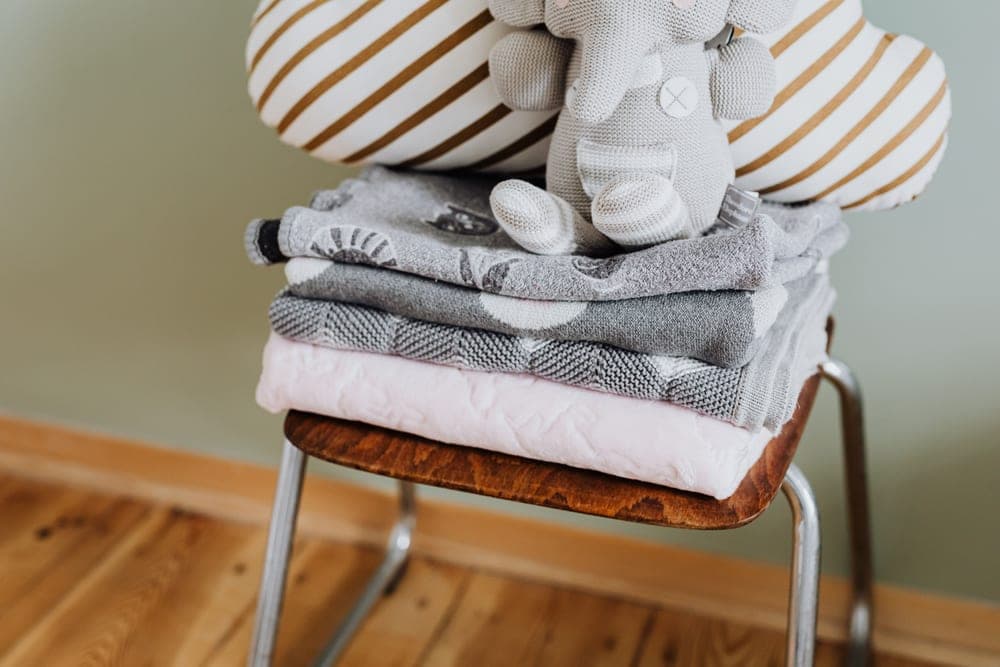 Baloo Living Weighted BlanketA conventional glass-bead blanket done carefully: 100% cotton shell and liner, and double-stitched baffles so the beads stay where they were put. | A cotton bead blanket that does not run hot | Glass microbeads in a 100% cotton shell and liner | |
| 2 | 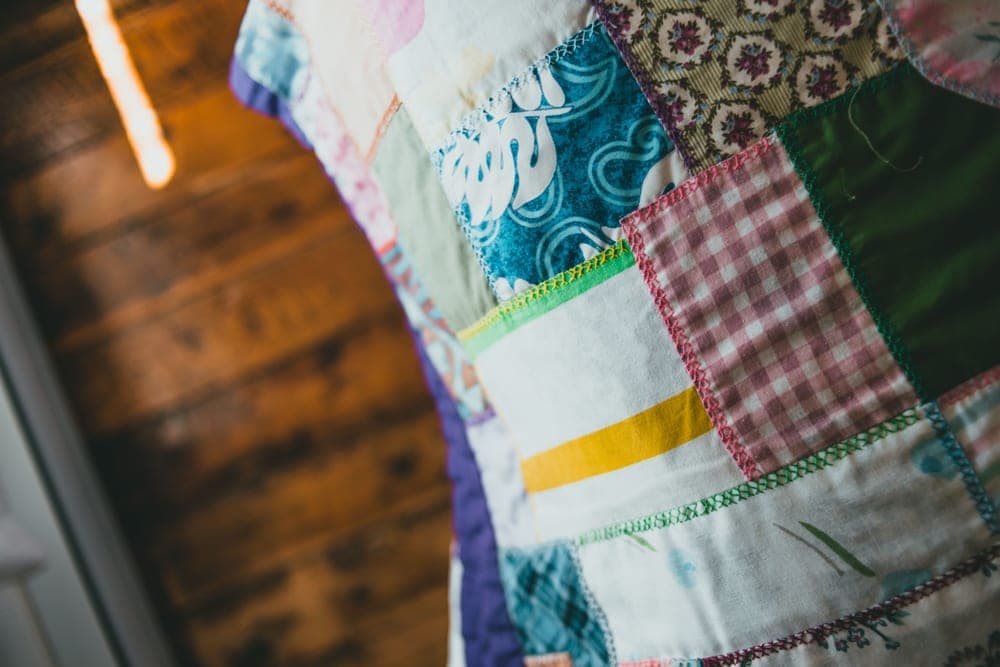 YnM Weighted BlanketThe sizing catalog, not the luxury pick: glass beads in small quilted pockets, in weights and dimensions from child up to king. | Odd sizes and weights nobody else makes | 5 to 30 lb across 7 sizes | |
| 3 | 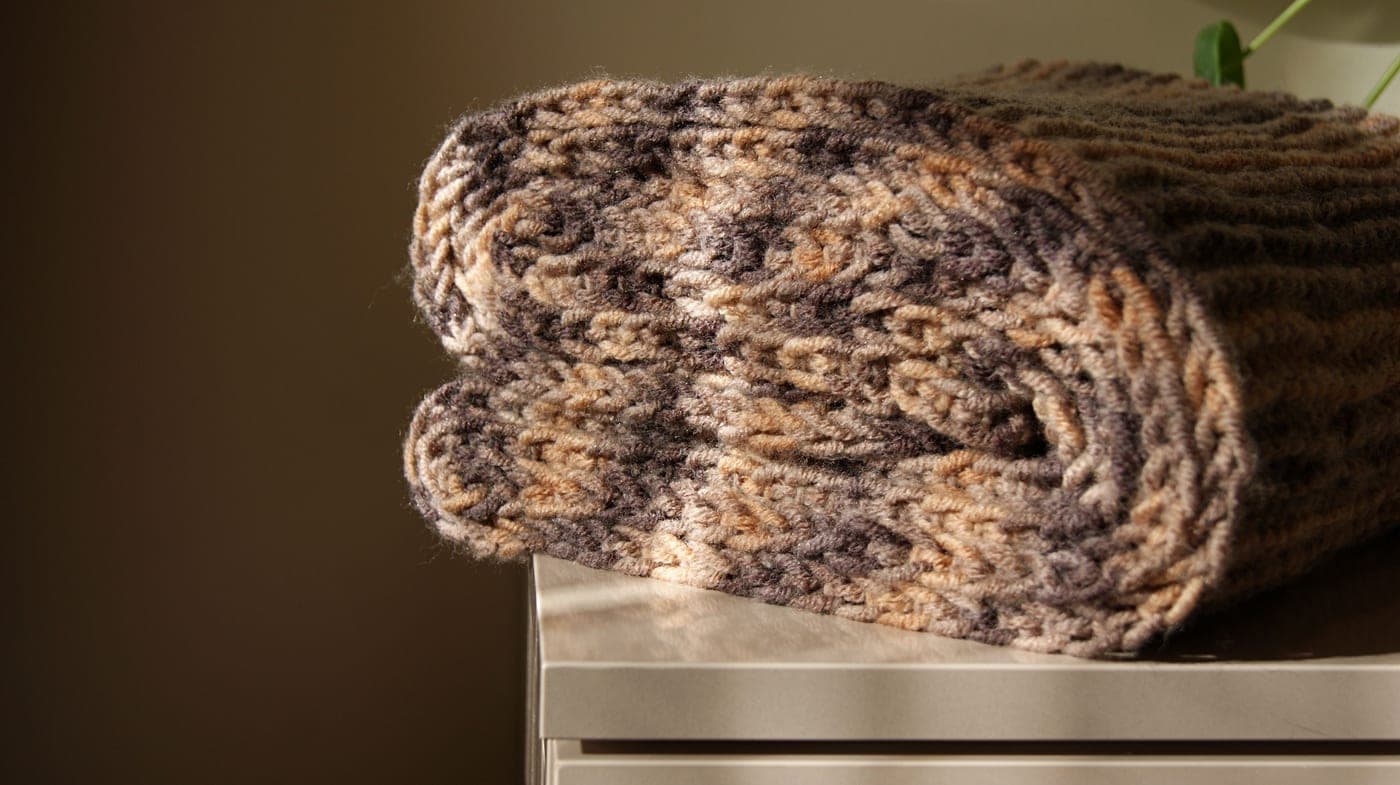 Bearaby Cotton NapperThe only mainstream weighted blanket with no beads at all - the weight is the yarn itself, so air moves straight through the knit. | Anyone who hates the sealed-duvet feeling | Bead-free: weight comes from organic cotton yarn | |
| 4 | 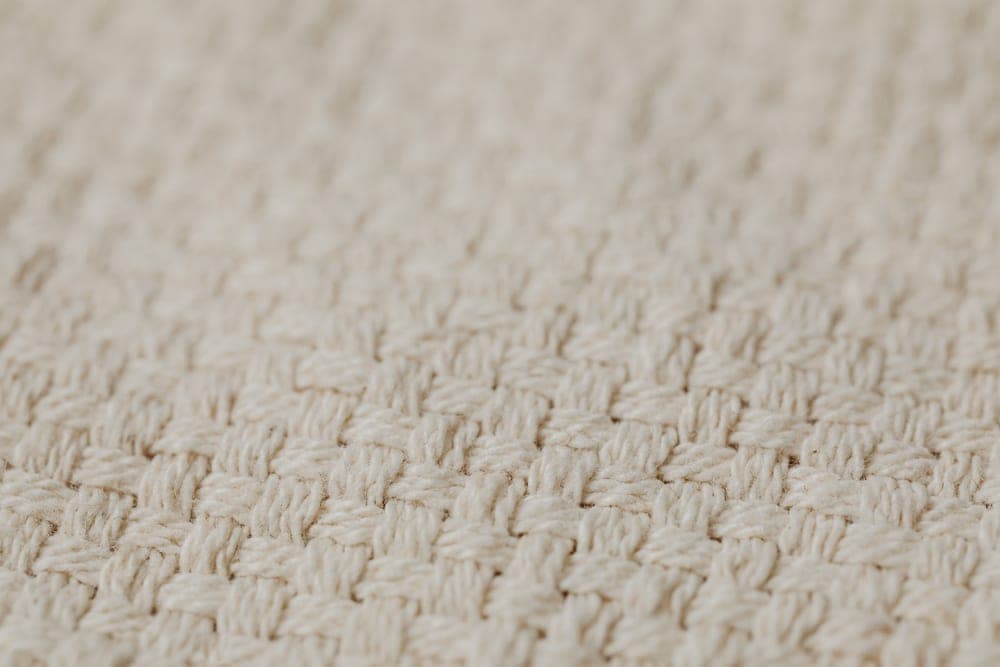 Bearaby Tree NapperThe cooling version of the Napper: same bead-free knit, but half the fiber is Tencel lyocell, which moves moisture instead of holding it. | Hot sleepers who still want real weight | 50% Tencel lyocell / 45% organic cotton / 5% spandex | |
| 5 |  Quility Premium Weighted BlanketThe blanket that solves the laundry problem out of the box: a removable minky duvet cover ties on at eight points and goes in the machine on its own. | A washable cover included in the box | Removable minky duvet cover included, 8 tie points, 5-30 lb ladder |
We have no live price feed for this site yet, so every button reads “Check price on Amazon” rather than showing a number that could be out of date. As an Amazon Associate we earn from qualifying purchases.
The first two are the blankets to buy if you are sharing; the last three are the ones to buy if you decide on one each. Every pick is a real, currently-sold product; none has been tested by us, and the specifications are the manufacturers' own.
Our top pick · A cotton bead blanket that does not run hot
1. Baloo Living Weighted Blanket
A conventional glass-bead blanket done carefully: 100% cotton shell and liner, and double-stitched baffles so the beads stay where they were put.
- Fill:
- Glass microbeads
- Shell and liner:
- 100% cotton
- Weights:
- 12, 15, 20, 25 lb
- Construction:
- Double-stitched baffles
What it gets right
- Cotton on both faces rather than a polyester minky backing
- Double-stitched baffles are the single best predictor of a blanket that will not pool
- Classic quilted pressure - the sensation most buyers are actually looking for
Where it falls short
- Cotton is breathable but a quilted shell still traps more heat than an open knit
- No weight below 12 lb
- Bulky and slow to dry after washing
Skip it if: You run very hot. A quilted construction is still two layers of fabric plus fill, whatever the fiber.
Pick 2 · Odd sizes and weights nobody else makes
2. YnM Weighted Blanket
The sizing catalog, not the luxury pick: glass beads in small quilted pockets, in weights and dimensions from child up to king.
- Fill:
- Glass beads in small quilted pockets
- Weights:
- 5 to 30 lb
- Sizes:
- 7, from child through king
- Construction:
- Layered quilted pocket system
What it gets right
- The widest weight range in the category, which matters if the ten percent rule lands you on an unusual number
- Small pockets keep beads distributed better than large-baffle designs
- Consistently the cheapest way into a proper glass-bead blanket
Where it falls short
- Shell fabric quality is the trade-off for the price
- Runs warm compared with cotton-knit options
- Frequently sold without the duvet cover you will probably want
Skip it if: You are a hot sleeper. This is a warm blanket and no cover fixes that.
Pick 3 · Anyone who hates the sealed-duvet feeling
3. Bearaby Cotton Napper
The only mainstream weighted blanket with no beads at all - the weight is the yarn itself, so air moves straight through the knit.
- Fill:
- None - weight is long-staple organic cotton yarn
- Weights:
- 8 lb (kids and travel), 12, 15, 20, 25 lb
- Construction:
- Open hand-knit weave
- Care:
- Machine washable
What it gets right
- No beads means no shifting, no bunching and no rustling
- The open knit breathes better than any quilted shell in this roundup
- Doubles as a sofa throw without looking like medical equipment
Where it falls short
- Among the most expensive options in the category
- The open weave catches on rings, watches and rough pet claws
- Heavy knit takes a long time to dry
Skip it if: You want the tucked-in, evenly pinned feeling a bead blanket gives. The knit drapes; it does not press.
Pick 4 · Hot sleepers who still want real weight
4. Bearaby Tree Napper
The cooling version of the Napper: same bead-free knit, but half the fiber is Tencel lyocell, which moves moisture instead of holding it.
- Fill:
- None - weight from dense Tencel and cotton fiber
- Weights:
- 15, 20, 25 lb (single-sleeper sizing)
- Fabric:
- Tencel lyocell blend, cool to the touch
- Care:
- Machine wash and tumble dry cold, gentle cycle
What it gets right
- Two cooling mechanisms at once: a moisture-wicking fiber and an open weave
- No synthetic fill, so nothing traps a pocket of warm air against you
- Same weight options as the cotton version, so you are not trading weight for temperature
Where it falls short
- Premium price, and the cooling blend costs more than the cotton one
- No sizes below 15 lb, which rules it out for smaller adults
- Open knit is snag-prone
Skip it if: You need a blanket under 15 lb, or you share it with a partner - these are sized for one person.
Pick 5 · A washable cover included in the box
5. Quility Premium Weighted Blanket
The blanket that solves the laundry problem out of the box: a removable minky duvet cover ties on at eight points and goes in the machine on its own.
- Fill:
- Glass beads in small quilted polyester pockets
- Shell:
- Cotton, in a 7-layer construction
- Cover:
- Removable micro-mink duvet cover, 8 string ties
- Weights:
- 5 lb through 30 lb
- Sizing:
- Maker suggests 10-14% of body weight
What it gets right
- The cover is included rather than an upsell, which is the whole reason to buy this one
- Small quilted pockets keep beads from migrating to the foot of the bed
- The weight ladder starts low enough for a smaller teenager
Where it falls short
- Thin fabric ties rather than a zip, and testers have doubted them on the heavy sizes
- Getting a heavy blanket back into the cover is a two-person job
- The minky cover is warm - it is not the pick for a hot sleeper
Skip it if: You sleep hot. A mink-feel polyester cover is the warmest surface in this category.
Questions people actually ask
Should couples share one weighted blanket or get one each?
One each, unless you are close in body weight, sleep fairly still and prefer similar temperatures. A shared blanket can only be one weight, does not move with you when you turn over, and forces one fabric choice on two people. Baloo, which sells both options, frames it the same way and suggests two smaller blankets as a genuine alternative to one large one.
What size weighted blanket is best for two people?
80 by 87 inches is the most common king size and covers two adults with little overhang; Baloo and YnM both publish that figure. If you want enough to tuck under on both sides, YnM's California king is 88 by 104 inches and Baloo's king comforter is 92 by 108. A 60 by 80 inch blanket is sold as full/queen but is the standard one-adult size, and it is too narrow to share.
How heavy should a weighted blanket be for a couple?
Choose for the lighter partner, not the combined weight. You cannot divide the weight between two bodies because it sits wherever the blanket lies. YnM publishes a shared-bed table keyed to the lighter person: 15 pounds for 70 to 140 pounds, 20 for 90 to 160, 25 for 110 to 190 and 30 for 140 to 240.
Is buying two weighted blankets more expensive than one king?
Less than people assume, because you do not buy two kings. The one-each route uses two single-sleeper blankets - around 60 by 80 inches, which is the best-stocked and usually cheapest size in the category - so two of them often lands near the price of one king. Pricing the route as two kings is the mistake that sends couples back to sharing.
Can one partner have a cooling weighted blanket and the other a warm one?
Yes, and that is one of the strongest arguments for buying one each. Most couples have one hot sleeper and one cold one, and a single shared blanket forces one fabric on both. Separate blankets let the hot sleeper take an open knit or a lyocell shell while the other takes brushed cotton.
Is a king weighted blanket hard to wash?
Yes - 25 pounds of wet blanket is more than many domestic machines are rated for, and drying it takes a long time. A removable cover is the practical answer, because it turns a 25-pound wash into a cover wash. Our page on washing a weighted blanket goes through the detail.
Sources
- Baloo Living - Are weighted blankets good for couples? Should we share one or get one each (manufacturer guidance, king and comforter dimensions).
- Baloo Living - weighted blanket range, weights and materials (manufacturer).
- YnM - weighted blanket size guide (manufacturer sizes in inches, weight range, and the shared-bed weight table).
- Bearaby - Tree Napper product specifications (manufacturer).
- Mattress Clarity - Quility Weighted Blanket review (hands-on testing: removable machine-washable minky cover, cotton inner, glass microbeads, sizes and weights).
- Ekholm B, Spulber S, Adler M. A randomized controlled study of weighted chain blankets for insomnia in psychiatric disorders. Journal of Clinical Sleep Medicine, 2020.
- American Academy of Sleep Medicine - Study shows weighted blankets can decrease insomnia severity (2020).
- Sleep Foundation - Best Weighted Blankets (specification comparison).
- TechGearLab - The Best Weighted Blanket, tested and ranked.
Back to the best weighted blankets.
Read next
- Best weighted blanketsThe main roundup, sized and weighted for one sleeper.Read it
- How heavy should a weighted blanket beThe ten percent rule, and where it stops applying.Read it
- What size weighted blanket to buyWhy blanket sizes do not match the bed names.Read it
- Best cooling weighted blanketsFor the half of the bed that runs hot.Read it
- How to wash a weighted blanketThe part that gets much harder at king weight.Read it
- Weighted blanket vs duvetWhy a weighted blanket is a load rather than a layer.Read it