

How this page is funded: we earn a commission if you buy through the links below, at no extra cost to you. As an Amazon Associate we earn from qualifying purchases. It does not change which products we pick or the order they appear in. Full disclosure.
How these picks were made: by comparing published specifications and clearly-credited public reporting. We do not run a laboratory, we have not measured these products, and we do not claim to have slept with them. Here is exactly how we choose.
Short answer: in the best controlled study available, people using a weighted blanket reported lower anxiety alongside better sleep - but the participants all had diagnosed insomnia plus a diagnosed psychiatric condition, and the outcome measured was self-reported symptoms, not a clinical cure. That is a useful finding and it is not the finding the packaging implies.
What the trial actually did
Ekholm, Spulber and Adler, Journal of Clinical Sleep Medicine, 2020 enrolled 120 adults who had clinical insomnia together with major depressive disorder, bipolar disorder, ADHD or generalized anxiety disorder. Participants were randomized to four weeks at home with either a chain-weighted blanket or a control blanket.
Those using the weighted blanket reported significantly reduced insomnia severity, better sleep maintenance, higher daytime activity levels, and reduced symptoms of fatigue, depression and anxiety. They were far more likely than the control group to record a substantial drop in insomnia severity, and more likely to reach remission. The American Academy of Sleep Medicine summarized the result when it was published.
What it did not show
- It was not a study of anxiety on its own. Every participant had clinical insomnia as well. The blanket was tested as a sleep intervention in a population with psychiatric diagnoses, not as an anxiety treatment.
- It was not a study of the general public. If you are simply stressed and sleeping badly, you are not the population this trial recruited, and the effect size may not transfer.
- Outcomes were self-reported. That is normal and reasonable for sleep and mood research, but it is not the same as an objective measurement, and blinding is obviously difficult when the intervention is a heavy blanket.
- It does not establish a mechanism. The phrase “deep pressure stimulation” is used widely, including by manufacturers. We are not going to assert a specific physiological pathway we cannot cite.
What to take from it, practically
If the physical experience you are trying to change is restlessness - being unable to lie still, turning over repeatedly, feeling wound up in your body - a weighted blanket is a reasonable, evidence-backed thing to try, and the downside risk is a return.
If the experience is purely mental - the thoughts themselves - a blanket does not touch that, and the free interventions on what to do when your brain will not shut off are the better starting point. A lot of people need both, and the ordering matters: do the free thing first so you can tell what the purchase actually changed.
One detail that decides whether it works for you
Get the weight right. In the trial itself, ten participants assigned an 8 kg blanket found it too heavy and had to be moved to 6 kg - and that was with the weight chosen by researchers. Too heavy reads as trapped rather than held, which is the opposite of what you are buying. Start at about ten percent of your body weight and round down.
Where this site stops
We sell nothing, diagnose nothing and treat nothing. If worry is affecting how you function outside the bedroom, if sleep has been bad for weeks rather than nights, or if you are falling asleep during the day, a doctor is the right next step and a blanket is not a substitute for one. Cognitive behavioral therapy for insomnia - not bedding - is the intervention with the deepest evidence base for chronic insomnia.
If you decide to try one
Tap any row to jump to the full write-up. The photographs are licensed stock images chosen to illustrate the category - they are not photographs of these specific products, and each one’s alt text describes what is actually shown.
| # | Product | Best for | The spec that decides it | Price |
|---|---|---|---|---|
| 1 | 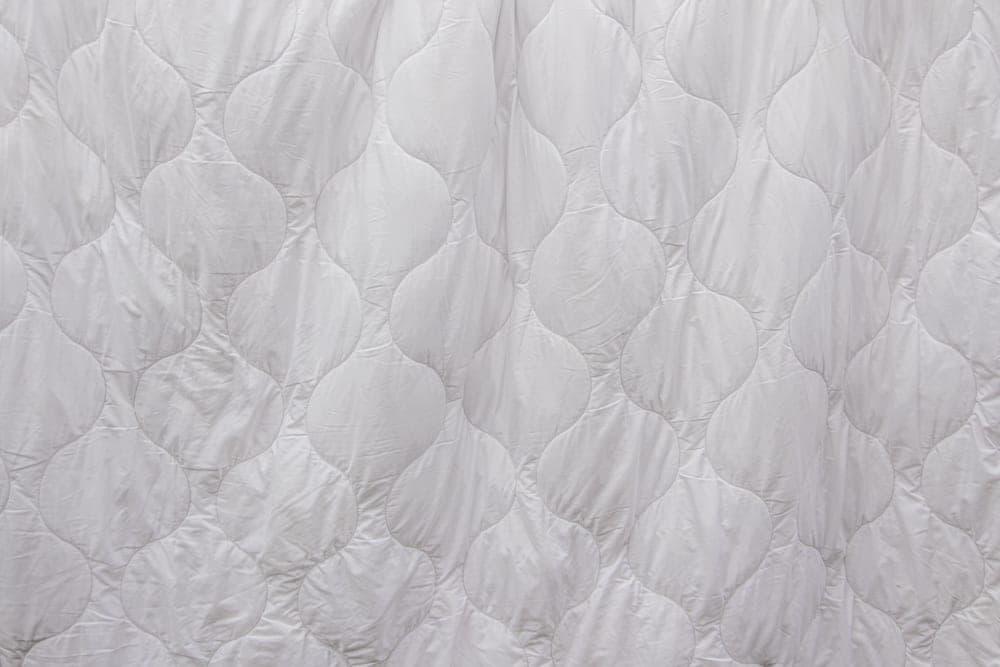 Gravity BlanketThe brand that made weighted blankets mainstream, and still the most even weight distribution of the bead blankets we shortlisted. | The evenly pinned, heavily tucked feeling | Evenly distributed glass beads with a removable cover | |
| 2 | 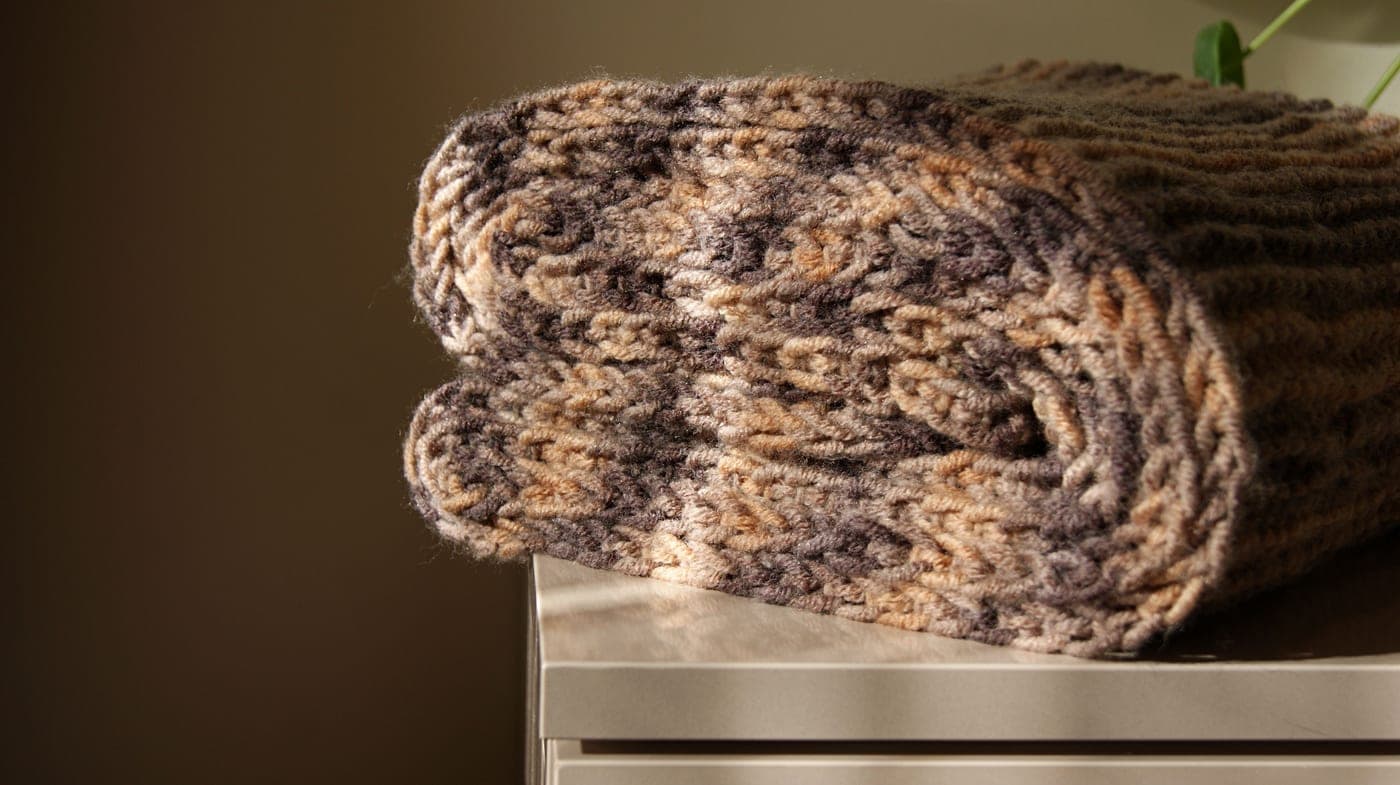 Bearaby Cotton NapperThe only mainstream weighted blanket with no beads at all - the weight is the yarn itself, so air moves straight through the knit. | Anyone who hates the sealed-duvet feeling | Bead-free: weight comes from organic cotton yarn |
We have no live price feed for this site yet, so every button reads “Check price on Amazon” rather than showing a number that could be out of date. As an Amazon Associate we earn from qualifying purchases.
Even weight distribution matters more than total weight for this use, so these are the two we would point you at.
Our top pick · The evenly pinned, heavily tucked feeling
1. Gravity Blanket
The brand that made weighted blankets mainstream, and still the most even weight distribution of the bead blankets we shortlisted.
- Fill:
- Evenly distributed glass beads
- Cover:
- Removable and machine washable
- Feel:
- Whole-body even pressure rather than localized weight
- Sizing:
- Single-sleeper sizes
What it gets right
- The pressure is genuinely even end to end, which is the whole point of the category
- Removable cover means you wash the cover, not the 20 lb insert
- Widely stocked, so returns and exchanges are simple
Where it falls short
- Priced well above the equivalent YnM
- Duvet-style construction is warm
- Sized for one person, so it will not cover a shared bed
Skip it if: You want something you can throw over both of you on the sofa. This is a personal-sized blanket.
Pick 2 · Anyone who hates the sealed-duvet feeling
2. Bearaby Cotton Napper
The only mainstream weighted blanket with no beads at all - the weight is the yarn itself, so air moves straight through the knit.
- Fill:
- None - weight is long-staple organic cotton yarn
- Weights:
- 8 lb (kids and travel), 12, 15, 20, 25 lb
- Construction:
- Open hand-knit weave
- Care:
- Machine washable
What it gets right
- No beads means no shifting, no bunching and no rustling
- The open knit breathes better than any quilted shell in this roundup
- Doubles as a sofa throw without looking like medical equipment
Where it falls short
- Among the most expensive options in the category
- The open weave catches on rings, watches and rough pet claws
- Heavy knit takes a long time to dry
Skip it if: You want the tucked-in, evenly pinned feeling a bead blanket gives. The knit drapes; it does not press.
Questions people actually ask
Do weighted blankets help anxiety attacks?
No published trial we are aware of tests weighted blankets on acute panic or anxiety attacks. The 2020 randomized study found reduced self-reported anxiety symptoms over four weeks of nightly use in people who had both clinical insomnia and a psychiatric diagnosis. That is a different claim from stopping an attack.
How long does it take for a weighted blanket to help anxiety?
The trial ran for four weeks and reported outcomes at the end of that period. Anecdotally people notice the settling sensation on the first few nights, but two weeks is a fair minimum before judging whether it changes anything for you.
Can a weighted blanket make anxiety worse?
For some people the sensation of being pinned reads as trapped rather than held, particularly if the blanket is too heavy. That is a genuine response and not something to push through - size down, or return it.
Do weighted blankets help with ADHD?
The 2020 trial population included participants diagnosed with ADHD alongside clinical insomnia, and the whole weighted-blanket group reported better sleep and lower symptom scores. The study was not designed to test ADHD outcomes specifically and we would not present it as evidence for that.
Is a weighted blanket a treatment for anxiety?
No. It is a comfort product with evidence that it helps some people sleep better and report lower anxiety symptoms. It treats nothing, and nothing on this page should replace advice from a clinician.
Sources
Back to the best weighted blankets.
Read next
- Best weighted blankets for a restless mindThe picks, if you have decided to try one.Read it
- Can't fall asleep, brain won't shut offThe free interventions to run first.Read it
- How heavy should a weighted blanket be?Too heavy reads as trapped. Get the number right.Read it
- Best white noise machinesWhat to give a busy mind to listen to instead.Read it