
How this page is funded: we earn a commission if you buy through the links below, at no extra cost to you. As an Amazon Associate we earn from qualifying purchases. It does not change which products we pick or the order they appear in. Full disclosure.
How these picks were made: by comparing published specifications and clearly-credited public reporting. We do not run a laboratory, we have not measured these products, and we do not claim to have slept with them. Here is exactly how we choose.
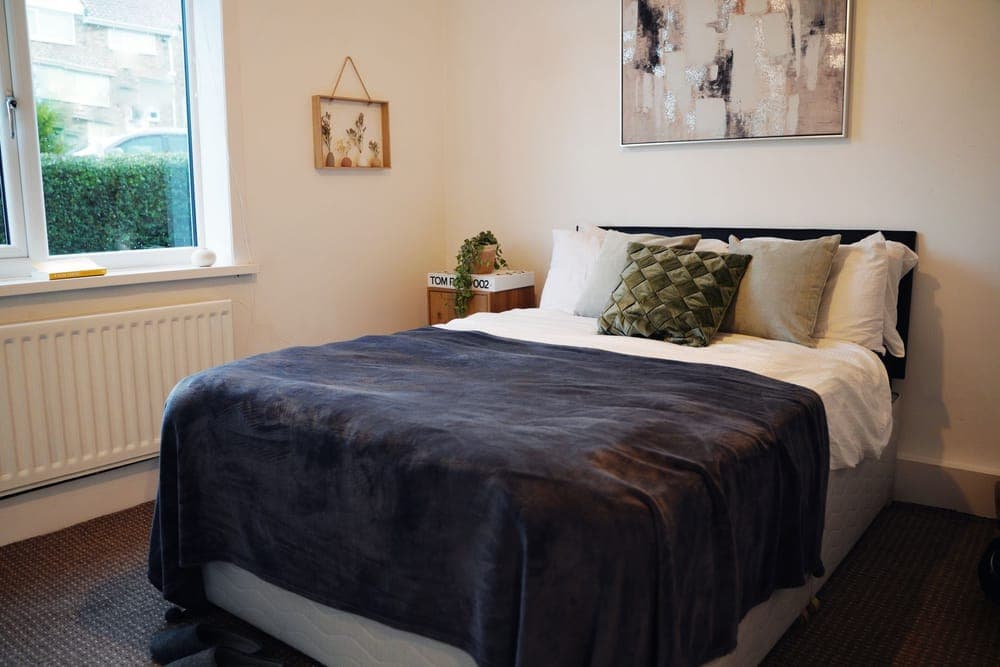
Short answer: buy the blanket that covers you from shoulders to feet with a few inches to spare, and ignore the size of your bed. For most adults that is a 60 x 80 in blanket, sold as “twin” or simply “adult” depending on the brand. Overhang is not a bonus - it is weight hanging off the side of the mattress, pulling the blanket off you all night.
This is the question people ask second, after weight, and it is the one where the obvious answer is wrong. You have bought bedding your whole life by matching it to the mattress. A weighted blanket is the one piece of bedding where doing that actively makes it work worse.
Why body size, not bed size
A weighted blanket works by distributing a fixed number of pounds across the area of your body. Two consequences follow, and both of them argue against a bigger blanket.
- Spread the same weight over a larger blanket and you feel less of it. A 15 lb blanket in a 60 x 80 in size puts noticeably more pressure on you than the same 15 lb stretched across a king-size 88 x 104 in panel, because a large share of those pounds is now lying on the mattress either side of you rather than on you.
- Overhang drags. Weight hanging over the edge of the bed has gravity working on it all night. It creeps, it slides, and at some point between 1am and 4am it takes the rest of the blanket with it onto the floor. People describe this as the blanket “never staying put” and buy a heavier one, which makes it worse.
The rule that falls out of this is simple: the blanket should end at roughly the mattress edge or just inside it, and it should cover you from shoulder to foot. Nothing more.
The sizes, and who each one is for
Dimensions vary a little between makers, so treat these as the common sizes rather than a standard. Match on your height first.
| Common size | Typical dimensions | Who it fits |
|---|---|---|
| Throw / lap | About 40 x 60 in | Sofa use, or a child under adult supervision - not a bed blanket |
| Twin / single adult | About 48 x 72 in | Adults up to roughly 5 ft 6 in; teens |
| Twin XL / standard adult | About 60 x 80 in | The default for most adults, and most brands' best-stocked size |
| Queen | About 60 x 80 to 80 x 87 in | Tall adults, or one person who moves a lot in a wide bed |
| King | About 88 x 104 in | Two people sharing one blanket - see the warning below |
Note the overlap between queen and twin XL. Several brands label a 60 x 80 in blanket “queen,” which is a mattress size, not a body size. Always check the dimensions in inches rather than trusting the word.
Start from your height
The practical test is coverage from the top of your shoulders to a few inches past your feet. Measure that rather than guessing from your bed.
- Under about 5 ft 4 in: a 48 x 72 in blanket covers you fully, and the smaller panel concentrates the weight pleasantly.
- Roughly 5 ft 4 in to 6 ft: 60 x 80 in is the standard answer and will be in stock in the widest range of weights.
- Over about 6 ft 2 in: you want an 80 in or longer panel, which in practice means checking the queen listings for one that is long rather than wide.
Width matters less than length for one person, with one exception: if you are a determined roller, a slightly wider blanket survives the night better simply because there is more of it to roll into.
Couples: the honest answer is two blankets
This is the section people arrive looking for, so here it is without hedging. One king weighted blanket shared by two people is almost always worse than two separate blankets, for three reasons.
The weight will be wrong for at least one of you. The weight convention is based on an individual’s body weight, and a king blanket is sold at a single total poundage. Two people of different sizes under one blanket cannot both be correctly weighted. Our page on how heavy a weighted blanket should be exists because getting this wrong is the main reason blankets end up in a cupboard.
It transmits movement instead of absorbing it. One of the quiet benefits of weighted bedding for a light sleeper is that it dampens your own movement. A shared blanket does the opposite: your partner turning over now moves twenty-five pounds that is also lying on you.
It is extremely difficult to handle. A king weighted blanket at a credible weight is a two-person object to move, to strip and to put back on the bed, and it will not fit in most domestic washing machines - see how to wash a weighted blanket.
The arrangement that works is two individually-sized blankets side by side, each at its own correct weight, on top of a shared flat sheet. It looks odd for about a week.
Sizing for children
Children’s sizing is a safety topic before it is a comfort one, and we are not going to compress it into a paragraph here. The short version is that an adult blanket on a child’s bed is mostly overhang, that weight must be scaled to the child’s body, and that there are firm age and supervision rules that come before any of the sizing arithmetic. Those rules are set out on the weighted blankets for kids page, and on the teens page for older children. Read the safety section there before buying anything.
How size and weight interact
The two decisions are not independent, and brands do not always make the relationship obvious. The number that actually governs how the blanket feels is pounds per square foot, not total pounds.
That means a 20 lb blanket in a 60 x 80 in size and a 20 lb blanket in a king size are genuinely different products, even though the listing weight is identical. If you are replacing a blanket that felt right and buying a different size, keeping the same poundage will not keep the same feel - going bigger will feel lighter, and going smaller will feel heavier.
A practical consequence: if you loved a weighted blanket on a sofa and want the same feeling in bed, you usually need to go up in pounds when you go up in dimensions, not keep them the same.
The sizing mistakes we see most
- Buying king because the bed is king. The most common one, and the most expensive to fix.
- Buying extra length “to tuck in.” Weighted blankets are not tucked. The weight is the thing that keeps them in place, and tucking one under a mattress creates tension that pulls it off you.
- Buying a throw as a bed blanket. A 40 x 60 in throw does not reach your feet, and partial coverage is the one configuration that reliably feels unpleasant.
- Ignoring the duvet cover size. If you want to put the blanket in a cover, the cover has to match the blanket’s dimensions rather than the bed’s. A loose cover lets the blanket shift inside it all night.
- Not checking the washing machine. Size and washability are the same decision. Work out what your machine takes before you buy, not after.
Three blankets with sizing worth buying into
Tap any row to jump to the full write-up. The photographs are licensed stock images chosen to illustrate the category - they are not photographs of these specific products, and each one’s alt text describes what is actually shown.
| # | Product | Best for | The spec that decides it | Price |
|---|---|---|---|---|
| 1 | 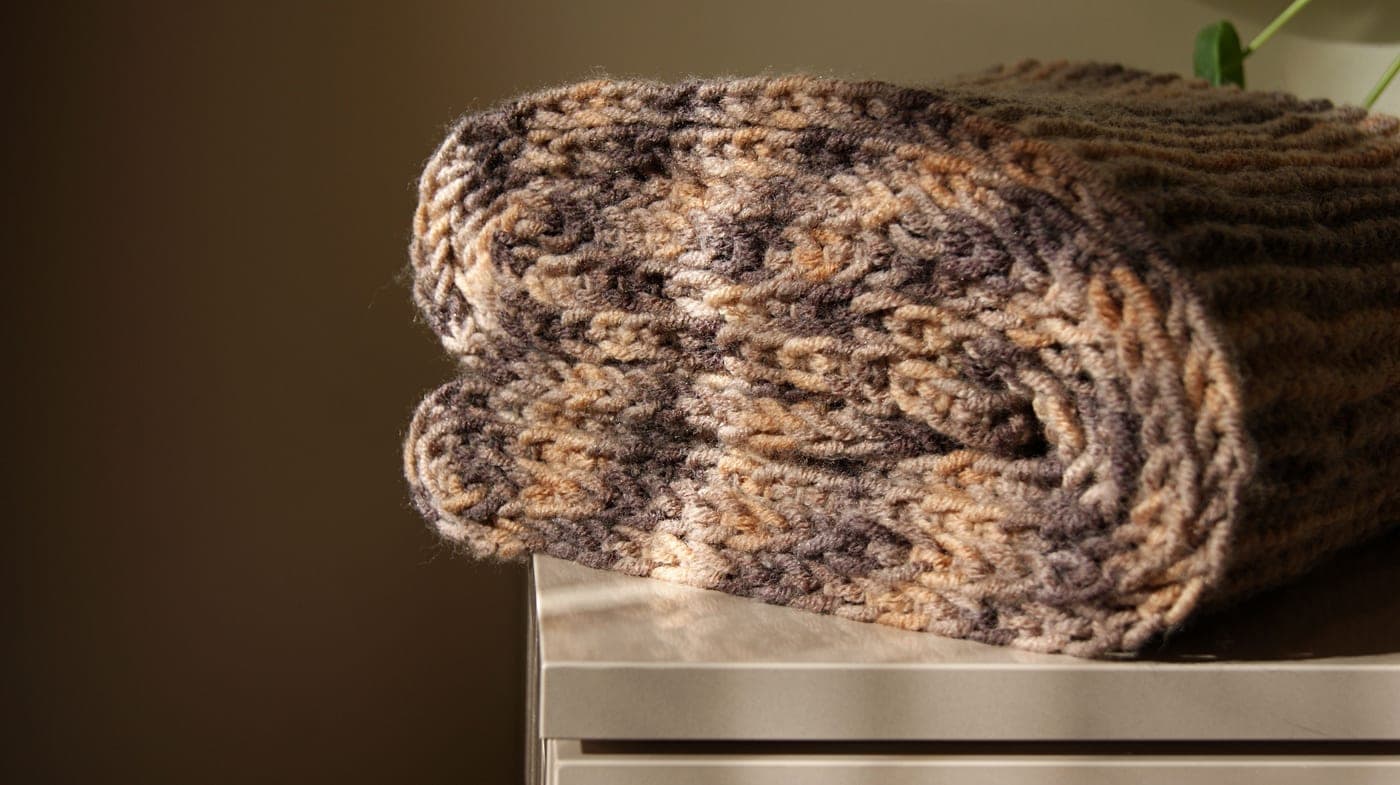 Bearaby Cotton NapperThe only mainstream weighted blanket with no beads at all - the weight is the yarn itself, so air moves straight through the knit. | Anyone who hates the sealed-duvet feeling | Bead-free: weight comes from organic cotton yarn | |
| 2 |  Luna Cotton Weighted BlanketOEKO-TEX cotton, glass beads and eight corner loops for a duvet cover - the mid-price blanket that keeps turning up in tested roundups. | A cotton bead blanket without the premium price | OEKO-TEX 300 thread count cotton shell, glass-bead fill, 10-30 lb ladder | |
| 3 |  YnM Weighted BlanketThe sizing catalog, not the luxury pick: glass beads in small quilted pockets, in weights and dimensions from child up to king. | Odd sizes and weights nobody else makes | 5 to 30 lb across 7 sizes |
We have no live price feed for this site yet, so every button reads “Check price on Amazon” rather than showing a number that could be out of date. As an Amazon Associate we earn from qualifying purchases.
Chosen for the range of dimensions each maker offers rather than for a single size. Specifications are the manufacturers' own and nothing here has been tested by us.
Our top pick · Anyone who hates the sealed-duvet feeling
1. Bearaby Cotton Napper
The only mainstream weighted blanket with no beads at all - the weight is the yarn itself, so air moves straight through the knit.
- Fill:
- None - weight is long-staple organic cotton yarn
- Weights:
- 8 lb (kids and travel), 12, 15, 20, 25 lb
- Construction:
- Open hand-knit weave
- Care:
- Machine washable
What it gets right
- No beads means no shifting, no bunching and no rustling
- The open knit breathes better than any quilted shell in this roundup
- Doubles as a sofa throw without looking like medical equipment
Where it falls short
- Among the most expensive options in the category
- The open weave catches on rings, watches and rough pet claws
- Heavy knit takes a long time to dry
Skip it if: You want the tucked-in, evenly pinned feeling a bead blanket gives. The knit drapes; it does not press.
Pick 2 · A cotton bead blanket without the premium price
2. Luna Cotton Weighted Blanket
OEKO-TEX cotton, glass beads and eight corner loops for a duvet cover - the mid-price blanket that keeps turning up in tested roundups.
- Fill:
- Glass microbeads with a fiber layer
- Shell:
- OEKO-TEX certified 300 thread count cotton
- Weights:
- 10 lb through 30 lb, in several sizes
- Cover:
- Shell is not removable; 8 loops take a separate duvet cover
- Care:
- Machine washable; 2-year warranty
What it gets right
- A cotton shell rather than polyester, so it does not trap heat the way minky does
- The widest weight ladder of the mid-price blankets
- Loops are sewn in, so a cover will not slide around inside
Where it falls short
- The blanket itself has no removable cover - you buy that separately
- The bare cotton shell is plain to look at
- The heaviest sizes are hard work in a domestic washing machine
Skip it if: You want the cover included in the box. Quility ships one with the blanket.
Pick 3 · Odd sizes and weights nobody else makes
3. YnM Weighted Blanket
The sizing catalog, not the luxury pick: glass beads in small quilted pockets, in weights and dimensions from child up to king.
- Fill:
- Glass beads in small quilted pockets
- Weights:
- 5 to 30 lb
- Sizes:
- 7, from child through king
- Construction:
- Layered quilted pocket system
What it gets right
- The widest weight range in the category, which matters if the ten percent rule lands you on an unusual number
- Small pockets keep beads distributed better than large-baffle designs
- Consistently the cheapest way into a proper glass-bead blanket
Where it falls short
- Shell fabric quality is the trade-off for the price
- Runs warm compared with cotton-knit options
- Frequently sold without the duvet cover you will probably want
Skip it if: You are a hot sleeper. This is a warm blanket and no cover fixes that.
Questions people actually ask
What size weighted blanket should I get?
Size it to your body, not your mattress. The blanket should cover you from the shoulders to a few inches past your feet and end at about the edge of the bed. For most adults that is a 60 x 80 in blanket. Under about 5 ft 4 in, a 48 x 72 in size fits better; over about 6 ft 2 in, look for a longer panel.
Should a weighted blanket hang over the sides of the bed?
No. Overhang is weight hanging off the mattress with gravity pulling on it all night, which is why oversized blankets creep and end up on the floor. It also spreads the same poundage over a larger area, so you feel less of the pressure you paid for.
Can two people share one weighted blanket?
You can, but it usually works badly. A single king blanket is sold at one total weight, so it cannot be correctly weighted for two different bodies; it transmits your partner's movement rather than absorbing it; and it is very hard to handle and to wash. Two individually sized blankets side by side is the arrangement that works.
Is a queen weighted blanket the same as a queen duvet?
Often not. Several brands label a 60 x 80 in blanket 'queen' even though a queen mattress is wider than that, because weighted blankets are sized to bodies rather than beds. Always check the dimensions in inches rather than trusting the size name.
Does a bigger weighted blanket feel heavier?
The opposite. What you feel is pounds per square foot, so the same total weight spread over a larger blanket feels lighter, with more of the load resting on the mattress beside you rather than on your body. If you go up a size and want the same feel, you need to go up in weight too.
What size weighted blanket for a child?
Smaller than an adult's, and weight is the more important question. A child's blanket should be scaled to the child's body rather than the bed, and there are age and supervision rules that come before any sizing decision. Read the safety section on our weighted blankets for kids page before buying.
Sources
- Sleep Foundation - Best Weighted Blankets (specification comparison).
- Baloo Living - weighted blanket range, weights and materials (manufacturer).
- Luna - Luxe Cotton Weighted Blanket (manufacturer specifications).
- Bearaby - Tree Napper product specifications (manufacturer).
- Ekholm B, Spulber S, Adler M. A randomized controlled study of weighted chain blankets for insomnia in psychiatric disorders. Journal of Clinical Sleep Medicine, 2020.
- Gillette Children's - Weighted Blankets patient education (pediatric weight guidance).
Back to the best weighted blankets.
Read next
- How heavy should a weighted blanket be?The other half of this decision, with the full chart.Read it
- Best weighted blanket brandsWhich makers offer which sizes, and what each builds.Read it
- Weighted blanket vs duvetWhy duvet sizing logic does not transfer.Read it
- How to wash a weighted blanketSize and washability are the same decision.Read it
- Weighted blankets for kidsThe safety rules that come before any sizing question.Read it