
How this page is funded: we earn a commission if you buy through the links below, at no extra cost to you. As an Amazon Associate we earn from qualifying purchases. It does not change which products we pick or the order they appear in. Full disclosure.
How these picks were made: by comparing published specifications and clearly-credited public reporting. We do not run a laboratory, we have not measured these products, and we do not claim to have slept with them. Here is exactly how we choose.
Short answer: yes. For a healthy adult, sleeping under a weighted blanket every night is exactly what the product is for, and there is no mechanism by which nightly use causes harm or builds tolerance. The people who should not are a short, specific list - and the reasons blankets actually get abandoned are mundane: the blanket is too hot, the weight was chosen wrong, or washing it is such a chore that it stops happening.
We are a gear site rather than a clinic, so this is the equipment answer: what the research base supports, where the genuine cautions are, and what changes at the point of purchase if you intend to use one nightly. If you have not decided whether to buy one at all, that is a different question and it lives on are weighted blankets worth it. The whole category is on the weighted blanket hub.
What the research actually studied
The most useful study in this field is Ekholm and colleagues’ randomized controlled trial in the Journal of Clinical Sleep Medicine (2020), which tested weighted chain blankets for insomnia in people with psychiatric disorders, and the American Academy of Sleep Medicine’s summary of it reports a decrease in insomnia severity. That trial ran over weeks of nightly use, which is the relevant point here: the thing being studied was nightly use, not an occasional nap.
What that does not establish is a benefit for everyone, and we are not going to overstate it. The population was specific, the sample was not huge, and the field as a whole is thin - most notably, Gringras and colleagues’ 2014 trial in Pediatrics found that weighted blankets did not improve sleep in autistic children, and the hospital that ran it said so plainly. A product can be perfectly safe to use nightly without being proven to help you.
Who should not sleep under one nightly
This list is short and it is the part worth reading carefully. In each case the answer is to ask a clinician rather than to work it out from a product page.
- Anyone who cannot move the blanket off themselves. This is the one genuine safety principle in the whole category. It is why infants and toddlers must never be under one, and why it applies to anyone with significant mobility limitation.
- Anyone with a respiratory or circulatory condition for which chest pressure could matter, including sleep apnea. Weight on a chest is not a neutral thing and that is a medical judgment.
- Children, without proper weight guidance. Pediatric advice is stricter and lighter than adult rules of thumb - Gillette Children’s guidance is the kind of source to work from, and our kids page covers it.
- Anyone who is claustrophobic enough that the pressure causes panic. Not a safety issue, but a reason the blanket will not be used, and worth knowing before you spend.
The three real reasons nightly use stops
Almost nobody abandons a weighted blanket for a safety reason. Here is what actually happens, in order of how often we see it.
Heat. This is the overwhelming first cause, and it is seasonal - a blanket bought in November becomes unusable in June. The fix is a construction that breathes: an open knit with air moving through it, or a cotton shell rather than a polyester minky backing. The cooling roundup ranks the category on this, and the honest answer for some people is two blankets or a seasonal swap.
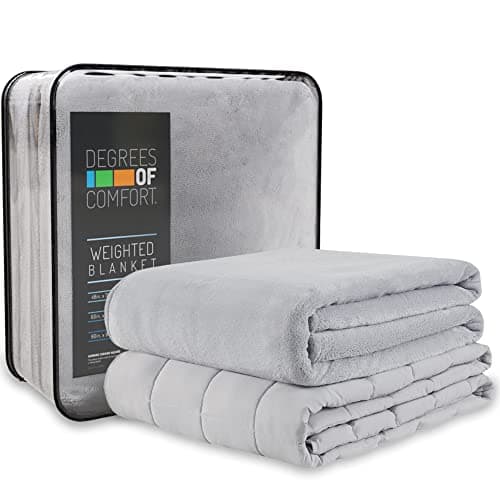
The wrong weight. A blanket that is too heavy is not a cozier blanket - it is one you fight. The common rule of thumb is roughly ten percent of body weight; Degrees of Comfort, for instance, suggests 10 to 14 percent for its own range. If you are between options, lighter is the safer error, and the weight guide goes through it properly.
Laundry. A 20 lb blanket that has to go in the washer whole is a genuine chore, and when washing is hard it does not happen. A removable cover converts the problem into normal laundry, which is the single best predictor of a blanket still being in use a year later - the washable-cover page is about exactly this, and how to wash one covers the mechanics.
What to buy if you intend to use it nightly
Nightly use changes the specification you should be shopping for, and the change is not to spend more.
- Prioritize breathability over weight. An open knit or a 100% cotton shell and liner. Polyester minky is the warmest construction in the category and the most common reason a blanket gets retired.
- Insist on a removable, washable cover - or pick a knit designed to be machine washed whole. Bare Home’s shell is not removable but it takes a separate duvet cover on eight loops, which is a workable middle ground.
- Check the baffles. Double-stitched pockets are the best single predictor of a bead blanket that will not pool at one end after a year of nightly use and repeated washing.
- Buy the lighter option if you are between two. You will use a slightly-too-light blanket every night and a slightly-too-heavy one occasionally.
The first two weeks, and what tolerance really means
Plenty of people find the first few nights strange, and the pressure takes some getting used to - which is normal and not a sign the weight is wrong. What is a sign is waking up to push it off, overheating, or any numbness or tingling in a limb; those mean too heavy, too warm, or the blanket is bunched, respectively.
A note on the thing people worry about most: there is no evidence of physiological tolerance, in the sense of needing a heavier blanket over time to get the same effect. What does happen is habituation - the sensation stops being novel and stops being noticeable, which some people read as the blanket having stopped working. Going heavier is not the answer to that. If the blanket is no longer doing anything for you, the useful question is what problem you bought it for; the anxiety page and the racing-mind page are both honest about how much of that a blanket can carry.
And one practical note for couples: two people under one weighted blanket is a worse experience than it sounds, because the blanket does not move independently with each of you. The couples page makes the case for two blankets, and it is the single change that most often rescues nightly use in a shared bed.
For the rest of the practical rules - placement, acclimatization, heat and who should not use one - how to use a weighted blanket collects them in one place.
Blankets built to be used 365 nights a year
Tap any row to jump to the full write-up. Each thumbnail is the product photograph from that item’s own Amazon listing, and the price in the last column is the one Amazon showed at the last check.
| # | Product | Best for | The spec that decides it | Price |
|---|---|---|---|---|
| 1 | 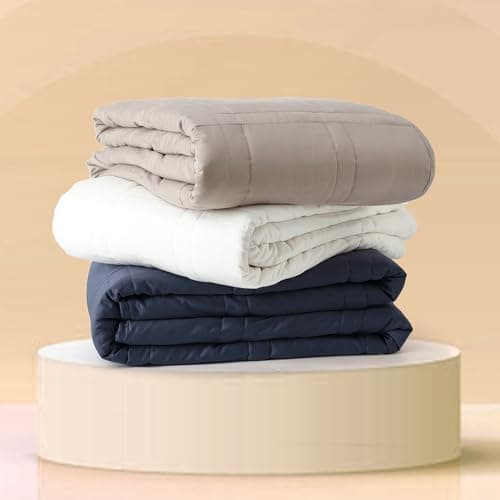 Baloo Living Weighted BlanketA conventional glass-bead blanket done carefully: 100% cotton shell and liner, and double-stitched baffles so the beads stay where they were put. | A cotton bead blanket that does not run hot | Glass microbeads in a 100% cotton shell and liner | |
| 2 | 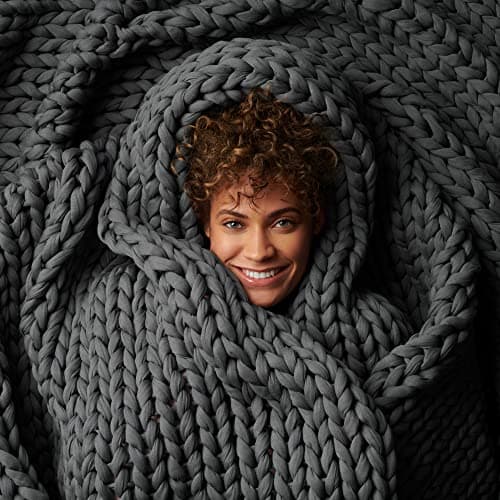 Bearaby Cotton NapperThe only mainstream weighted blanket with no beads at all - the weight is the yarn itself, so air moves straight through the knit. | Anyone who hates the sealed-duvet feeling | Bead-free: weight comes from organic cotton yarn | |
| 3 | 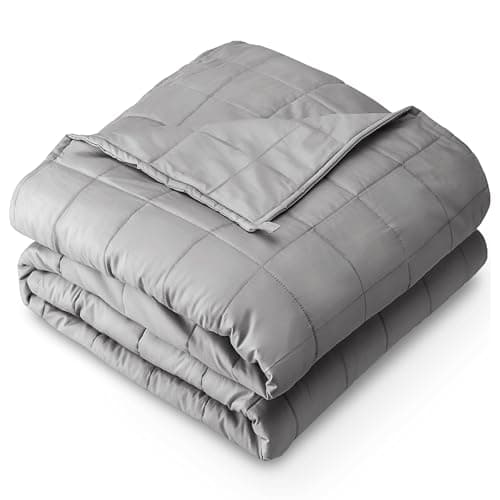 Bare Home Cotton Weighted BlanketAll-natural cotton and nontoxic glass beads in small reinforced pockets - the cheapest way to get a cotton shell instead of a polyester one. | A cotton bead blanket without the premium price | All-natural 100% cotton shell, nontoxic glass-bead fill, 15 lb at 48 x 72 in |
Prices come straight from Amazon and are refreshed daily; the date they were checked is stamped under the buy buttons below. If a price has gone stale or a listing has no offer, the button falls back to “Check price on Amazon” rather than showing a number we cannot stand behind. As an Amazon Associate we earn from qualifying purchases.
Chosen for breathability and washability rather than for price - the two things that decide whether a blanket is still on the bed in six months. Specifications are the manufacturers' own.
#ad How we are funded · price as of November 12, 2026
Our top pick · A cotton bead blanket that does not run hot
1. Baloo Living Weighted Blanket
A conventional glass-bead blanket done carefully: 100% cotton shell and liner, and double-stitched baffles so the beads stay where they were put.
- Fill:
- Mini glass beads
- Shell and liner:
- 100% cotton inside and out, OEKO-TEX Standard 100 certified
- Sizes:
- 9 lb mini, 12 lb throw (42 x 72 in), 15 and 20 lb full/queen
- Care:
- Machine washable and dryer safe - cold, gentle, low heat
What it gets right
- Cotton on both faces rather than a polyester minky backing - the maker's whole pitch
- The 12 lb throw concentrates its weight in a smaller area, so it feels denser than the number suggests
- Dryer safe, which almost nothing else in this roundup is
Where it falls short
- Cotton is breathable but a quilted shell still traps more heat than an open knit
- The throw is sofa-sized rather than bed-sized - you size up for a bed
- Bulky and slow to dry after washing
Skip it if: You run very hot. A quilted construction is still two layers of fabric plus fill, whatever the fiber.
#ad How we are funded · price as of November 12, 2026
Pick 2 · Anyone who hates the sealed-duvet feeling
2. Bearaby Cotton Napper
The only mainstream weighted blanket with no beads at all - the weight is the yarn itself, so air moves straight through the knit.
- Fill:
- None - weight is long-staple organic cotton yarn
- Weights:
- 10, 15, 20, 25 lb (manufacturer's published ladder)
- Construction:
- Open hand-knit weave
- Care:
- Machine washable
What it gets right
- No beads means no shifting, no bunching and no rustling
- The open knit breathes better than any quilted shell in this roundup
- Doubles as a sofa throw without looking like medical equipment
Where it falls short
- Among the most expensive options in the category
- The open weave catches on rings, watches and rough pet claws
- Heavy knit takes a long time to dry
Skip it if: You want the tucked-in, evenly pinned feeling a bead blanket gives. The knit drapes; it does not press.
#ad How we are funded · price as of November 12, 2026
Pick 3 · A cotton bead blanket without the premium price
3. Bare Home Cotton Weighted Blanket
All-natural cotton and nontoxic glass beads in small reinforced pockets - the cheapest way to get a cotton shell instead of a polyester one.
- Fill:
- Nontoxic glass beads in small pockets
- Shell:
- All-natural 100% cotton
- Size:
- 48 x 72 in, 15 lb - the maker's 10%-of-body-weight pick for a 150 lb adult
- Cover:
- None included; Bare Home sells a matching duvet cover separately
- Care:
- Machine wash cold on gentle, hang or air dry; 30-night trial
What it gets right
- A cotton shell rather than polyester, so it does not trap heat the way minky does
- Reinforced stitching and smaller pockets, which is what stops beads pooling at the foot
- A 30-night sleep-on-it window, unusual at this price
Where it falls short
- No removable cover - you buy that separately
- The bare cotton shell is plain to look at
- Hang-dry only, so laundry day takes longer than a tumble-dry blanket
Skip it if: You want the cover included in the box. The Degrees of Comfort blanket ships one with it.
Questions people actually ask
Can you use a weighted blanket every night?
Yes, for a healthy adult that is what they are designed for, and the main randomized trial in this field studied weeks of nightly use. There is no mechanism by which nightly use causes harm. The short list of people who should not includes anyone who cannot move the blanket off themselves, and anyone with a respiratory or circulatory condition where chest pressure matters.
Is it bad to sleep with a weighted blanket every night?
Not for most people. What goes wrong is practical rather than medical: the blanket runs too hot as the seasons change, the weight was chosen too heavy, or washing a 20 lb blanket is enough of a chore that it stops happening. All three are purchase decisions you can get right up front.
Do you build up a tolerance to a weighted blanket?
There is no evidence of physiological tolerance - you do not need a heavier blanket over time to get the same effect. What happens is habituation: the sensation stops being novel and stops being noticeable. Going heavier is not the fix, and a blanket that has stopped helping is a reason to revisit what you bought it for.
Should I take nights off from a weighted blanket?
You do not need to for safety reasons. Plenty of people use one seasonally instead - a heavier or warmer blanket in winter and something lighter in summer - which is less about taking breaks and more about the fact that one blanket rarely suits every month of the year.
What should I look for if I will use it every night?
Breathability first: an open knit or a 100% cotton shell and liner rather than polyester minky, which is the warmest construction in the category. Then a removable washable cover, double-stitched baffles so the fill does not pool after a year of washing, and the lighter of two weights if you are undecided.
Can two people share one weighted blanket every night?
It works much less well than it sounds, because the blanket does not move independently with each person - one of you gets dragged every time the other turns. Two single blankets is the usual fix, and it is the change that most often rescues nightly use in a shared bed.
Sources
- Ekholm B, Spulber S, Adler M. A randomized controlled study of weighted chain blankets for insomnia in psychiatric disorders. Journal of Clinical Sleep Medicine, 2020.
- American Academy of Sleep Medicine - Study shows weighted blankets can decrease insomnia severity (2020).
- Gringras P, Green D, Wright B, et al. Weighted blankets and sleep in autistic children - a randomized controlled trial. Pediatrics, 2014;134(2):298-306 (PubMed 25022743).
- Guy's and St Thomas' NHS Foundation Trust - Heavy blankets do not help children with autism to sleep (plain-language summary from the hospital that ran the trial).
- Gillette Children's - Weighted Blankets patient education (pediatric weight guidance).
- Degrees of Comfort - washable weighted blanket with a removable Cozyheat minky cover (Amazon listing, specifications as published by the seller).
- Baloo Living - weighted blanket range, weights and materials (manufacturer).
Back to the best weighted blankets.
Read next
 Are weighted blankets worth it?Whether to buy one at all, evidence first.Read it
- Weighted blanket side effectsWhat can go wrong, and what is folklore.Read it
- What weight weighted blanket do I need?The decision that decides whether you keep using it.Read it
- Best cooling weighted blanketsThe first reason nightly use stops.Read it
 Weighted blankets with a washable coverThe laundry problem, solved at purchase.Read it