
How this page is funded: we earn a commission if you buy through the links below, at no extra cost to you. As an Amazon Associate we earn from qualifying purchases. It does not change which products we pick or the order they appear in. Full disclosure.
How these picks were made: by comparing published specifications and clearly-credited public reporting. We do not run a laboratory, we have not measured these products, and we do not claim to have slept with them. Here is exactly how we choose.
Short version: the Loop Quiet 2 is the pick, because it is reusable silicone that washes, ships with several tip sizes and lives in a carry case - three things that matter far more on the road than a high blocking number. The Loop Dream is the upgrade if you want more attenuation in a body shaped to be slept on. The Flents Protechs Super Sleep is the budget pick - cheap sleep-specific foam you can lose without caring, which is the single most common way travel earplugs end.
The honest starting point: there is no such thing as a travel-specific earplug. What exists is a set of constraints that travel imposes, and plugs that handle those constraints better than others. Rank by the constraints, not by the marketing, and the list reshuffles noticeably from the main earplug roundup.
What travel actually changes
Five things, and they are the reason this page exists rather than being a link to the general roundup.
- You have no spares and no shop. At home, a foam plug that tears is a trip to the drawer. In a hotel at 1am it is the end of your night. This is the strongest argument for a reusable plug in a case, or for packing a bulk strip of disposables rather than two pairs.
- Hygiene gets harder. You are handling plugs with airport hands, setting them down on surfaces you did not clean, and repacking them damp. A washable silicone plug and a hard case is a genuinely better system than loose foam in a pocket. The NHS is clear that you should not push anything into the canal to clear wax (NHS on earwax build-up), and travel is exactly when people start improvising.
- The noise is unfamiliar, not just loud. This is the under-appreciated one. Sleeping somewhere new is measurably worse than sleeping at home even when the room is quiet - half the brain stays more alert on the first night in an unfamiliar place (the first-night effect). Plugs help with the noise half of that, and nothing helps with the rest, which is worth knowing before you blame the earplugs. Why you cannot sleep in hotel rooms covers the whole problem.
- You usually still need to be wakeable. A checkout time, an early flight, a shared room, a fire alarm in a building you do not know the layout of. Maximum attenuation is often the wrong choice on the road even when it is the right choice at home - plugs that still let you hear your alarm goes into that properly.
- The pillow is not your pillow. A hotel pillow is often firmer and taller than the one you are used to, which presses a protruding plug further into the canal. Low-profile shapes matter more away from home than at home.
How we chose
Criteria, in the order they decide a packing list:
- Does it come with a case, and will the case survive a bag? A plug loose in a wash bag collects lint and gets thrown away. This is the first filter and it eliminates a lot of otherwise-good plugs.
- Reusable or genuinely disposable - not the awkward middle. Either you wash it and keep it for months, or you accept it is a consumable and pack enough. Foam that you keep re-wearing for a fortnight because you only brought one pair is the worst of both.
- Sized tips. Fit decides real-world attenuation far more than the printed rating does, and NIOSH recommends derating published laboratory figures substantially for field use (NIOSH 98-126). A plug that ships several tip sizes lets you find your seal once and then travel with it.
- Profile against an unfamiliar pillow. Flat beats protruding.
- Attenuation, last. It matters, but it is the criterion that travels best - any of these will take the edge off a corridor. Fit, hygiene and not losing them are what actually decide whether you sleep.
- No testing we did not do. We have not taken these on a trip with a meter. Every figure below is the manufacturer’s published specification, attributed as such, and the cons are listed on every pick.
The picks, and what is wrong with each
Loop Quiet 2 - the pick. Reusable silicone at 14 dB NRR and 24 dB SNR - the same plug rated under the US and European standards (US specifications) (why the European figure differs) - with multiple ear-tip sizes in the box, washable and reused for months. It is on this list for the system rather than the number: a case, sizes, and a plug you can rinse in a hotel sink and wear again tomorrow. The deliberately moderate blocking is a feature on the road, because you can still hear an alarm. Cons: 14 dB NRR is the lowest figure on this page by a distance, so for a genuinely loud room it will not be enough; silicone does not suit every ear; and the tips are a consumable you will eventually need to replace. Full detail in the Quiet 2 review.
Loop Dream - the upgrade. 21 dB NRR and 27 dB SNR in a soft silicone body with foam-silicone hybrid tips, four tip sizes XS to L plus four Double Tip sizes, in a shape built to be slept on (manufacturer specifications). The widest sizing range here, which matters when you only get one shot at the fit before the trip. Independent coverage reaches much the same conclusion about the shape (T3 on the Dream). Cons: it is the most expensive plug on this page, the tips are a replaceable consumable, and at 21 dB you are closer to not hearing a travel alarm, so set a backup.
Alpine SleepDeep - if silicone and foam have both failed you. An oval body that follows the ear’s contours so it sits flat under a pillow, silicone-free and hypoallergenic, in small, medium and large plus a multisize pack (manufacturer specifications). The multisize pack is the reason it belongs on a travel page specifically: you can sort out your fit before you go rather than discovering the problem in a hostel. Cons: the maker publishes a fit-and-contour story rather than a US NRR figure, so it is harder to compare on paper; and the oval body takes a few nights to learn.
Flents Protechs Super Sleep - the budget pick. NRR 29 dB foam the listing describes as pressure-reducing, sold specifically for sleeping rather than for work sites, in 50-pair boxes and a 10-pair pack to test the fit (listing specifications). Pack the 10-pair for a trip. This is the right answer for anyone who loses things, because losing one costs nothing and you have nine more. Cons: disposable, so it is a recurring cost and a small waste stream; foam cannot be washed and should be discarded after a few nights (manufacturer guidance); and at NRR 29 you may well sleep through the alarm you set.
Mack’s Pillow Soft - the flattest thing you can pack. Moldable latex-free silicone putty at NRR 22 dB, and the important detail is that the maker is explicit it is a cover over the canal entrance rather than an insert (specifications and fitting instructions). Nothing sits flatter against an unfamiliar pillow. Cons: you shape it by hand each night, which is unpleasant with travel-grade hand hygiene; it picks up hair and lint ferociously in a bag; and it is the wrong product for anyone who wants to put something in and roll over.
Planes and hotels are not the same problem
Worth separating, because the advice differs.
In a hotel the noise is mostly structural and intermittent: a corridor door, the lift, the room above, a street. Plugs handle the mid and high frequencies of that well. What they handle badly is low-frequency bass through the structure - improving low-frequency attenuation in passive plugs is an open engineering problem rather than a product you have failed to find (Carillo et al. on low-frequency attenuation). If the hotel problem is a nightclub below you, pack a small masking machine instead - sound machines for travel ranks those, and a machine plus plugs is the combination most frequent travelers land on.
On a plane the noise is a continuous broadband roar, which is the easiest case for a plug and also the case where moderate attenuation is plenty. One caution worth stating plainly and then leaving alone: pressure changes during descent are an ear-health topic rather than a sleep-gear one, and if you have had pain or congestion on a flight before, that is a question for a clinician rather than for a roundup.
In a shared room or hostel the deciding factor is usually being able to hear your own alarm without waking six other people. That is an argument for moderate blocking plus a vibrating or in-ear alarm rather than for maximum attenuation.
Which to pack, by trip
A week of hotels for work. The Loop Quiet 2, and nothing else. You will be in a different room every night or two, the noise profile changes each time, and the thing that matters is a plug that is always clean, always in its case and always the right size. Moderate attenuation is the right call because you have early starts and cannot afford to sleep through the alarm.
One long-haul flight each way. The Flents foam, in the 10-pair pack. A plane is continuous broadband noise, which is the easiest thing in the world for foam to flatten, and you do not need the plug to survive the trip - you need two pairs that cost almost nothing. Spend the money you saved on a mask instead; travel sleep masks matter more on a plane than plugs do, because cabin lighting is the harder problem.
A hostel or a shared room. The Loop Dream, for the tip range. You want the best seal you can get because the noise is unpredictable and close, and the sizing options are what get you there on the first night rather than the third. Pair it with a vibrating or in-ear alarm so you are not relying on a sound you have deliberately blocked.
Camping, or a trip where things get lost and wet. Mack’s Pillow Soft. It is putty, so there is nothing to break, nothing to charge and nothing to lose a tip from, and a replacement costs less than a coffee.
Anywhere, if standard plugs have never sealed for you. The Alpine SleepDeep multisize pack, bought well before the trip. Travel is the worst possible time to be discovering that your ear canals are narrower than average - earplugs for small ears is the page to read first if that is you.
Packing and hygiene, briefly
- Pack the case, not just the plugs. Obvious and routinely skipped.
- Bring a backup pair of a different type. A reusable pair plus a strip of foam covers both the lost-plug and the wrong-fit failure modes for a couple of dollars.
- Wash silicone with mild soap and dry it fully before it goes back in the case. A damp plug in a sealed case is the one genuinely avoidable hygiene mistake here.
- Do not re-wear foam for a whole trip. It is porous, it is cheap, and it is meant to be discarded after a few nights.
- Stop if it hurts. Pain is a fit problem, not something to push through - earplugs that do not hurt and is it bad to sleep with earplugs cover the rest, and plugs can tamp existing wax inward (MedlinePlus on ear wax).
If you would rather mask than block, or you are packing for someone who cannot tolerate anything in the ear, sound machine versus earplugs is the strategic version of this decision, and earplugs under $25 is where almost all of these sit anyway.
What to pack, in order
Tap any row to jump to the full write-up. Each thumbnail is the product photograph from that item’s own Amazon listing, and the price in the last column is the one Amazon showed at the last check.
| # | Product | Best for | The spec that decides it | Price |
|---|---|---|---|---|
| 1 | 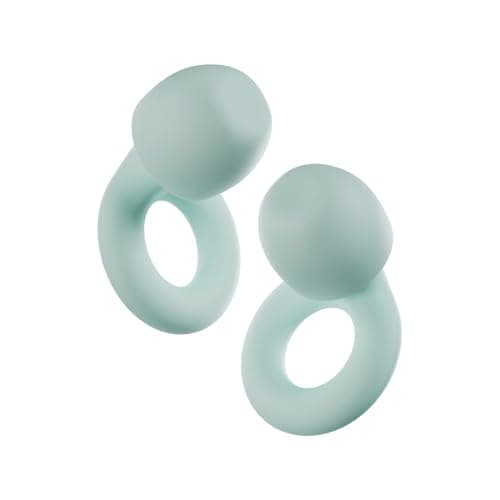 Loop Quiet 2Reusable silicone with a low profile that does not press back when your ear is against a pillow - you trade some blocking for that. | Side sleepers who reuse their plugs | 14 dB NRR / 24 dB SNR - lower than foam, and deliberately so | |
| 2 | 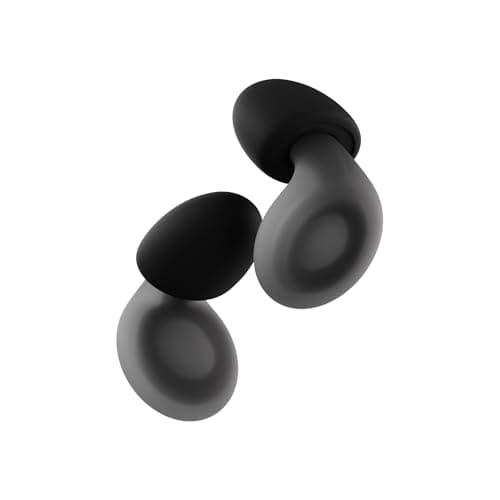 Loop DreamThe only plug here designed from scratch for bedtime rather than adapted to it - Loop's softest silicone, oval memory-foam tips and four tip sizes to get the seal right. | Side sleepers who want one plug and no compromises | 21 dB NRR / 27 dB SNR in a body shaped to be slept on | |
| 3 | 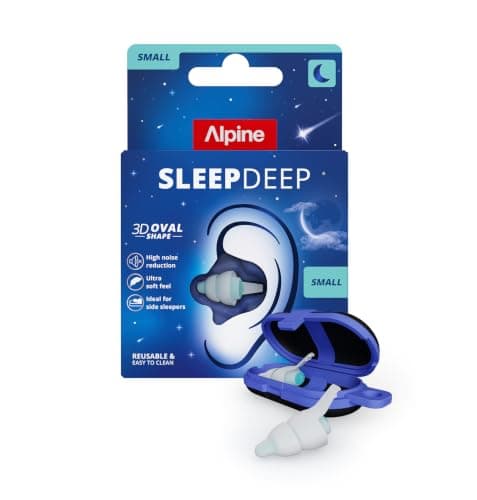 Alpine SleepDeepA silicone-free oval plug sold in three sizes, for the case where the problem is not the material but that nothing has ever fit your ear properly. | Anyone who has tried foam and silicone and found both painful | Oval body that follows the ear's contours, so it sits flat under a pillow | |
| 4 | 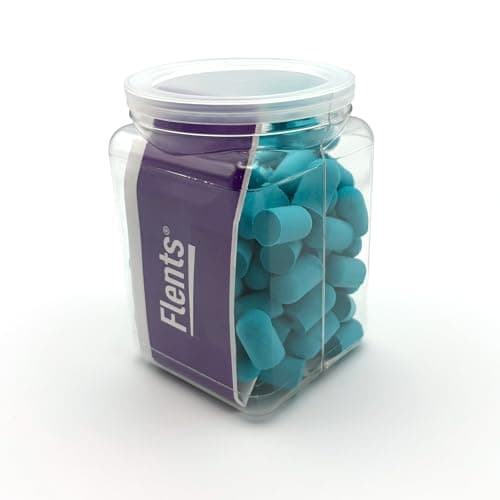 Flents Protechs Super Sleep Foam Ear PlugsA sleep-specific foam plug that trades four decibels for a softer, lower-pressure body - and leaves you enough hearing to catch an alarm or a child. | Anyone who has to stay wakeable | NRR 29 dB, pressure-reducing sleep foam | |
| 5 | 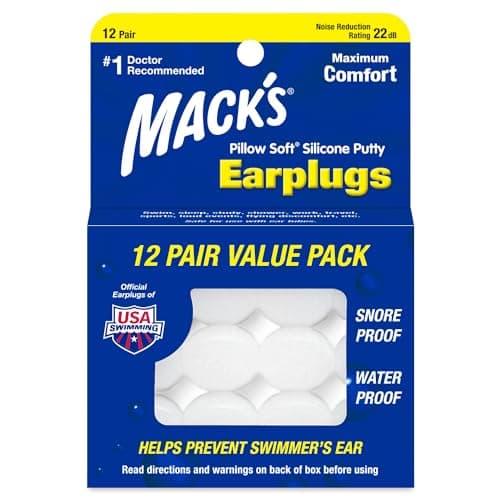 Mack's Pillow Soft Silicone Putty EarplugsMoldable silicone that covers the ear opening instead of going into the canal, so there is nothing inside your ear for the pillow to press on. | The flattest possible profile against a pillow | NRR 22 dB - and it is explicitly a cover, not an insert |
Prices come straight from Amazon and are refreshed daily; the date they were checked is stamped under the buy buttons below. If a price has gone stale or a listing has no offer, the button falls back to “Check price on Amazon” rather than showing a number we cannot stand behind. As an Amazon Associate we earn from qualifying purchases.
Each row carries the price Amazon showed at the last daily check, with the check date stamped under the button. The first three are reusable plugs that live in a case; the last two are the cheap options worth throwing in a bag as backup.
#ad How we are funded · price as of November 23, 2026
Our top pick · Side sleepers who reuse their plugs
1. Loop Quiet 2
Reusable silicone with a low profile that does not press back when your ear is against a pillow - you trade some blocking for that.
- Rating:
- 14 dB NRR, 24 dB SNR (manufacturer figures - the same plug under the US and European standards)
- Material:
- Reusable silicone
- Fit:
- Multiple ear-tip sizes included
- Care:
- Washable, reused for months
What it gets right
- The low profile is the reason side sleepers stick with these
- Washable and reusable, so the running cost is near zero
- Multiple tip sizes solve the fit problem foam plugs create
Where it falls short
- 14 dB NRR is meaningfully less blocking than a 33 dB foam plug
- Higher up-front cost than a year of foam
- Silicone can work loose over a long night
Skip it if: Your problem is loud, low-frequency snoring. You want the foam number, not the comfort number.
#ad How we are funded · price as of November 23, 2026
Pick 2 · Side sleepers who want one plug and no compromises
2. Loop Dream
The only plug here designed from scratch for bedtime rather than adapted to it - Loop's softest silicone, oval memory-foam tips and four tip sizes to get the seal right.
- Rating:
- 21 dB NRR, 27 dB SNR (manufacturer figures)
- Material:
- Soft silicone body, foam-silicone hybrid tips
- Fit:
- Four tip sizes XS-L, plus four Double Tip sizes
- Care:
- Reusable; tips are a consumable and get replaced
What it gets right
- Low-profile body in Loop's softest compound - the pressure point most side sleepers complain about is the one thing it was designed around
- Oval memory-foam tips expand into the ear canal rather than pushing back against it
- Eight tip pieces in the box, which is the difference between a plug that seals and one that falls out
Where it falls short
- The most expensive plug on this page by a wide margin
- 21 dB NRR is low - a foam plug blocks meaningfully more, and T3's reviewer notes this is passive muffling with no active cancellation
- Memory-foam tips are a recurring cost once they stop recovering their shape
Skip it if: You want maximum blocking for the least money. A foam plug beats it on raw attenuation for a few dollars.
#ad How we are funded · price as of November 23, 2026
Pick 3 · Anyone who has tried foam and silicone and found both painful
3. Alpine SleepDeep
A silicone-free oval plug sold in three sizes, for the case where the problem is not the material but that nothing has ever fit your ear properly.
- Rating:
- Up to 27 dB SNR (manufacturer figure)
- Material:
- Silicone-free, hypoallergenic, with a noise-reducing core
- Fit:
- Small, medium or large, plus a multisize pack to find your size
- Care:
- Washable and reusable; the manufacturer quotes up to six months of use
What it gets right
- The oval shape follows the ear rather than plugging it, which is the design that stops pillow pressure
- Three sizes sold separately, so two differently-shaped ears can be fitted individually
- Silicone-free and hypoallergenic, which matters if silicone has irritated you before
Where it falls short
- More expensive than a bag of foam, and the multisize pack costs more again
- Three sizes is fewer options than the eight tip pieces Loop ships
- Six months of life, not a year, so the running-cost case is weaker than it looks
Skip it if: You are fighting genuinely loud noise. An SNR in the mid-20s is a comfort-first number, not a blocking-first one.
#ad How we are funded · price as of November 23, 2026
Pick 4 · Anyone who has to stay wakeable
4. Flents Protechs Super Sleep Foam Ear Plugs
A sleep-specific foam plug that trades four decibels for a softer, lower-pressure body - and leaves you enough hearing to catch an alarm or a child.
- Rating:
- NRR 29 dB (figure printed on the listing by Flents)
- Material:
- Soft foam; the listing describes it as reducing pressure
- Intended use:
- Sold specifically for sleeping rather than for work sites
- Pack:
- 50 pairs; also sold in a 10-pair pack
What it gets right
- The lowest-pressure retail foam plug that still reaches the high twenties
- Four decibels down from the top is usually the difference between hearing an alarm and not
- Sold in a small pack, so trying it is cheap
Where it falls short
- The most expensive per pair of any plug on this page
- NRR 29 is not enough for loud snoring or a busy road
- Disposable, like all foam
Skip it if: Your problem is a snorer. Start at NRR 33 and work down only if comfort forces you to.
#ad How we are funded · price as of November 23, 2026
Pick 5 · The flattest possible profile against a pillow
5. Mack's Pillow Soft Silicone Putty Earplugs
Moldable silicone that covers the ear opening instead of going into the canal, so there is nothing inside your ear for the pillow to press on.
- Rating:
- NRR 22 dB (manufacturer figure)
- Material:
- Moldable, latex-free silicone putty
- Fit:
- Molded by hand to your own ear each time
- Reuse:
- Reused until dirty or no longer tacky - Mack's says up to five uses
What it gets right
- Nothing sits inside the canal, which removes the pressure problem rather than softening it
- Molds to an ear shape that no stock tip size matches
- The cheapest entry point here, and stocked in nearly every drugstore
Where it falls short
- Tacky silicone catches hair and can pull at it when you take them out
- Five uses per pair means an ongoing cost if you wear plugs nightly
- Must be worn over the opening, never pushed in - people who insert them anyway are the source of most complaints
Skip it if: You sleep with long hair loose, or you want something you can wash and reuse for months.
Questions people actually ask
What are the best earplugs for travel?
The Loop Quiet 2. It is reusable silicone that washes, it ships with several tip sizes so you can find your seal before the trip, and it lives in a carry case - which matters more away from home than a high blocking number. The Loop Dream is the higher-attenuation upgrade, and Flents Protechs Super Sleep is the cheap pack-and-lose option.
Are reusable or disposable earplugs better for travel?
Reusable, for most trips, because you can wash them and you are not rationing a limited supply. The sensible system is a reusable pair in a case plus a small strip of disposable foam as backup - that covers both losing a plug and discovering the fit is wrong.
Will earplugs block hotel noise?
They handle corridor doors, voices, lifts and street noise well. What they handle poorly is low-frequency bass coming through the building structure, which is a known limitation of passive plugs rather than a product you have not found yet. For that, a small masking machine works better.
Will I still hear my alarm with earplugs in?
With moderate-attenuation plugs like the Loop Quiet 2, usually yes. With NRR 29 or higher foam, quite possibly not. Away from home that matters more than at home, so either drop the attenuation deliberately or use a vibrating or in-ear alarm as backup.
How do you keep earplugs clean while traveling?
Carry the case, wash silicone plugs with mild soap and dry them completely before they go back in, and treat foam as disposable rather than re-wearing one pair all week. Do not improvise cleaning inside your ear canal.
Why can't I sleep in hotels even with earplugs?
Because noise is only part of it. Sleeping somewhere unfamiliar is measurably worse than sleeping at home even in a quiet room - the first-night effect - and no earplug addresses that. Light, temperature and an unfamiliar bed are the other three factors.
Sources
- Loop (US store) - Quiet 2 earplugs (manufacturer specifications: 14 dB NRR, soft-touch silicone, four ear-tip sizes XS to L, keychain carry case, 100-day returns).
- Loop (international store) - Quiet 2 earplugs, published as 24 dB SNR: the same plug rated under the European standard rather than the US one.
- Loop - Dream earplugs for sleeping (manufacturer specifications).
- T3 - Loop Dream review: super soft earplugs to help you snooze soundly, even if you are a side sleeper.
- Alpine Hearing Protection - SleepDeep earplugs for sleeping (manufacturer specifications).
- Flents - Protechs Super Sleep foam ear plugs, NRR 29, 50 pair (Amazon listing, specifications as published by the seller).
- Mack's - Pillow Soft Silicone Putty Ear Plugs (manufacturer specifications and fitting instructions).
- Mack's - Ear Plugs for Sleeping (manufacturer specifications).
- NIOSH - Criteria for a Recommended Standard: Occupational Noise Exposure (DHHS/NIOSH 98-126), hearing protector NRR derating recommendation.
- Carillo K, Sgard F, Dazel O, Doutres O. Improving low-frequency attenuation of passive earplugs using Helmholtz resonators. Journal of the Acoustical Society of America (IRSST record).
- Brown University - Half the brain stays alert on the first night in a new place (Tamaki M, Sasaki Y et al., Current Biology, April 2016 - the first-night effect).
- NHS - Earwax build-up: causes, treatment and what not to put in your ear.
- MedlinePlus (US National Library of Medicine) - Ear wax, medical encyclopedia entry.
Back to the best white noise machines.