
How this page is funded: we earn a commission if you buy through the links below, at no extra cost to you. As an Amazon Associate we earn from qualifying purchases. It does not change which products we pick or the order they appear in. Full disclosure.
How these picks were made: by comparing published specifications and clearly-credited public reporting. We do not run a laboratory, we have not measured these products, and we do not claim to have slept with them. Here is exactly how we choose.
Short version: buy the Lumie Bodyclock Shine 300. It is the only pick here whose maker publishes both a light-sensitive display that dims itself in a dark room and a sunrise you can stretch to 90 minutes - the two specifications that matter most when the problem is waking too easily rather than not waking at all. The Philips SmartSleep HF3520 is the no-app, no-subscription alternative with 20 light intensity settings. The Casper Glow is the pick if winding down is the harder half of your night. The ecozy is the cheap way to find out whether light works for you before spending more.
This is the opposite problem from the heavy-sleeper roundup, and buying from that page is how light sleepers end up worse off: a clock built to defeat someone who sleeps through earthquakes is a clock with a bright display, a loud backup and an aggressive ramp. You need the inverse of all three.
The display is the problem, not the alarm
A light sleeper spends roughly eight hours being affected by the clock and ninety seconds being woken by it. Most buying guides only consider the ninety seconds.
Overnight light exposure has measurable effects on sleep physiology even at relatively low levels - the PLOS Biology consensus recommendations for evening and nighttime indoor light exposure set a bar most bedside clocks fail, and a clock face is a light source sitting a meter from your head all night. If you are someone who notices a standby LED, this is not a theoretical concern.
So the first question to ask of any clock is: can the display be dimmed to nothing, and does it do that automatically? A clock you must remember to dim is a clock that will be bright on the night it matters.
What we ranked on
- Display behavior in a dark room, first. Auto-dimming beats manual dimming, manual dimming beats a fixed brightness, and a clock that cannot be turned off at the face is disqualified.
- Ramp length and the shape of the curve. Longer is gentler. A sunrise that goes from nothing to full in fifteen minutes is a flash to someone who is already surfacing; thirty to ninety minutes is where light alarms earn their keep.
- Whether it can wake you with light alone. The point of this category for a light sleeper is that you never hear a sound at all. Any clock whose audio cannot be disabled is the wrong product.
- How quiet the device itself is. Coil whine, a cooling fan, a relay click on the hour. Rare, but fatal.
- The sunset side. Light sleepers are frequently also slow to fall asleep, and a fade-down is the half of the feature set people forget to look for.
Independent light-meter measurements of this category exist and we lean on them rather than inventing our own - the measured comparison at Optimize Your Biology and Tom’s Guide’s tested ranking are both useful. We have not tested these clocks; our method is on how we choose what to recommend.
The four, compared
| Clock | Why a light sleeper wants it | The catch |
|---|---|---|
| Lumie Bodyclock Shine 300 | 15 to 90 minute sunrise and sunset; display dims itself in the dark | The most expensive pick here |
| Philips SmartSleep HF3520 | 20 light intensity settings, no app and no subscription | Shorter maximum ramp than the Lumie |
| Casper Glow Light | Wind-down fade is the main event; no clock face at all | It is a light, not a full-featured alarm clock |
| ecozy Sunrise | Cheapest way to test whether light wakes you | Entry-level display control; 17 night-light colors you will not use |
Why the Lumie wins
Lumie publishes two things on the Bodyclock Shine 300 that nothing else here matches together: sunrise and sunset durations adjustable from 15 to 90 minutes, and a light-sensitive display that dims automatically. Those are precisely the light-sleeper specifications. A 90-minute ramp means the light is still below conscious threshold when it starts, which is the mechanism that lets you wake without a sound. And auto-dimming removes the one failure mode nobody plans for: forgetting.
Our Lumie Bodyclock Shine 300 review covers it properly, and sunrise alarms with an app is the page if you want to control it from your phone - which, for the record, is a feature we would skip here.
The analogue-feeling alternative
Philips publishes colored sunrise simulation with 20 light intensity settings and no app requirement at all. For a light sleeper that absence is a feature: there is no firmware update to change the behavior overnight, no account, no notification, and nothing on the device wants your attention. The full Philips review has the detail, and Hatch Restore versus Philips SmartSleep is the comparison if you are weighing a connected clock against this one.
The case for light with no sound at all
If you wake easily, you almost certainly do not need an audible alarm, and that is worth testing deliberately rather than assuming. Set the light alarm for your normal time and set a phone alarm for fifteen minutes later as a safety net. Most light sleepers find within a week that the backup never fires.
That matters beyond convenience. Being startled awake by a sound is unpleasant because of where in the sleep cycle it lands - the structure is covered in the NIH’s sleep stages overview - and light alarms work by raising you gradually rather than interrupting. The fuller argument is on sunrise alarm clock versus phone alarm.
The clock is only part of it
A light sleeper usually has more than one thing waking them. Work through the room: every standby LED taped over, the hall light dealt with, a mask if the window cannot be fixed, and masking sound if the problem is noise rather than light. The cross-category version of that sweep is on how to set up a bedroom for sleep, and whether you are actually a light sleeper or just sleeping in a loud room is the question on light sleeper vs deep sleeper.
Four clocks chosen for a light sleeper
Tap any row to jump to the full write-up. Each thumbnail is the product photograph from that item’s own Amazon listing, and the price in the last column is the one Amazon showed at the last check.
| # | Product | Best for | The spec that decides it | Price |
|---|---|---|---|---|
| 1 | 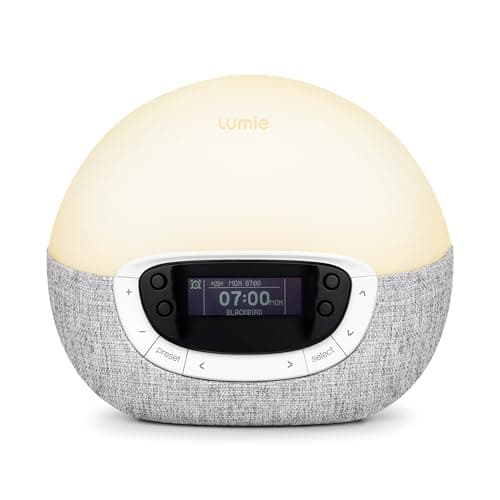 Lumie Bodyclock Shine 300The specialist's pick: adjustable ramp duration in both directions, from a manufacturer that only makes light-therapy devices. | Long, slow sunrises and a proper sunset | 15 to 90 minute sunrise and sunset durations | |
| 2 | 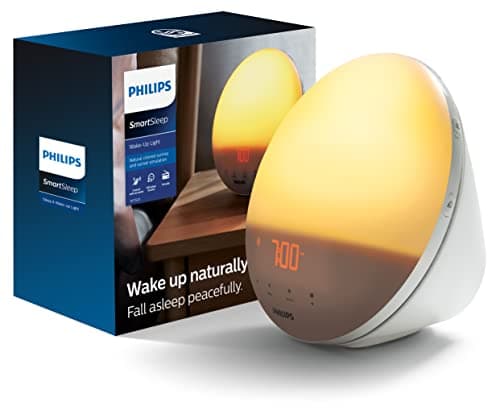 Philips SmartSleep Wake-Up Light HF3520The reference sunrise. No account, no app, no monthly fee - a dial, twenty brightness steps, and a light that ramps properly. | Sunrise quality with no app and no subscription | 20 light-intensity settings, no app or subscription | |
| 3 | 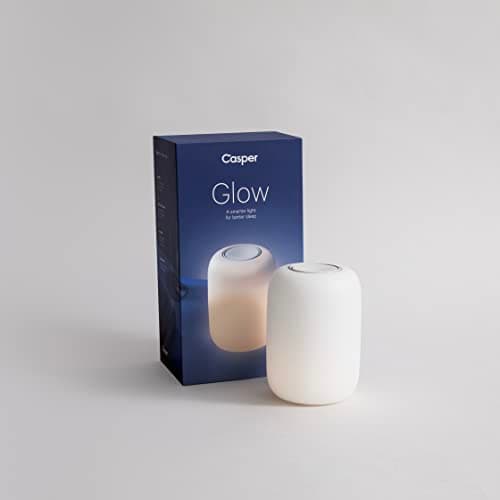 Casper Glow LightThe gesture light: twist the body to set the brightness, lift it off its base and carry it anywhere, and schedule the lighting in the app. | Winding down, more than waking up | Gyroscope brightness control, wireless charging base, iOS app scheduling | |
| 4 | 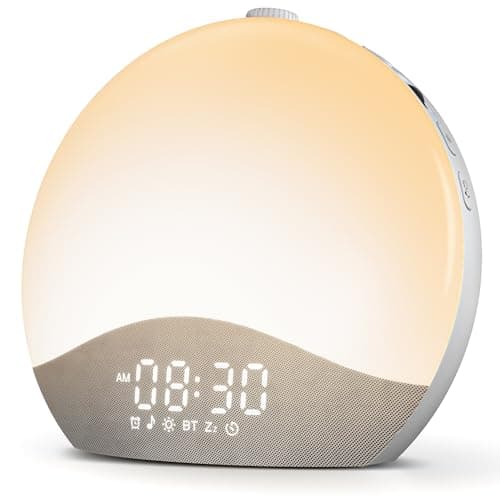 ecozy Sunrise Alarm ClockA sunrise light, a 26-sound masking machine and a Bluetooth speaker in one cheap box - the device to buy if you are testing the idea rather than committing to it. | The cheapest way to find out whether light wakes you | Sunrise wake light plus 26 sleep sounds and 17 night-light colors |
Prices come straight from Amazon and are refreshed daily; the date they were checked is stamped under the buy buttons below. If a price has gone stale or a listing has no offer, the button falls back to “Check price on Amazon” rather than showing a number we cannot stand behind. As an Amazon Associate we earn from qualifying purchases.
Ranked on how little they intrude during the night and how gently they wake you at the end of it. Every pick is a real, currently-sold product; none has been tested by us, and the specifications are the manufacturers' own.
#ad How we are funded · price as of November 12, 2026
Our top pick · Long, slow sunrises and a proper sunset
1. Lumie Bodyclock Shine 300
The specialist's pick: adjustable ramp duration in both directions, from a manufacturer that only makes light-therapy devices.
- Sunrise:
- Adjustable from 15 to 90 minutes
- Sunset:
- Matching fade-to-dark, same 15-90 minute range
- Sound:
- 15 sleep and wake sounds, or FM radio
- Display:
- Light-sensitive auto-dimming clock face
- Specialism:
- Designed in Cambridge by the inventors of the wake-up light
What it gets right
- The sunset fade is as well implemented as the sunrise, which is rare
- Duration control matters more than peak brightness for light sleepers
- No subscription
Where it falls short
- Priced with the premium units without the smart features
- US availability is patchier than Philips or Hatch
- Dated interface
Skip it if: You want app scheduling. This is a well-made physical device with physical controls.
#ad How we are funded · price as of November 12, 2026
Pick 2 · Sunrise quality with no app and no subscription
2. Philips SmartSleep Wake-Up Light HF3520
The reference sunrise. No account, no app, no monthly fee - a dial, twenty brightness steps, and a light that ramps properly.
- Light settings:
- 20 intensity levels
- Sunrise:
- Colored sunrise simulation before the alarm
- Sound:
- Natural wake-up sounds plus FM radio
- Account:
- None required
What it gets right
- Nothing to sign up for and nothing to update - it is an appliance
- Twenty brightness steps means you can actually find a comfortable display level
- Long-standing design with a well-understood service life
Where it falls short
- No app, so scheduling is manual
- The sound library is small and dated
- Larger footprint than the smart units
Skip it if: You want a sound machine and a sunrise in one device. This is a light first and foremost.
#ad How we are funded · price as of November 12, 2026
Pick 3 · Winding down, more than waking up
3. Casper Glow Light
The gesture light: twist the body to set the brightness, lift it off its base and carry it anywhere, and schedule the lighting in the app.
- Controls:
- Built-in gyroscope - twist the light itself to set brightness
- App:
- Designed for Apple iOS; schedule, customize and fine-tune the lighting
- Power:
- Charges wirelessly on its base, then runs unplugged
- Size:
- 5.5 x 5.5 x 3.7 in
- Sound:
- None
What it gets right
- Genuinely portable - lift it off the base and carry it through the house
- A twist of the whole object is the one bedtime control people actually use
- Made for the wind-down half of the day, which most sunrise devices treat as an afterthought
Where it falls short
- App support is iOS-first; Android is limited
- No sound and no radio, so it cannot be your only alarm
- Expensive for a light with no speaker
Skip it if: You are on Android and want full app control, or you need an audible alarm as a backstop.
#ad How we are funded · price as of November 12, 2026
Pick 4 · The cheapest way to find out whether light wakes you
4. ecozy Sunrise Alarm Clock
A sunrise light, a 26-sound masking machine and a Bluetooth speaker in one cheap box - the device to buy if you are testing the idea rather than committing to it.
- Sunrise:
- Light ramps up to your set wake time rather than a sudden alarm
- Sounds:
- 26, from rain through to white noise
- Light:
- 17 colors, adjustable brightness, from night light to reading lamp
- Speaker:
- Dual speakers, pairs over Bluetooth
- Setup:
- Four steps: plug in, set the time, set the alarm, pick the light
What it gets right
- Cheap enough to treat as an experiment rather than a commitment
- The masking sounds mean it earns its nightstand space even on nights you do not use the alarm
- Doubles as a reading lamp and a colored bedside lamp
Where it falls short
- Peak brightness is well below a premium wake-up light
- Mains only, and the listing insists on the supplied adapter
- A 17-color light invites you to pick a blue, which is the wrong choice at bedtime
Skip it if: You are a genuinely heavy sleeper. Budget lights do not put out enough light to move a heavy sleeper on their own.
Questions people actually ask
What is the best alarm clock for a light sleeper?
One with a display that dims itself in a dark room and a sunrise long enough to wake you without any sound - the Lumie Bodyclock Shine 300 is the clearest example, with a published 15 to 90 minute ramp and a light-sensitive display. The usual mistake is buying a clock designed for heavy sleepers, which means a bright face and a loud backup.
Do sunrise alarm clocks work for light sleepers?
They tend to work better for light sleepers than for anyone else, because a gradual light cue is enough to bring a light sleeper up on its own. The trade-off is the opposite one from heavy sleepers: the risk is not that the light fails to wake you, it is that the clock's own display disturbs you for the other eight hours.
Should an alarm clock display be off at night?
For a light sleeper, yes - or as close to off as the clock allows. A clock face is a light source a meter from your head all night, and published guidance on nighttime indoor light exposure sets a lower bar than most bedside clocks meet. Auto-dimming is better than manual dimming, because it does not depend on remembering.
Can I use a sunrise alarm with no sound?
On any clock worth buying, yes - the audible alarm is optional. Test it with a phone alarm set fifteen minutes later as a safety net for the first week. Most light sleepers find the backup never fires, at which point you can retire it.
How long should the sunrise ramp be?
Longer than the default. Thirty minutes is the usual factory setting and is a reasonable starting point; light sleepers generally do better at the top of the range, because the light is still below conscious threshold when it begins and the wake is correspondingly gentler.
Sources
- Lumie - Bodyclock Shine 300 (manufacturer specifications: 15 to 90 minute sunrise and sunset durations, 15 wake and sleep sounds, light-sensitive auto-dimming display, FM radio).
- Philips - SmartSleep Wake-up Light HF3520 product page (manufacturer specifications: colored sunrise simulation and 20 light-intensity settings).
- Casper - Glow Light product specifications (manufacturer).
- ecozy - sunrise alarm clock and sound machine, sound list and light options (Amazon listing, specifications as published by the seller).
- Brown TM et al. Recommendations for daytime, evening and nighttime indoor light exposure to best support physiology, sleep and wakefulness in healthy adults. PLOS Biology, 2022.
- National Heart, Lung, and Blood Institute (NIH) - Sleep Phases and Stages.
- Optimize Your Biology - Best Sunrise Alarm Clocks 2026 (independent light-meter measurements, theirs not ours).
- Tom's Guide - The best sunrise alarm clocks, tested and ranked.
Back to the best sunrise alarm clocks.
Read next
 Best sunrise alarm clocks for heavy sleepersThe opposite problem, and the opposite clock.Read it
 Light sleeper vs deep sleeperWhether the room or your sleep is the variable.Read it
- Lumie Bodyclock Shine 300 reviewThe long-ramp clock, in full.Read it
- Sunrise alarm clock vs phone alarmWhy being startled awake feels worse.Read it
- Best sunrise alarm clocksThe whole category, ranked on the spec that matters.Read it