
How this page is funded: we earn a commission if you buy through the links below, at no extra cost to you. As an Amazon Associate we earn from qualifying purchases. It does not change which products we pick or the order they appear in. Full disclosure.
How these picks were made: by comparing published specifications and clearly-credited public reporting. We do not run a laboratory, we have not measured these products, and we do not claim to have slept with them. Here is exactly how we choose.
Short answer: a light sleeper wakes easily from noise and movement; a deep sleeper does not. The difference is real and partly measurable - people who produce more sleep spindles, a specific brain rhythm, tolerate noise better, and spindle rate is stable across nights. You cannot change your spindle rate. You can change the room, and for a light sleeper that is where almost all of the available improvement is.
This page exists because the labels get used as character judgments - the light sleeper is “fussy,” the deep sleeper is “lucky” - when they are closer to a description of hardware. Knowing which you are is genuinely useful, because the two types should spend money on completely different things.
The research: it is not in your head
The most quotable finding here comes from a study by a Harvard Medical School sleep group published in Current Biology in 2010. Participants slept one quiet night and one noisy night in a laboratory. The researchers found that individuals who generated more sleep spindles - brief 11-15 Hz oscillations visible on an EEG - during the quiet night went on to tolerate noise better on the noisy night.
Three things in that paper matter for anyone standing in this aisle. Spindle rate varies a lot between people. It is stable across nights within the same person. And it predicts noise tolerance before any noise has happened. In other words there is a measurable, individual, consistent trait underneath “I wake at everything,” and it is not willpower.
What the research does not say is that you can train it. The authors frame augmenting spindle production as a direction for future work, not a thing you can do tonight. Be suspicious of anything that claims otherwise.
The other half: where you are in the night
Trait is only part of it. The same person is a dramatically different sleeper at 11pm and at 5am, because sleep is not uniform.
The National Heart, Lung, and Blood Institute describes a cycle starting over every 80 to 100 minutes, with four to six cycles a night. Stage 3 - deep or slow-wave sleep - is concentrated early in the night, while REM increases later. Deep sleep is the hardest to be woken from.
| Time of night | What is dominant | What this means for you |
|---|---|---|
| First third | Deep slow-wave sleep | Hardest to wake; a slammed door may go unnoticed |
| Middle | Mixed, cycling | Variable - this is where most noise wakings land |
| Last third | More REM, lighter stages | Easily woken; the 5am bin lorry wins every time |
This is why “I slept fine until 4am” is such a common complaint, and why it is not evidence that something changed in the room. Your sleep got lighter on schedule. It is also the structural explanation for waking at the same time every night.
Which one are you?
There is no home test and we are not going to invent a quiz. But the pattern is usually obvious from a few honest answers.
You are probably a light sleeper if: you wake when your partner turns over; you notice a changed noise rather than a loud one, like a fridge compressor starting; you cannot sleep in an unfamiliar room for the first night or two; you are woken by light from a standby LED; you remember waking several times a night.
You are probably a deep sleeper if: you have slept through an alarm more than once; people tell you about overnight events you have no memory of; you fall asleep easily in cars, planes and other people’s houses; you wake groggy rather than alert.
Note that these are different problems rather than better and worse ones. The deep sleeper’s complaint is not getting up - which is why alarm clocks for heavy sleepers is one of the most-read pages on this site.
What you can actually change
Not the trait. Quite a lot of everything else, and in a specific order of value.
- Noise, first. For a light sleeper this is almost always the biggest single lever. The two approaches - blocking with earplugs, masking with steady noise - solve different problems and are covered on the sound machines hub.
- Light, second. Cheap to fix and frequently underestimated, especially the last third of the night when dawn arrives and your sleep is already light. Making the room dark costs almost nothing.
- Movement, third. If what wakes you is your partner moving, that is a mattress and bedding problem rather than a noise problem. Separate duvets solve more marriages than people admit.
- Temperature, fourth. A room that is too warm fragments sleep quietly, without ever producing a moment you would describe as being woken - too hot to sleep.
For a light sleeper: mask or block?
This is the decision that matters most, and the right answer depends on what kind of noise is reaching you.
Block when the noise is loud, close and continuous - a snoring partner, a main road. Earplugs are the cheapest genuinely effective thing on this entire site, and the full picture is on the earplug roundup.
Mask when the noise is intermittent and not especially loud - a hallway door, a car outside, a neighbor’s stairs. A steady sound raises the floor so individual events stop standing out, which is the mechanism that matters for a light sleeper: it is the contrast that wakes you, not the absolute level. The World Health Organization night-noise guidance puts the threshold associated with sleep disturbance in the low 40s of decibels, which is well below what most people picture as loud.
Most light sleepers end up doing both, and that is a reasonable place to land rather than an admission of failure.
For a deep sleeper: almost none of this
If you sleep through things, do not buy a sound machine, do not buy earplugs, and probably do not buy a sleep mask. Your money belongs at the other end of the night.
The deep sleeper’s real problems are waking up and sleep inertia - the heavy, slow-witted stretch after waking from deep sleep. A light-based alarm that starts ramping before your wake time is the gear that addresses it, because it begins pulling you toward lighter sleep before anything has to jolt you out of it. The mechanism is on how sunrise alarm clocks work, and the schedule-first version that does not need a device at all is on how to wake up without an alarm clock.
One genuine warning for deep sleepers: be careful stacking earplugs on top of your existing ability to sleep through things. If you share a home with a child, or you are relying on hearing a smoke alarm, that is a real consideration rather than a theoretical one - earplugs that still let you hear your alarm exists because of it.
When it is not a sleep type at all
Two things get mistaken for being a light sleeper, and neither is one.
The first is a schedule problem. If you are going to bed at wildly different times, or sleeping in by hours at the weekend, you will wake at inconvenient points in a cycle and conclude you are a light sleeper. Fix the schedule for three weeks before concluding anything about your nature.
The second is something we are not qualified to address. Sleep that is consistently unrefreshing, frequent waking that started suddenly, or waking gasping or choking are not personality traits and are not solved by gear. That is a conversation with a doctor. This is a site about blankets, noise and light, and we will not pretend the boundary is anywhere other than where it is.
What a light sleeper should own
Tap any row to jump to the full write-up. The photographs are licensed stock images chosen to illustrate the category - they are not photographs of these specific products, and each one’s alt text describes what is actually shown.
| # | Product | Best for | The spec that decides it | Price |
|---|---|---|---|---|
| 1 |  LectroFan EVOThe digital machine that solved the loop problem: 22 sounds generated rather than played back, so there is no seam to notice. | Digital variety without the loop artifact | 22 non-looping generated sounds | |
| 2 |  Mack's Ultra Soft Foam EarplugsThe highest-rated foam plug in common retail, at a price where losing one in the sheets does not matter. | Maximum blocking for the least money | NRR 33 dB - the highest rating in this roundup | |
| 3 | 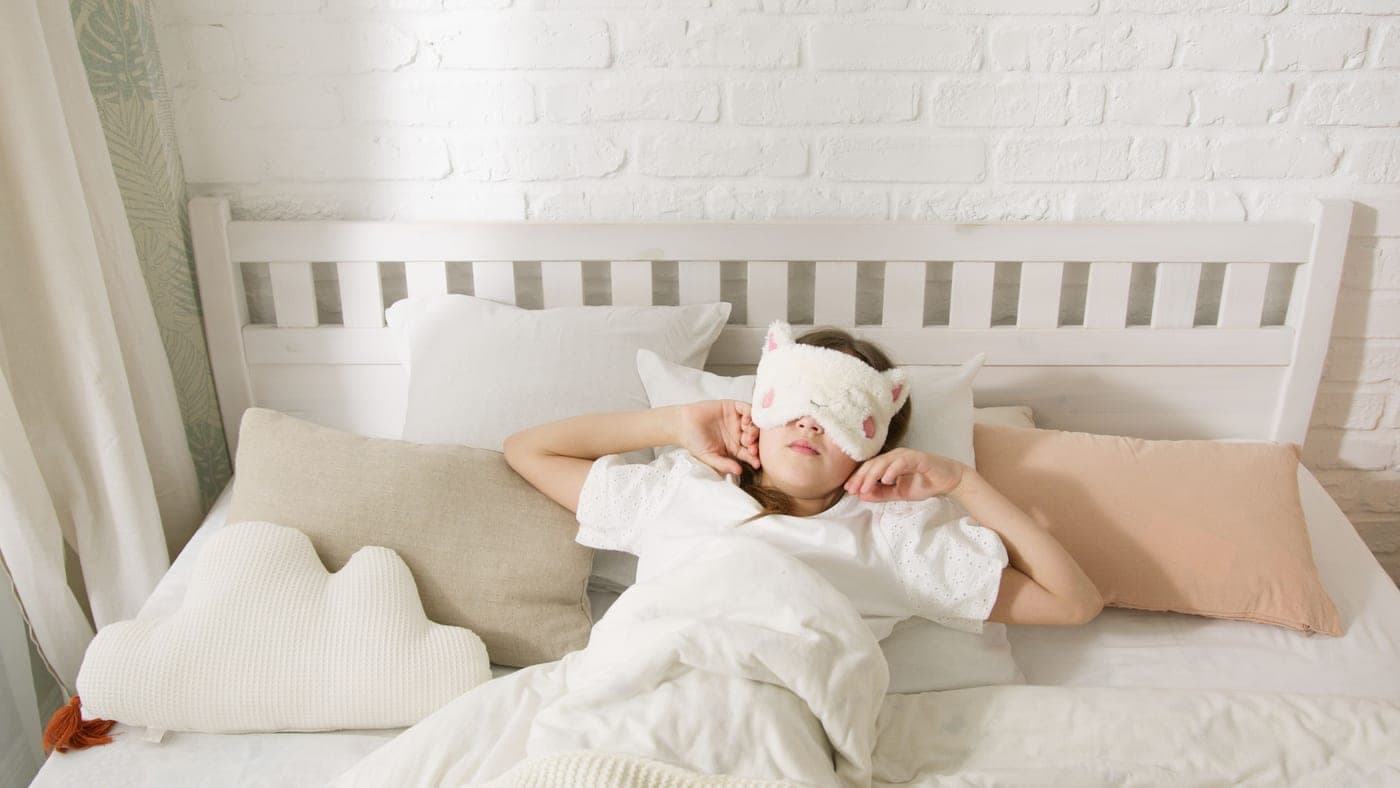 Manta Sleep Mask ProThe most adjustable mask in the category: the eye cups move independently, so you can seal a nose bridge that defeats every one-piece mask. | Total blackout on a back sleeper | Independently repositionable eye cups, zero eye pressure |
We have no live price feed for this site yet, so every button reads “Check price on Amazon” rather than showing a number that could be out of date. As an Amazon Associate we earn from qualifying purchases.
Three things, in order of how much difference each makes. A deep sleeper needs none of them, which is rather the point of this page.
Our top pick · Digital variety without the loop artifact
1. LectroFan EVO
The digital machine that solved the loop problem: 22 sounds generated rather than played back, so there is no seam to notice.
- Type:
- Digital, non-looping synthesis
- Sounds:
- 22, including white, pink and brown noise plus fan sounds
- Volume:
- Precise stepped control across a wide range
- Moving parts:
- None
What it gets right
- Gives you brown and pink noise, which a mechanical fan cannot
- No motor means no mechanical hum and nothing to wear out
- Compact enough to pack
Where it falls short
- Digital sound is still digital - some people hear it as flatter than moving air
- No app or alarm features
- More expensive than budget machines with far longer preset lists
Skip it if: You specifically want the texture of real moving air. Get the Dohm instead.
Pick 2 · Maximum blocking for the least money
2. Mack's Ultra Soft Foam Earplugs
The highest-rated foam plug in common retail, at a price where losing one in the sheets does not matter.
- Rating:
- NRR 33 dB (manufacturer figure)
- Material:
- Slow-recovery polyurethane foam
- Reuse:
- A few nights each, then discard
- Sold as:
- Bulk packs
What it gets right
- Nothing in common retail blocks more
- Cheap enough to replace constantly, which is also more hygienic
- The soft compound is tolerable for side sleepers once compressed correctly
Where it falls short
- Only works if you roll and insert them properly - most complaints are fit, not product
- Disposable, so there is an ongoing cost and ongoing waste
- At 33 dB you will very likely sleep through a standard alarm
Skip it if: You have to hear an alarm, a child, or a smoke detector. This is the wrong tool for that night.
Pick 3 · Total blackout on a back sleeper
3. Manta Sleep Mask Pro
The most adjustable mask in the category: the eye cups move independently, so you can seal a nose bridge that defeats every one-piece mask.
- Construction:
- Modular cups on a hook-and-loop band
- Eye pressure:
- None - the cups arch over the eye socket
- Adjustment:
- Cups reposition horizontally to match your face
- Strap:
- Wide adjustable band
What it gets right
- Seals light at the nose bridge better than any fixed-shape mask once fitted
- No contact with the eyelid, so you can blink freely and sleep in contacts
- Cups and band are replaceable, so the mask outlives its fabric
Where it falls short
- The deepest profile here - the cups stand well off the face
- Fitting it correctly takes a few nights of adjustment
- Premium price
Skip it if: You sleep strictly on your side. The cups press into the pillow and then into your face.
Questions people actually ask
What is the difference between a light sleeper and a deep sleeper?
A light sleeper is woken easily by noise, movement or light; a deep sleeper is not. The difference is partly a measurable trait: a Harvard study published in Current Biology found that people who produce more sleep spindles - a brief 11-15 Hz brain rhythm - tolerate noise better, and that spindle rate is stable from night to night within a person.
Can a light sleeper become a deep sleeper?
Not in the sense of changing the underlying trait - spindle rate is individual and stable, and there is no reliable way to train it. What you can change is the environment, and for a light sleeper that is where nearly all the available improvement lives: noise first, then light, then movement, then temperature.
Why do I wake up easily at 4am but not at midnight?
Because sleep is not uniform. Deep slow-wave sleep is concentrated in the first third of the night and REM and lighter stages increase toward morning, with cycles starting over every 80 to 100 minutes. The same noise that you slept through at midnight arrives during light sleep at 4am.
Is being a light sleeper bad for your health?
Being easily woken is not itself a diagnosis. What matters is whether your sleep is actually fragmented and whether you feel rested. If you consistently wake unrefreshed despite enough hours in bed, or the pattern started suddenly, that is a question for a doctor rather than a gear problem.
What should a light sleeper buy?
In order: something for noise - earplugs if the noise is loud and continuous, a steady masking sound if it is intermittent - then something for light, then a look at whether a partner's movement is the real culprit. A deep sleeper needs none of these and should spend the money on waking up instead.
Do white noise machines help light sleepers?
They help with a specific pattern: intermittent noise that is not especially loud. A steady sound removes the contrast between a quiet room and a sudden door, and contrast is a large part of what causes a waking. For loud continuous noise such as a snoring partner, blocking with earplugs does more than masking.
Sources
- Dang-Vu TT, McKinney SM, Buxton OM, Solet JM, Ellenbogen JM. Spontaneous brain rhythms predict sleep stability in the face of noise. Current Biology, 2010;20(15):R626-7.
- National Heart, Lung, and Blood Institute (NIH) - Sleep Phases and Stages.
- World Health Organization - Night Noise Guidelines for Europe.
- CDC - About Sleep: recommended hours of sleep by age and sleep habits.
- Papalambros NA et al. Acoustic Enhancement of Sleep Slow Oscillations and Concomitant Memory Improvement in Older Adults. Frontiers in Human Neuroscience, 2017.
Back to what to do when you can't sleep.
Read next
- Can't sleep? Start hereThe problem-first index for everything that keeps people awake.Read it
- Waking up at 3am every nightWhy the second half of the night is the fragile half.Read it
- Best white noise machinesThe masking half of a light sleeper's answer.Read it
- Best earplugs for sleepingThe blocking half, and the cheapest fix on this site.Read it
- Best alarm clocks for heavy sleepersThe deep sleeper's actual problem, which is the morning.Read it