
How this page is funded: we earn a commission if you buy through the links below, at no extra cost to you. As an Amazon Associate we earn from qualifying purchases. It does not change which products we pick or the order they appear in. Full disclosure.
How these picks were made: by comparing published specifications and clearly-credited public reporting. We do not run a laboratory, we have not measured these products, and we do not claim to have slept with them. Here is exactly how we choose.
A weighted sleep mask adds gentle pressure across the eyes and brow - the same deep-pressure idea behind weighted blankets, scaled down to the face. Some people find it genuinely settling. Others find it the single most uncomfortable thing they have ever tried to sleep in. It is worth knowing which you are likely to be before you buy.
What the weight is actually doing
Two separate things, and people conflate them.
- Pressure. A broad, constant, gentle load across the brow and around the eye sockets. This is the part people describe as calming, and it is the same mechanism as a weighted blanket.
- Sealing. A heavier mask conforms to the face more closely under its own weight, which incidentally improves blackout. A lot of people who think they want weight actually want the seal - and there is a better way to get that.
Why a weighted mask is often the wrong answer
If what you want is blackout, a contoured mask seals better than a weighted flat mask does, and does it without putting any load on your eyes at all. The cups arch over the socket and seal against bone, which is both a tighter seal and a more comfortable one.
If what you want is pressure, note where you actually want it. A weighted blanket applies pressure across your whole body, which is where most of the settling effect comes from. A mask applies it to a small area of your face, which some people find pleasant and some find claustrophobic. If you have not tried a weighted blanket, that is the more reliable version of the same idea - and the evidence behind it is better.
That is why the picks above are mostly not weighted masks. We would rather recommend the thing that solves your actual problem.
Who should avoid one
- Anyone with an eye condition, recent eye surgery, glaucoma, or persistent eye pain. Do not put sustained pressure on your eyes on the advice of a gear site. Ask a clinician. This is not a hedge - it is the one genuinely medical caution in this whole category.
- Contact lens wearers who sleep in their lenses. Pressure plus a lens is a combination to raise with your optometrist rather than test.
- Side sleepers. Your head weight is already pressing the mask into your face. Adding more is the wrong direction - the side-sleeper roundup is the right page.
- Anyone prone to feeling closed-in. A weighted mask is more confining than a normal one, and if a weighted blanket reads as trapped rather than held, this will too.
Who they genuinely suit
- Back sleepers who like the feel of pressure and already get on with a weighted blanket
- People using one for a short lie-down or a rest rather than a full night
- Anyone who finds the sensation across the brow specifically settling
That is a narrower group than the marketing implies, and we would rather say so.
If you do buy one
- Go light. These are measured in ounces, not pounds, and heavier is not better. The failure mode is discomfort, not insufficient weight.
- Prefer weight over the brow, not the eyeball. Designs that rest the load on the bone around the socket are better than ones that press the center of the mask onto your eyes.
- Check it is removable in your sleep. Same principle as a weighted blanket: if you cannot easily push it off, it is wrong.
- Stop if it hurts. Obvious, and worth writing down. Discomfort around the eyes is not something to push through.
What to buy instead, and when
Tap any row to jump to the full write-up. The photographs are licensed stock images chosen to illustrate the category - they are not photographs of these specific products, and each one’s alt text describes what is actually shown.
| # | Product | Best for | The spec that decides it | Price |
|---|---|---|---|---|
| 1 | 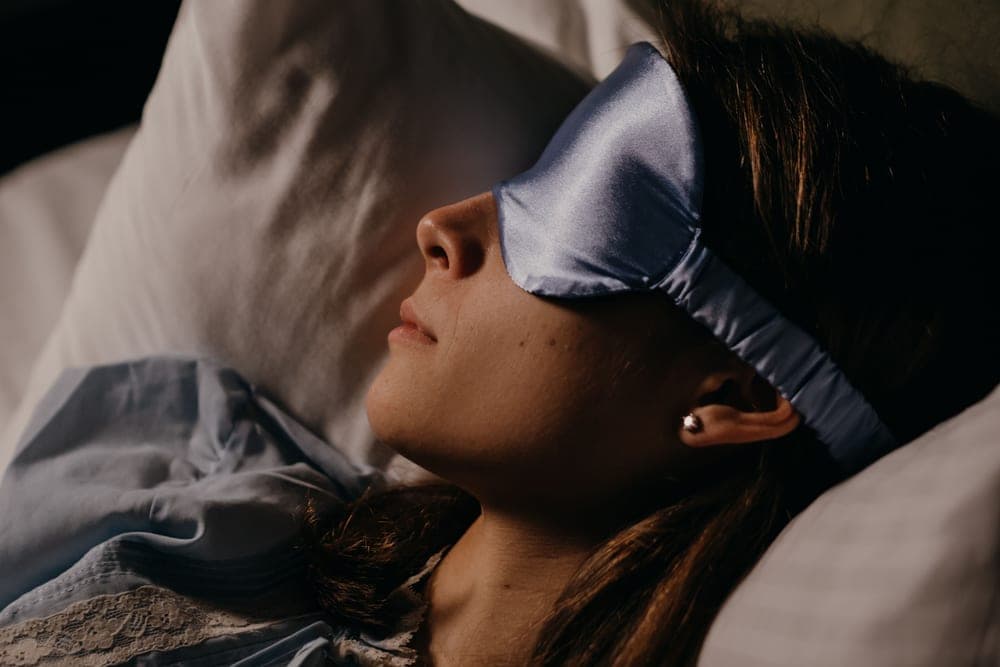 Nidra Deep Rest Sleep MaskMolded eye cups with slim side panels - it keeps the no-pressure benefit of a contoured mask without the depth that ruins side sleeping. | Side sleepers who still want contoured blackout | Molded cups with deliberately slim side panels | |
| 2 |  Tempur-Pedic Sleep MaskBlocks light as well as anything here by molding tightly to the face - which is also exactly why some people cannot wear it. | Sealing light out at all costs | Tempur memory foam molded to the face | |
| 3 |  Alaska Bear Natural Silk Sleep MaskA flat silk mask that costs less than lunch and blocks a surprising amount of light - the honest default before you spend more. | The cheapest mask genuinely worth owning | Flat mulberry silk, no cups, no bulk |
We have no live price feed for this site yet, so every button reads “Check price on Amazon” rather than showing a number that could be out of date. As an Amazon Associate we earn from qualifying purchases.
A deliberately unusual list: we would steer most people asking about weighted masks towards a well-fitted contoured mask instead, for the reasons below.
Our top pick · Side sleepers who still want contoured blackout
1. Nidra Deep Rest Sleep Mask
Molded eye cups with slim side panels - it keeps the no-pressure benefit of a contoured mask without the depth that ruins side sleeping.
- Construction:
- Molded contoured cups
- Side panels:
- Slim, for pillow contact
- Eye pressure:
- None - the cups clear the lashes
- Strap:
- Adjustable
What it gets right
- The best blackout-to-bulk ratio in this roundup
- Cheap relative to the premium contoured masks
- Lash clearance is real, which matters if you wear eye makeup or lash extensions
Where it falls short
- Less adjustable than a modular mask - the fit is the fit
- Nose-bridge sealing depends on your face shape
- Fabric wears faster than the premium options
Skip it if: Your light leak is at a high nose bridge. Buy adjustable cups instead.
Pick 2 · Sealing light out at all costs
2. Tempur-Pedic Sleep Mask
Blocks light as well as anything here by molding tightly to the face - which is also exactly why some people cannot wear it.
- Material:
- Tempur memory foam
- Fit:
- Conforms closely to facial contours
- Blackout:
- Among the strongest we shortlisted
- Strap:
- Adjustable
What it gets right
- Genuinely excellent light sealing along the nose and cheekbones
- The foam does not lose its shape the way cheap foam does
- Brand-backed quality control
Where it falls short
- Comfort is the recurring complaint in public reporting - it is a tight mask
- Dense foam traps facial heat
- Not a packable travel mask
Skip it if: You dislike anything pressing on your face. This mask works by pressing on your face.
Pick 3 · The cheapest mask genuinely worth owning
3. Alaska Bear Natural Silk Sleep Mask
A flat silk mask that costs less than lunch and blocks a surprising amount of light - the honest default before you spend more.
- Material:
- Natural mulberry silk shell
- Profile:
- Flat - sits against the face
- Strap:
- Elasticated, adjustable
- Packability:
- Folds to nothing
What it gets right
- Almost nothing to feel against a pillow, so side sleepers get on with it
- Silk is kinder to skin and lashes than a foam contact surface
- Cheap enough to keep a spare in a bag
Where it falls short
- Flat masks touch the eyelid, so you cannot open your eyes underneath
- Light leaks around the nose on most faces
- Silk stains and is easily damaged in a hot wash
Skip it if: You need genuine blackout for daytime sleep. A flat mask will not get you there.
Questions people actually ask
Are weighted sleep masks good?
For back sleepers who already like the feel of a weighted blanket, they can be genuinely settling. For everyone else they are often the wrong answer - if you want blackout, a contoured mask seals better with no load on the eyes at all, and if you want pressure, a weighted blanket delivers it across your whole body where most of the effect comes from.
Are weighted sleep masks safe?
For most people a light weighted mask is unremarkable. Anyone with an eye condition, recent eye surgery, glaucoma or persistent eye pain should ask a clinician before putting sustained pressure on their eyes, and that is not a caution to skip.
How heavy should a weighted sleep mask be?
Light. These are measured in ounces and heavier is not better - the failure mode in this category is discomfort, not insufficient weight. Prefer designs that rest the load on the bone around the socket rather than pressing the center of the mask onto your eyes.
Can side sleepers use a weighted sleep mask?
We would not. Your own head weight is already pressing the mask into your face against the pillow, so adding more is the wrong direction. A slim contoured mask is the better answer.
Do weighted sleep masks help with headaches?
We are not going to make that claim. There is a long tradition of cool or weighted eye pillows being used for comfort, but head pain is a medical question rather than a gear one, and persistent headaches are worth raising with a doctor.
Sources
Back to the best sleep masks.
Read next
- Best sleep masks for side sleepersWhere adding weight is the wrong direction.Read it
- Best weighted blankets for a restless mindThe same idea, applied where it works better.Read it
- Best blackout sleep masksIf the seal is what you actually wanted.Read it
- Best sleep masks, overallThe three mask shapes and who each suits.Read it