
How this page is funded: we earn a commission if you buy through the links below, at no extra cost to you. As an Amazon Associate we earn from qualifying purchases. It does not change which products we pick or the order they appear in. Full disclosure.
How these picks were made: by comparing published specifications and clearly-credited public reporting. We do not run a laboratory, we have not measured these products, and we do not claim to have slept with them. Here is exactly how we choose.
Short version: the Perytong Sleep Headphones Headband is the pick if you want one object - flat speakers in a stretch band, nothing in the ear canal, and you can pull it down over your eyes. But the honest recommendation for most side sleepers is two cheap things instead of one clever one: a flat mask that adds no depth at the temples, plus low-profile audio. The Nidra Deep Rest with a pair of Soundcore Sleep A20 buds blacks out better than any combo unit and puts nothing thick between your cheekbone and the pillow.
This is the hardest brief in the mask category, and the reason is geometric rather than a matter of taste. Three requirements pull against each other:
- Blackout needs material at the temples and a seal at the nose bridge - which means depth.
- Audio needs a driver somewhere near your ear - which means more depth, usually in the worst possible place.
- Side sleeping means one half of your head is pressed into a pillow all night - which means no depth at all.
You cannot satisfy all three with one product. What you can do is decide which of the three you are willing to compromise, and this page is about making that choice deliberately rather than discovering it at 2am.
Why all-in-one combos fail side sleepers
The mask-with-headphones category is mostly two designs. The first is a contoured blackout mask with speaker pockets added over the ears. The second is a stretch fabric headband with flat speakers that you can pull down over your eyes.
The first design is the one that gets bought and returned. A contoured mask already stands off the face - MZOO publishes side panels around 35 mm, and the premium modular masks are deeper still. Add a speaker pocket beside each ear and you have a rigid object with thickness at the exact two points a side sleeper loads: the temple and the ear. By the small hours it is not a comfort problem, it is a pressure point.
The second design works for comfort and loses on blackout. A stretch band is thin, which is why it is comfortable, and thin fabric over an eye socket leaks light at the nose and the cheek. For night-time use in a dark room that is fine. For daytime sleep after a night shift it is not remotely enough, and that is the use case that most needs both blackout and audio.
Independent mask testing bears out the general shape of this - TechGearLab and Reviewed both consistently find that the masks that block the most light are the ones with the most structure, and structure is the thing a side sleeper cannot carry.
The pairing that actually works
Split the job. Buy the flattest mask that still seals, and buy audio that is flat independently of the mask.
| Approach | Blackout | Side-sleep comfort | Honest verdict |
|---|---|---|---|
| Contoured mask with built-in speakers | Good | Poor - depth at the temple and the ear | The combination that gets returned |
| Audio headband worn over the eyes | Partial - leaks at the nose and cheek | Best in class - nothing in the ear | Right for a dark room, not for daytime |
| Flat contoured mask + low-profile earbuds | Best | Good, if you tolerate in-ear | Our recommendation for most people |
| Flat silk mask + audio headband | Moderate | Excellent | The comfort-first answer |
On the audio half, the specification to look for is profile rather than sound quality. Anker publishes a low-profile shell with ear wings and 30 dB of high-frequency passive reduction on the Sleep A20, and independent coverage of the sleep-audio category from CNN Underscored and SoundGuys keeps coming back to the same point: the comfortable ones are the shallow ones. Our headbands-versus-earbuds comparison works through the whole trade.
On the mask half, you want cups without depth. The Nidra Deep Rest’s deliberately slim side panels are the specification that matters here - molded cups so there is no pressure on the eyelid, but panels thin enough to meet a pillow. The side-sleeper mask roundup covers that class of mask in full.
The strap is the part nobody checks
Side sleepers have one problem no other sleeper has: the strap passes over the part of your head that is on the pillow. A buckle, a plastic slider or a knot of hook-and-loop sitting at the back of your skull becomes a lump you can feel through a pillow for seven hours.
What to look for: a wide flat band rather than a cord, adjustment that ends up off-center so the hardware sits above your ear rather than behind your head, and a published strap range so you are not guessing. Mavogel’s strap range is published at roughly 19 to 29 in, which is more than most makers disclose. Masks with elastic cords tighten as they age and are the worst option on this specific point.
Before you buy either half
Two things cost nothing and remove the need for one of the two purchases.
Deal with the light at the window first. If the room can be made dark, you do not need a mask at all, and a mask is a nightly imposition where a curtain is a one-time job. We compared the two directly, and the darkness page runs the fixes in cost order.
Work out whether you need audio or quiet. People buy audio masks to cover noise, and blocking usually beats masking for that. A flat earplug designed for side sleeping is a few dollars, needs no charging, and there is a whole roundup of them. If what you actually want is to fall asleep to a podcast, that is a different need and audio is correct.
What not to buy
- A deep contoured blackout mask with speakers in it. The specification that makes it block light is the specification that makes it hurt on your side.
- Over-ear headphones, in any form. Obvious when stated, routinely attempted anyway.
- A weighted mask, if you are a side sleeper. Weight plus pillow pressure is pressure twice. The weighted mask page is honest about who they suit.
- Anything with a hard plastic housing at the temple. Press it into your own cheekbone with your thumb for thirty seconds in the store. That is the test, and most combos fail it.
The verdict
If you want one object and your room is already dark, buy the headband - it is the most comfortable thing on this page by a distance and the cheapest. If blackout genuinely matters, split the purchase: a slim-panel contoured mask plus low-profile buds will out-perform every all-in-one on the market and costs about the same.
What we would not do is buy a deep blackout mask with speakers built in and hope to get used to it. That is the one configuration in this category that reliably ends up in a drawer.
Four ways to get blackout and audio onto a side sleeper
Tap any row to jump to the full write-up. The photographs are licensed stock images chosen to illustrate the category - they are not photographs of these specific products, and each one’s alt text describes what is actually shown.
| # | Product | Best for | The spec that decides it | Price |
|---|---|---|---|---|
| 1 | 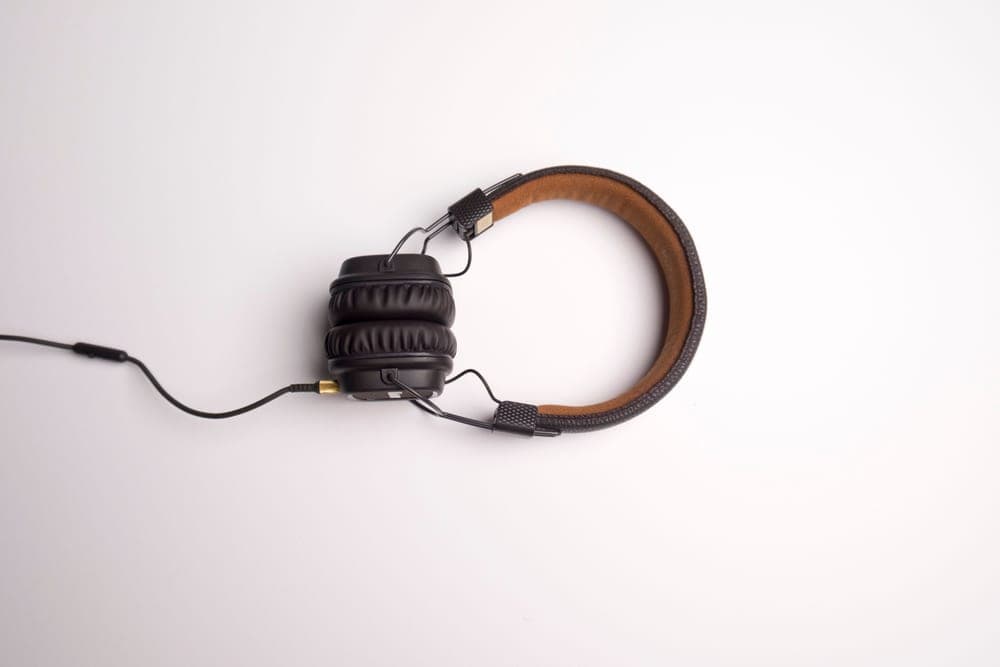 Perytong Sleep Headphones HeadbandFlat speakers in a stretch headband. Nothing enters the ear canal, which is the entire reason to buy it. | Side sleepers who cannot tolerate anything in the ear | Ultra-thin flat speakers inside a stretch fabric band | |
| 2 | 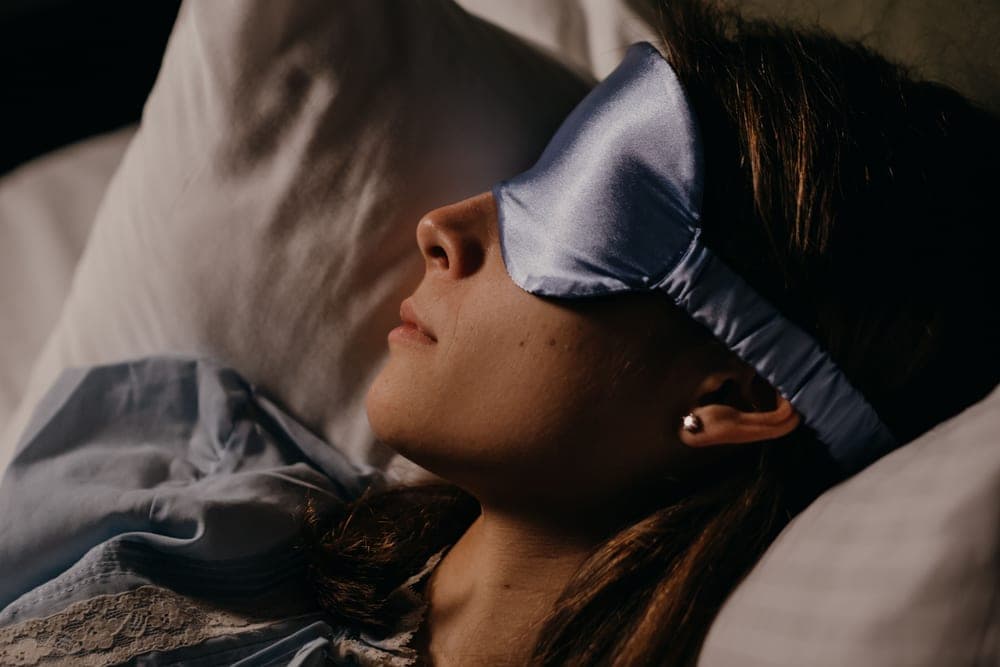 Nidra Deep Rest Sleep MaskMolded eye cups with slim side panels - it keeps the no-pressure benefit of a contoured mask without the depth that ruins side sleeping. | Side sleepers who still want contoured blackout | Molded cups with deliberately slim side panels | |
| 3 | 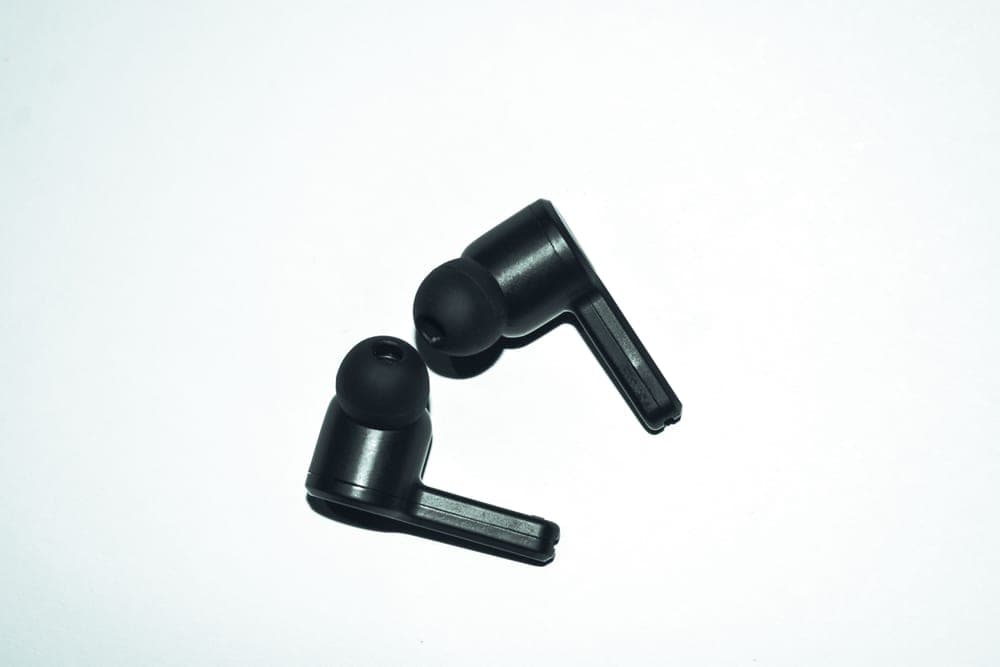 Soundcore Sleep A20Low-profile buds designed to be lain on, with the battery life to actually cover a full night plus a nap. | The value pick in sleep earbuds | 30 dB high-frequency passive noise reduction, 14 h per charge | |
| 4 |  Alaska Bear Natural Silk Sleep MaskA flat silk mask that costs less than lunch and blocks a surprising amount of light - the honest default before you spend more. | The cheapest mask genuinely worth owning | Flat mulberry silk, no cups, no bulk |
We have no live price feed for this site yet, so every button reads “Check price on Amazon” rather than showing a number that could be out of date. As an Amazon Associate we earn from qualifying purchases.
One all-in-one headband, then the flat-mask-plus-flat-audio pairings that beat it on blackout. Every pick is a real, currently-sold product; none has been tested by us, and the specifications are the manufacturers' own.
Our top pick · Side sleepers who cannot tolerate anything in the ear
1. Perytong Sleep Headphones Headband
Flat speakers in a stretch headband. Nothing enters the ear canal, which is the entire reason to buy it.
- Type:
- Bluetooth headband with removable flat speakers
- In-ear:
- No - speakers sit outside the canal
- Blocking:
- Essentially none; this masks rather than blocks
- Care:
- Band washes after removing the speaker modules
What it gets right
- Genuinely comfortable against a pillow - flatter than any earbud
- Cheapest route into sleep audio by a wide margin
- Doubles as a light eye cover if you pull it down
Where it falls short
- Blocks almost no external noise on its own
- Sound quality is adequate, not good
- The band rides up over a long night for some people
Skip it if: You need noise blocked, not covered. This adds sound, it does not remove any.
Pick 2 · Side sleepers who still want contoured blackout
2. Nidra Deep Rest Sleep Mask
Molded eye cups with slim side panels - it keeps the no-pressure benefit of a contoured mask without the depth that ruins side sleeping.
- Construction:
- Molded contoured cups
- Side panels:
- Slim, for pillow contact
- Eye pressure:
- None - the cups clear the lashes
- Strap:
- Adjustable
What it gets right
- The best blackout-to-bulk ratio in this roundup
- Cheap relative to the premium contoured masks
- Lash clearance is real, which matters if you wear eye makeup or lash extensions
Where it falls short
- Less adjustable than a modular mask - the fit is the fit
- Nose-bridge sealing depends on your face shape
- Fabric wears faster than the premium options
Skip it if: Your light leak is at a high nose bridge. Buy adjustable cups instead.
Pick 3 · The value pick in sleep earbuds
3. Soundcore Sleep A20
Low-profile buds designed to be lain on, with the battery life to actually cover a full night plus a nap.
- Noise reduction:
- 30 dB high-frequency, passive (manufacturer figure)
- Battery:
- 14 h per charge, 80 h total with the case
- Profile:
- Low-profile shell with ear wings, built for side sleeping
- Bluetooth:
- 5.3 - streams any audio source
What it gets right
- Passive isolation plus masking audio is a stronger combination than either alone
- Battery outlasts the night, which most true-wireless buds do not
- Streams anything, so you are not locked into one app's sound library
Where it falls short
- No active noise cancellation - that is the A30
- Passive isolation is weakest exactly where snoring lives, in the low frequencies
- Anything in your ear canal all night is a hygiene commitment
Skip it if: You just want silence. Earplugs block more, cost a fraction, and never need charging.
Pick 4 · The cheapest mask genuinely worth owning
4. Alaska Bear Natural Silk Sleep Mask
A flat silk mask that costs less than lunch and blocks a surprising amount of light - the honest default before you spend more.
- Material:
- Natural mulberry silk shell
- Profile:
- Flat - sits against the face
- Strap:
- Elasticated, adjustable
- Packability:
- Folds to nothing
What it gets right
- Almost nothing to feel against a pillow, so side sleepers get on with it
- Silk is kinder to skin and lashes than a foam contact surface
- Cheap enough to keep a spare in a bag
Where it falls short
- Flat masks touch the eyelid, so you cannot open your eyes underneath
- Light leaks around the nose on most faces
- Silk stains and is easily damaged in a hot wash
Skip it if: You need genuine blackout for daytime sleep. A flat mask will not get you there.
Questions people actually ask
What is the best sleep mask with headphones for side sleepers?
For one object, a stretch audio headband like the Perytong - flat speakers, nothing in the ear canal, and you can pull it over your eyes. For better blackout, do not buy an all-in-one: pair a slim-panel contoured mask such as the Nidra Deep Rest with low-profile earbuds. That combination blacks out more and presses less.
Why are mask-and-headphone combos uncomfortable on your side?
Because blackout requires depth and side sleeping forbids it. A contoured mask already stands off the face - around 35 mm of side panel on common models - and adding a speaker pocket puts thickness at the temple and the ear, which are exactly the two points a side sleeper loads against a pillow.
Do audio sleep headbands block light well enough?
For a dark bedroom, usually yes. For daytime sleep after a night shift, no - a thin stretch band over an eye socket leaks light at the nose and the cheek. If you are sleeping through daylight, buy a proper contoured mask and separate audio.
Should I use earbuds or a headband with a sleep mask?
Earbuds if you can tolerate something in the ear canal, because they add no thickness outside your ear and leave the mask strap free. A headband if you cannot, accepting that you then have two layers of fabric around your head and a slightly warmer night.
Will a sleep mask strap bother a side sleeper?
The hardware will. A buckle or a knot of hook-and-loop at the back of your skull is something you feel through a pillow all night. Look for a wide flat band, adjustment that puts the hardware above your ear rather than behind your head, and a published strap range rather than a guess.
Do I need audio at all, or would earplugs be better?
If the goal is covering noise, blocking usually beats masking, and a flat-profile earplug made for side sleeping costs a few dollars and never needs charging. Buy audio when you specifically want to fall asleep to something, not merely to drown something out.
Sources
- Anker soundcore - Sleep A20 sleeping earbuds (manufacturer specifications).
- CNN Underscored - The best headphones for sleeping, tried and tested.
- SoundGuys - Best earbuds and headphones for sleeping.
- TechGearLab - The Best Sleep Mask, tested and ranked.
- Reviewed - The Best Sleep Masks.
- TravelAwaits - Mavogel Cotton Sleep Eye Mask, independently selected and tested (published strap range of 19 to 29 in and mask dimensions).
- CNN Underscored - The best sleep masks, tried and tested.
- Brown TM et al. Recommendations for daytime, evening and nighttime indoor light exposure to best support physiology, sleep and wakefulness in healthy adults. PLOS Biology, 2022.
Back to the best sleep masks.
Read next
- Best sleep mask with headphonesThe general version of this question, without the side-sleeping constraint.Read it
- Best sleep mask for side sleepersThe slim-panel masks this page recommends pairing with audio.Read it
- Best sleep headphonesHeadbands versus earbuds, in detail.Read it
- Best earplugs for side sleepersIf the real goal is quiet rather than audio.Read it
- Best sleep mask for night shift workersWhere a thin audio headband stops being enough.Read it