
How this page is funded: we earn a commission if you buy through the links below, at no extra cost to you. As an Amazon Associate we earn from qualifying purchases. It does not change which products we pick or the order they appear in. Full disclosure.
How these picks were made: by comparing published specifications and clearly-credited public reporting. We do not run a laboratory, we have not measured these products, and we do not claim to have slept with them. Here is exactly how we choose.
Direct answer: most of the price difference is real, and it is concentrated in four places - the quality and number of LEDs, how finely the ramp can be controlled at the dim end, whether the display manages itself, and build and warranty. What is not worth paying for is app connectivity you will use twice, sound libraries you will never open, and any clock whose useful content sits behind a subscription. A good clock costs more than a lamp with a timer because it is harder to make light look like dawn than it looks.
The complaint behind this search is fair. A sunrise alarm clock is, on the surface, a bulb and a microcontroller. Premium models sell for several times the price of a smart bulb that can also fade up. So what is the money doing?
The four things that genuinely cost money
- Getting the bottom of the ramp right. This is the hard engineering problem and it is invisible on a spec sheet. Cheap LED dimming is coarse at low output - it steps, flickers, or simply cannot go dim enough - so a budget clock effectively starts its sunrise part-way up. Philips sells the HF3520 on exactly this axis, publishing 20 light-intensity settings rather than a headline brightness figure.
- Enough LEDs, of good enough quality, in a diffuser. Dawn is a color shift as well as a brightness ramp - deep amber to warm white - and doing it without visible banding needs several emitters and a diffuser that actually mixes them. One white LED behind orange plastic is what cheap clocks do instead.
- Ramp length and curve control. Lumie publishes sunrise and sunset durations adjustable from 15 to 90 minutes. Long ramps need fine control at the dim end, so this is really the first point again, expressed as a feature.
- Display management and build. A light-sensitive display that dims itself, a case that does not creak, buttons that still work in three years, and a warranty from a company that will honor it. Unglamorous, and most of the remaining difference.
The three things that do not
- App connectivity. Genuinely useful on a shared clock or if you change your schedule weekly. For most people it is set up once and never opened, and it adds a failure mode - an account, a server, a firmware update that changes the behavior you bought. Our view on when it is worth it is on sunrise alarm clocks with an app.
- Sound libraries. Dozens of soundscapes sounds like value and mostly is not: the point of this category is waking to light. If you do want sound, a dedicated machine does it better - sound machines with an alarm clock is the crossover page.
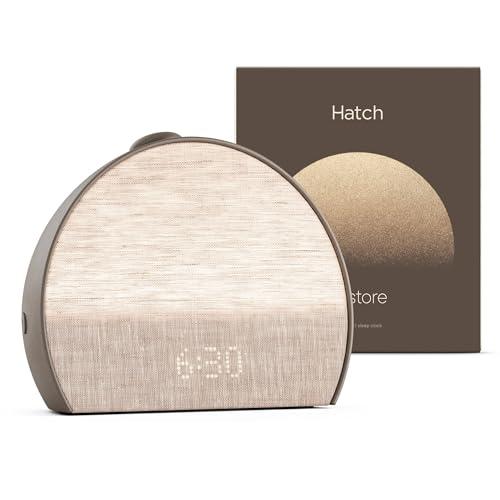
- Subscriptions. The one to watch. Hatch publishes its Hatch+ membership terms and a separate free-versus-paid breakdown, which is genuinely clear - read it before you buy, because the hardware price is not the whole price. The Hatch Restore 3 review covers what the free tier does.
The three price brackets, and who each suits
| Bracket | What you get | Who should buy it |
|---|---|---|
| Entry | A colored sunrise, a fixed or coarse ramp, a basic display | Anyone finding out whether light waking works for them at all |
| Middle | Fine intensity control, a real ramp, no subscription | Most people - this is where the value sits |
| Premium | Long adjustable ramps, auto-dimming display, sunset, warranty | Light sleepers and anyone who has already bought a cheap one |
Our advice is unglamorous: unless you already know light wakes you, start at the entry bracket. A clock like the JALL costs little enough to be a test rather than a commitment, and if it works you will know exactly which upgrade you want - the JALL review and the under-$50 roundup are the pages for that.
What about a smart bulb?
A smart bulb plus a schedule is the obvious cheap substitute and it does genuinely work for some people. Three things usually break it: the bulb is in a ceiling fitting pointed at the wrong part of the room, the dim end of its range is coarse, and the automation depends on a hub and a network at 6am. The full comparison is on sunrise alarm clock versus a smart bulb, and if what you actually want is bright light for mood rather than for waking, sunrise alarm versus SAD lamp is the distinction that saves people the most money.
The costs that are not on the price tag
Two of them, and they both favor spending a little more rather than a little less.
- The clock you replace. The commonest path through this category is buying the cheapest model, finding the ramp too coarse or the display too bright, and buying again within a year. That is not an argument for starting at the top - it is an argument for being honest with yourself about whether you already know light waking works for you. If you do, skip the entry bracket.
- What the clock is replacing. A sunrise alarm is competing with a phone on the nightstand, and the phone is free. The value of the clock is partly in the phone leaving the room, which is worth more than the light for some people - sunrise alarm clock versus phone alarm is the argument in full.
There is also a third thing worth naming: a clock used for ten years is a different purchase from a gadget. Spread across that long, the gap between the brackets is a few dollars a year, and the premium models are the ones most likely to still be working at the end of it.
Is any of it worth it?
That depends on a fact about you that you can establish for the price of the cheapest clock on this page: whether light wakes you. For people it works on, the difference between waking to a 45-minute dawn and waking to a phone alarm is not subtle, and the premium clocks earn their price over years of mornings. For people it does not work on, no amount of money fixes it, and the honest options are a shaker alarm or accepting a loud one. The skeptical version of this whole question is on are sunrise alarm clocks worth it; the whole category is on the sunrise alarm hub.
One line item is worth separating from the rest: the recurring one. If you would rather buy a lamp than rent a routine, sunrise alarms without a subscription lists the clocks with nothing behind a paywall and spells out exactly what a membership gates.
Where each price bracket actually lands
Tap any row to jump to the full write-up. Each thumbnail is the product photograph from that item’s own Amazon listing, and the price in the last column is the one Amazon showed at the last check.
| # | Product | Best for | The spec that decides it | Price |
|---|---|---|---|---|
| 1 | 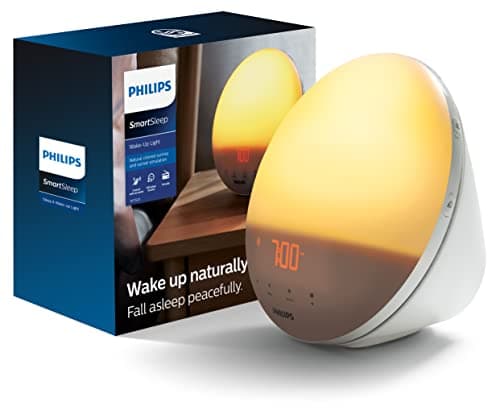 Philips SmartSleep Wake-Up Light HF3520The reference sunrise. No account, no app, no monthly fee - a dial, twenty brightness steps, and a light that ramps properly. | Sunrise quality with no app and no subscription | 20 light-intensity settings, no app or subscription | |
| 2 | 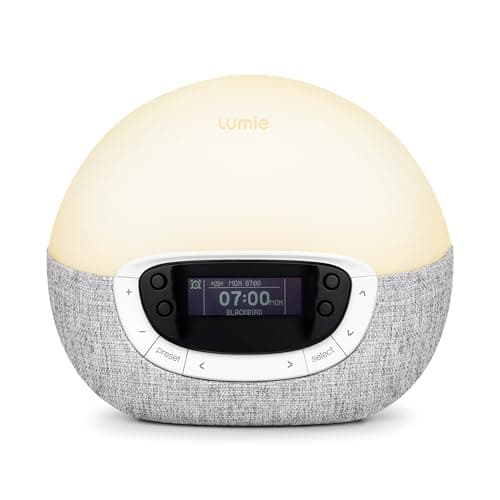 Lumie Bodyclock Shine 300The specialist's pick: adjustable ramp duration in both directions, from a manufacturer that only makes light-therapy devices. | Long, slow sunrises and a proper sunset | 15 to 90 minute sunrise and sunset durations | |
| 3 | 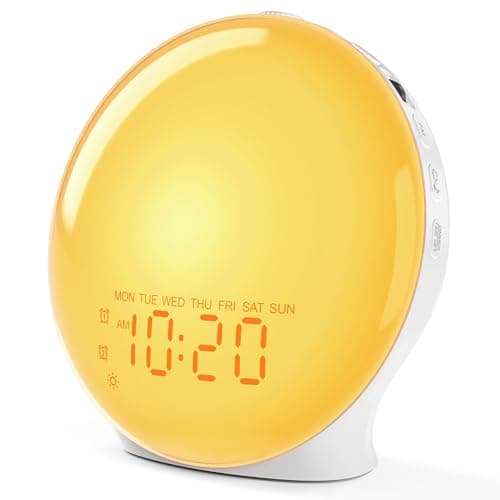 JALL Wake Up LightThe cheap way to test the idea. The light is dimmer than the premium units, but the mechanism is the same. | Finding out whether sunrise waking works for you | Full-screen display with colored sunrise, at entry-level pricing |
Prices come straight from Amazon and are refreshed daily; the date they were checked is stamped under the buy buttons below. If a price has gone stale or a listing has no offer, the button falls back to “Check price on Amazon” rather than showing a number we cannot stand behind. As an Amazon Associate we earn from qualifying purchases.
One clock from each of the three brackets described above, so you can see what the extra money is buying. Specifications are the manufacturers' own.
#ad How we are funded · price as of November 12, 2026
Our top pick · Sunrise quality with no app and no subscription
1. Philips SmartSleep Wake-Up Light HF3520
The reference sunrise. No account, no app, no monthly fee - a dial, twenty brightness steps, and a light that ramps properly.
- Light settings:
- 20 intensity levels
- Sunrise:
- Colored sunrise simulation before the alarm
- Sound:
- Natural wake-up sounds plus FM radio
- Account:
- None required
What it gets right
- Nothing to sign up for and nothing to update - it is an appliance
- Twenty brightness steps means you can actually find a comfortable display level
- Long-standing design with a well-understood service life
Where it falls short
- No app, so scheduling is manual
- The sound library is small and dated
- Larger footprint than the smart units
Skip it if: You want a sound machine and a sunrise in one device. This is a light first and foremost.
#ad How we are funded · price as of November 12, 2026
Pick 2 · Long, slow sunrises and a proper sunset
2. Lumie Bodyclock Shine 300
The specialist's pick: adjustable ramp duration in both directions, from a manufacturer that only makes light-therapy devices.
- Sunrise:
- Adjustable from 15 to 90 minutes
- Sunset:
- Matching fade-to-dark, same 15-90 minute range
- Sound:
- 15 sleep and wake sounds, or FM radio
- Display:
- Light-sensitive auto-dimming clock face
- Specialism:
- Designed in Cambridge by the inventors of the wake-up light
What it gets right
- The sunset fade is as well implemented as the sunrise, which is rare
- Duration control matters more than peak brightness for light sleepers
- No subscription
Where it falls short
- Priced with the premium units without the smart features
- US availability is patchier than Philips or Hatch
- Dated interface
Skip it if: You want app scheduling. This is a well-made physical device with physical controls.
#ad How we are funded · price as of November 12, 2026
Pick 3 · Finding out whether sunrise waking works for you
3. JALL Wake Up Light
The cheap way to test the idea. The light is dimmer than the premium units, but the mechanism is the same.
- Sunrise:
- Configurable ramp before the alarm
- Colors:
- Multiple selectable light colors
- Sound:
- Built-in nature sounds plus FM radio
- Extras:
- Dual alarms, snooze, USB charging port
What it gets right
- A fraction of the price of the Philips or the Hatch
- Includes dual alarms and a USB port the premium units often omit
- Low risk if you are not sure the approach suits you
Where it falls short
- Peak brightness is well below the premium units, and that is the spec that matters most
- Build quality is what the price suggests
- Display dimming is coarser than the Philips
Skip it if: You are a genuinely heavy sleeper. Buy brightness - it is the one spec you cannot compromise on.
Questions people actually ask
Why do sunrise alarm clocks cost so much?
Most of it is the light engine rather than the clock. Dimming LEDs smoothly at very low output is harder than it sounds, and a convincing dawn needs several emitters, a diffuser that mixes them and fine control at the bottom of the ramp. The rest is display management, build quality and warranty.
Is an expensive sunrise alarm clock worth it?
If you already know that waking to light works for you, yes - the difference between a long, finely controlled ramp and a coarse one is the difference between waking gently and being switched on. If you have never owned one, buy the cheapest credible model first and find out, because no price fixes someone the method does not work on.
What is the difference between a cheap and an expensive wake-up light?
Four things: how dim the light can go at the start of the ramp, how many LEDs and how well they are diffused, how long and how adjustable the ramp is, and whether the clock display manages its own brightness overnight. Sound libraries and app features explain much less of the price than people assume.
Do I need to pay a subscription for a sunrise alarm clock?
Not for the alarm itself on any clock worth buying. Some connected models put extra content behind a membership, and at least one publishes a clear free-versus-paid breakdown. Read it before buying so the hardware price is the actual price.
Can a smart bulb replace a sunrise alarm clock?
Sometimes. It fails when the bulb is in a ceiling fitting aimed away from the bed, when its dimming is coarse at the low end, or when the schedule depends on a hub and a network that can drop out overnight. A dedicated clock is aimed at your face and does not need the internet to go off.
Sources
- Philips - SmartSleep Wake-up Light HF3520 product page (manufacturer specifications: colored sunrise simulation and 20 light-intensity settings).
- Lumie - Bodyclock Shine 300 (manufacturer specifications: 15 to 90 minute sunrise and sunset durations, 15 wake and sleep sounds, light-sensitive auto-dimming display, FM radio).
- Hatch - Restore 3 product page (manufacturer specifications and current subscription terms).
- Hatch - Hatch+ membership pricing and included content (manufacturer).
- Hatch Support - What do I get with Hatch+? What do I get for free? (full free vs subscription content lists).
- Optimize Your Biology - Best Sunrise Alarm Clocks 2026 (independent light-meter measurements, theirs not ours).
- Tom's Guide - The best sunrise alarm clocks, tested and ranked.
- Sleep Foundation - Best Sunrise Alarm Clocks.
Back to the best sunrise alarm clocks.
Read next
- Are sunrise alarm clocks worth it?The skeptical read, before you spend anything.Read it
- Best sunrise alarm clocks under $50Where to start if you are testing the idea.Read it
- Sunrise alarm clock vs a smart bulbThe cheap substitute, and when it breaks.Read it
 Best sunrise alarm clocks with an appWhen connectivity is actually worth paying for.Read it