
How this page is funded: we earn a commission if you buy through the links below, at no extra cost to you. As an Amazon Associate we earn from qualifying purchases. It does not change which products we pick or the order they appear in. Full disclosure.
How these picks were made: by comparing published specifications and clearly-credited public reporting. We do not run a laboratory, we have not measured these products, and we do not claim to have slept with them. Here is exactly how we choose.
Buy the mask first. It costs a tenth as much, it works tonight, and it tells you whether light was your problem at all. Buy curtains next if the answer is yes and the light is coming from the window.
Side by side
| Sleep mask | Blackout curtains | |
|---|---|---|
| Cost | Around ten dollars and up | Considerably more, plus fitting |
| Blocks light from | Every direction, including inside the room | The window only |
| Travels | Yes | No |
| Can come off overnight | Yes | No |
| Affects a partner | No | Yes - darkens the room for both of you |
| Works for day sleeping | Partly | Substantially, if fitted properly |
| Also helps with | Nothing else | Heat, cold, some noise |
What the mask wins on
Light from inside the room. This is the one people forget. A curtain does nothing about a charging indicator, a router LED, a smoke alarm, a clock face or a partner reading their phone. All of those are in the room with you, and Harvard Health notes measurable circadian effects at around 8 lux - dimmer than most table lamps.
It also travels, it costs nothing to try, it does not require agreement from anyone else in the household, and it cannot be defeated by the wind moving a curtain.
What curtains win on
Being permanent. A mask can slip off at four in the morning, which is exactly when you least want it to. Curtains cannot. For day sleepers especially, that reliability matters more than the cost difference.
They also do the whole room, which means you are not dependent on a mask for a nap, and they incidentally help with heat and cold and a little with noise.
Why blackout curtains so often disappoint
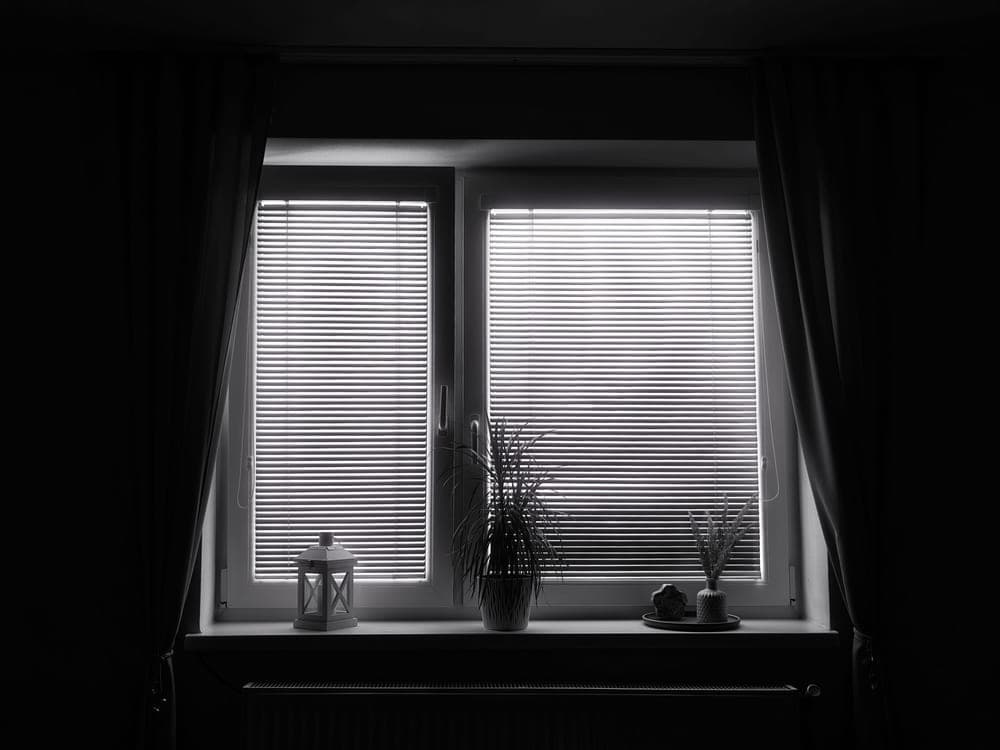
Because almost all the light comes in around the edges rather than through the fabric, and most people buy for the fabric.
- The top gap. The strip of daylight above the rail is the brightest leak in most bedrooms. A pelmet, a board or hanging the curtain from the ceiling fixes it.
- The sides. A curtain the same width as the window leaves a vertical line down each edge. It should overlap the frame by several inches on each side.
- Inside-recess blinds. The worst configuration available - light escapes around all four edges by design. An outside-mounted blind or a curtain over the top is a large improvement.
- The bottom. Curtains that stop at the sill leave a gap. Floor-length is better.
The free version of all of this is on how to make a bedroom dark for sleeping.
The case for both
For day sleepers there is no real choice: you want both, in that order. Curtains bring the room from bright to dim; the mask takes it from dim to dark and covers you when you roll over. The night-shift setup is written up in full here.
For night sleepers the mask alone is usually enough, and the honest recommendation is to spend ten dollars before you spend a hundred and fifty.
If the mask is the right first purchase
Tap any row to jump to the full write-up. The photographs are licensed stock images chosen to illustrate the category - they are not photographs of these specific products, and each one’s alt text describes what is actually shown.
| # | Product | Best for | The spec that decides it | Price |
|---|---|---|---|---|
| 1 | 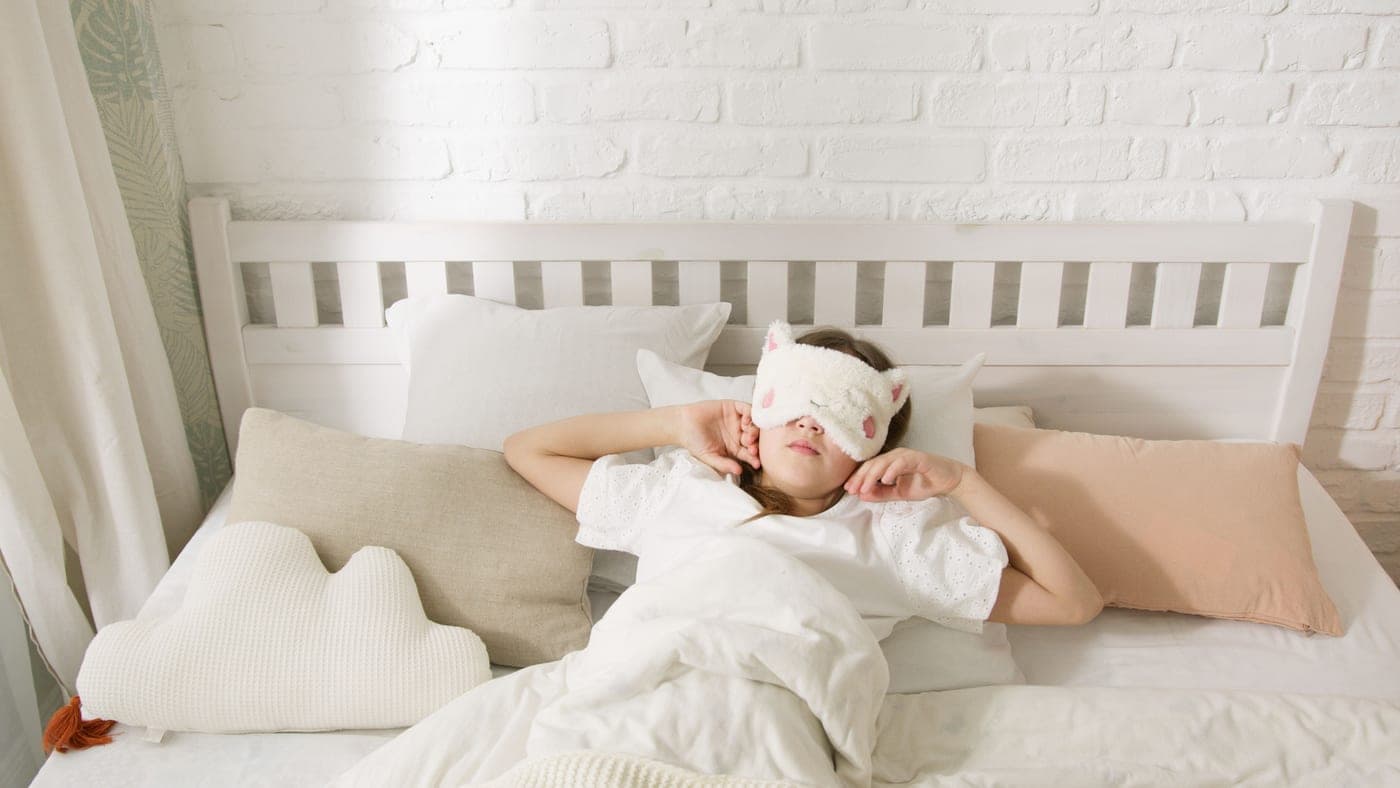 Manta Sleep Mask ProThe most adjustable mask in the category: the eye cups move independently, so you can seal a nose bridge that defeats every one-piece mask. | Total blackout on a back sleeper | Independently repositionable eye cups, zero eye pressure | |
| 2 |  Alaska Bear Natural Silk Sleep MaskA flat silk mask that costs less than lunch and blocks a surprising amount of light - the honest default before you spend more. | The cheapest mask genuinely worth owning | Flat mulberry silk, no cups, no bulk |
We have no live price feed for this site yet, so every button reads “Check price on Amazon” rather than showing a number that could be out of date. As an Amazon Associate we earn from qualifying purchases.
Our top pick · Total blackout on a back sleeper
1. Manta Sleep Mask Pro
The most adjustable mask in the category: the eye cups move independently, so you can seal a nose bridge that defeats every one-piece mask.
- Construction:
- Modular cups on a hook-and-loop band
- Eye pressure:
- None - the cups arch over the eye socket
- Adjustment:
- Cups reposition horizontally to match your face
- Strap:
- Wide adjustable band
What it gets right
- Seals light at the nose bridge better than any fixed-shape mask once fitted
- No contact with the eyelid, so you can blink freely and sleep in contacts
- Cups and band are replaceable, so the mask outlives its fabric
Where it falls short
- The deepest profile here - the cups stand well off the face
- Fitting it correctly takes a few nights of adjustment
- Premium price
Skip it if: You sleep strictly on your side. The cups press into the pillow and then into your face.
Pick 2 · The cheapest mask genuinely worth owning
2. Alaska Bear Natural Silk Sleep Mask
A flat silk mask that costs less than lunch and blocks a surprising amount of light - the honest default before you spend more.
- Material:
- Natural mulberry silk shell
- Profile:
- Flat - sits against the face
- Strap:
- Elasticated, adjustable
- Packability:
- Folds to nothing
What it gets right
- Almost nothing to feel against a pillow, so side sleepers get on with it
- Silk is kinder to skin and lashes than a foam contact surface
- Cheap enough to keep a spare in a bag
Where it falls short
- Flat masks touch the eyelid, so you cannot open your eyes underneath
- Light leaks around the nose on most faces
- Silk stains and is easily damaged in a hot wash
Skip it if: You need genuine blackout for daytime sleep. A flat mask will not get you there.
Questions people actually ask
Are blackout curtains better than a sleep mask?
For day sleeping and for reliability, yes - curtains cannot slip off at four in the morning. For everything else the mask wins: it costs a tenth as much, it travels, and it blocks light from inside the room, which a curtain cannot do at all.
Should I buy a sleep mask or blackout curtains first?
The mask. It works tonight for about ten dollars and tells you whether light was your problem at all. If the answer is yes and the light is coming from the window, curtains are the permanent follow-up.
Why do my blackout curtains still let light in?
Because light comes in around the edges, not through the fabric. The gap above the rail is the biggest leak, followed by the sides if the curtain is only as wide as the window. Blinds fitted inside the recess are the worst configuration of all.
Do blackout curtains help with noise?
A little. Heavy fabric adds soft mass to a room and reduces reflection, which makes everything sound less sharp. It is not soundproofing, and it will not stop a neighbor - for that you want earplugs or a sound machine.
Can I use a sleep mask and blackout curtains together?
That is the correct setup for day sleepers. Curtains take the room from bright to dim, and the mask takes it from dim to dark and covers you when you turn over.
Sources
Back to the best sleep masks.
Read next
- How to make a bedroom dark for sleepingThe free version, in order of effectiveness.Read it
- Best sleep masks for night shift workersWhere you genuinely want both.Read it
- Best blackout sleep masksIf the mask has to do the heavy lifting.Read it
- Are sleep masks worth it?The straight verdict on the cheaper option.Read it