
How this page is funded: we earn a commission if you buy through the links below, at no extra cost to you. As an Amazon Associate we earn from qualifying purchases. It does not change which products we pick or the order they appear in. Full disclosure.
How these picks were made: by comparing published specifications and clearly-credited public reporting. We do not run a laboratory, we have not measured these products, and we do not claim to have slept with them. Here is exactly how we choose.
Short answer: a sleep mask can contribute to hair breakage, and when it does, the cause is almost always the strap rather than the mask. A narrow elastic band under tension concentrates friction on one line of hair, usually at the back of the head where hair is already under strain from the pillow. Wide, flat or fabric-covered bands spread that load; thin round elastic does the opposite. Change the strap design and most of the problem goes away.
The mechanism is mechanical and cumulative, which is why it is easy to miss. The American Academy of Dermatology’s tips for healthy hair keep returning to the same theme: friction and tension are what damage hair, which is why the advice warns against tight styles and rough handling rather than against any particular product. A sleep mask strap is a tight style you wear for eight hours a night, every night. If you are weighing up whether to own a mask at all, that is answered on are sleep masks worth it; this page is about owning one without paying for it in hair.
What is actually happening
Three things combine, and only one of them is the mask.
- Tension on one line. A narrow band holds all its force along a strip a few millimeters wide. Hair under constant tension at one point is the classic setup for mechanical breakage, which is the same reason dermatology advice is wary of tight ponytails worn constantly.
- Friction as you turn. You move dozens of times a night and the band drags across that strip each time. Rough or rubbery elastic grips and pulls; smooth fabric slides.
- Hair that is already stressed. The back of the head takes the pillow’s share of the friction regardless of what you wear. The strap is adding load to the spot with the least left to give.
Notice that none of this involves the eye panel. A mask that touches your lashes can bend them - a real and separate issue, covered on masks that do not touch your eyes - but it is not touching your hair.
The spec that decides it: strap design
Here is the whole category sorted by the only variable that matters for hair. Blackout performance is deliberately absent; it belongs on the blackout roundup, not here.
| Strap type | What it does to hair | Verdict |
|---|---|---|
| Thin round elastic cord | Concentrates all tension on a narrow line, grips as you turn | The worst design. Avoid if hair is a concern |
| Flat elastic, around 1 cm | Better, but still a defined line and usually bare elastic | Acceptable on a loose setting |
| Wide fabric-covered band | Spreads load across a broad area; fabric slides rather than grips | The best mainstream answer |
| Hook-and-loop wide band | Wide and adjustable, but the hook side can catch loose hair | Good if you keep hair clear of the closure |
This is why an oversized silk mask such as the Drowsy is the pick we reach for most often here. Its wide wrap band spreads pressure instead of cutting a line into your head, which is a comfort claim on the packaging and a hair claim in practice - and Drowsy’s own product FAQs are specific about the band and sizing. The full Drowsy review goes into what else the extra fabric buys you.
The fixes that cost nothing
Try these before you buy anything, because between them they resolve most complaints we see.
Move the strap off the bulk of your hair. Most people center the band across the back of the head, straight through the hair. Sitting it lower, below the occipital bone and under a low braid, or higher so it rides above the mass, takes it off the line that breaks.
Loosen it one notch. Light leaks tempt you to tighten, and tension is half the mechanism. A loose wide band blocks as much light as a tight thin one.
Do not sleep on wet hair under a strap. Wet hair is at its most fragile, and a band under tension across it is the least forgiving thing you can do to it.
Use a loose braid, not a tight bun. A braid gives the band a smooth surface to sit on rather than a mass to compress, and it avoids adding a second tight style.
Rotate two masks. Elastic that has been stretched out for months pulls unevenly and sits worse. Two masks last longer than one does twice.
The other complaint: the dent, not the breakage
A lot of what gets searched as hair damage is actually a crease - the mark a strap leaves across your hair in the morning. That is a styling problem rather than a structural one, and it has different answers: a wider band leaves a softer mark, a band sitting below the hairline at the nape leaves none where anyone can see it, and silk slides out of the hair without the static bare elastic leaves behind.
If a dent is the real issue, you have more freedom than this page implies. A well-fitted mask with a wide band at low tension solves it and you keep the blackout you wanted. If your real issue is that any band across your head is unbearable, masks against blackout curtains is the honest alternative, and the too-bright page covers getting a room dark without wearing anything at all.
Is silk actually better, or is that marketing?
Both. Smooth fibers reduce friction, and friction is the mechanism dermatology advice points at when it tells you to handle hair gently, so a silk band genuinely slides where a rubber one grips. The overclaiming starts when silk is sold as something that repairs or thickens hair, which no fabric does.
Two cautions worth having. First, a great deal of inexpensive “silk” is polyester satin - satin is a weave, not a fiber - and polyester satin is smoother than rubber but holds moisture against skin and hair. If the listing does not say mulberry silk, assume polyester. Second, the silk that matters here is the silk on the band. A silk eye panel on a thin elastic cord has solved nothing for your hair.
If you want the cheapest correct version of this, a flat silk mask such as the Alaska Bear is a smooth panel on a slim adjustable band, which is a reasonable compromise worn loose - our Alaska Bear review covers where it falls short on light. If you want the band done properly, pay for width. And if your hair is thinning rather than breaking, or you are seeing loss rather than damage, that is a dermatologist’s question and no mask choice answers it. Everything else about picking a mask is on the sleep mask hub.
Strap placement is also what decides whether the mask is still on in the morning - masks that stay on all night approaches the same mechanics from the fit side.
Masks whose straps do not saw
Tap any row to jump to the full write-up. Each thumbnail is the product photograph from that item’s own Amazon listing, and the price in the last column is the one Amazon showed at the last check.
| # | Product | Best for | The spec that decides it | Price |
|---|---|---|---|---|
| 1 | 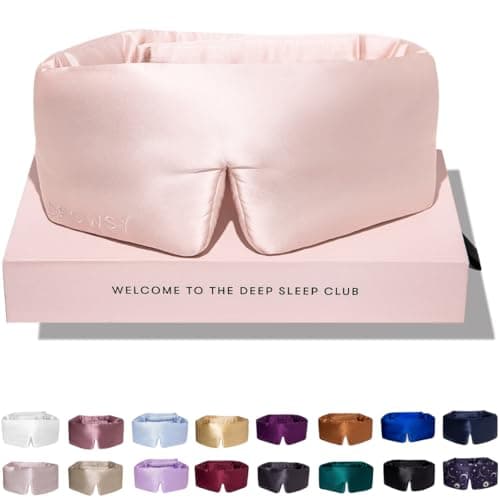 Drowsy Silk Sleep MaskAn oversized silk mask with a wide wrap-around band - the extra coverage seals the temples where narrow masks leak. | Travel, and anyone who finds standard masks too narrow | Certified 22 momme mulberry silk over a built-in blackout liner | |
| 2 | 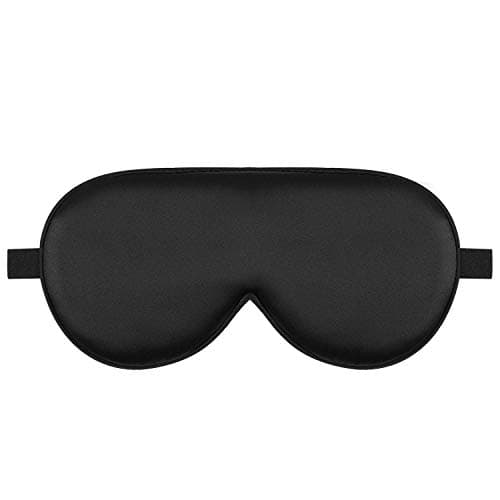 Alaska Bear Mulberry Silk Sleep MaskA flat silk mask that costs less than lunch and blocks a surprising amount of light - the honest default before you spend more. | The cheapest mask genuinely worth owning | Flat Grade 5A mulberry silk, no cups, no bulk | |
| 3 | 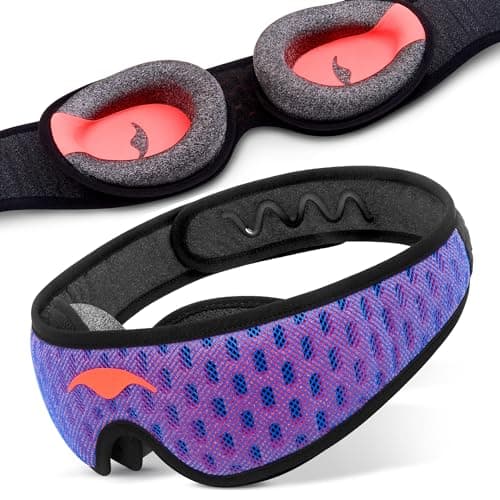 Manta Pro Sleep MaskThe most adjustable mask in the category: the eye cups move independently, so you can seal a nose bridge that defeats every one-piece mask. | Total blackout with room for long lashes | Independently repositionable eye cups, zero eye pressure |
Prices come straight from Amazon and are refreshed daily; the date they were checked is stamped under the buy buttons below. If a price has gone stale or a listing has no offer, the button falls back to “Check price on Amazon” rather than showing a number we cannot stand behind. As an Amazon Associate we earn from qualifying purchases.
Chosen for how the band distributes load and what it is made of, not for blackout. Specifications are the manufacturers' own; we have tested none of these.
#ad How we are funded · price as of November 12, 2026
Our top pick · Travel, and anyone who finds standard masks too narrow
1. Drowsy Silk Sleep Mask
An oversized silk mask with a wide wrap-around band - the extra coverage seals the temples where narrow masks leak.
- Material:
- Certified 22 momme pure mulberry silk
- Blackout:
- Built-in black-out liner inside the silk, not silk alone
- Coverage:
- Wide cushioned body that extends past the temples
- Strap:
- Wide band, fully adjustable to any head size
- Profile:
- Thick cloud-like padding - soft, but bulkier than a plain silk mask
What it gets right
- Temple coverage is the reason it outperforms cheaper silk masks
- The wide band spreads pressure instead of cutting a line into your head
- Comfortable enough for a long-haul flight
Where it falls short
- Premium price for a mask without molded cups
- Bulkier than a plain silk mask in a bag
- Contacts the eyelid, so no blinking underneath
Skip it if: You want zero eyelid contact. Buy a contoured mask with cups instead.
#ad How we are funded · price as of November 12, 2026
Pick 2 · The cheapest mask genuinely worth owning
2. Alaska Bear Mulberry Silk Sleep Mask
A flat silk mask that costs less than lunch and blocks a surprising amount of light - the honest default before you spend more.
- Material:
- Grade 5A 100% organic mulberry silk
- Profile:
- Flat - sits against the face
- Nose:
- Raised nose cutout, which is how a flat mask seals the bridge
- Strap:
- Adjustable loop, 15.8 to 27.6 in; buckle sits at the back of the head
- Also:
- CPAP compatible; non-toxic colorfast dyes
What it gets right
- Almost nothing to feel against a pillow, so side sleepers get on with it
- Silk is kinder to skin and lashes than a foam contact surface
- The buckle sits at the back of the head, so nothing digs in on a pillow
Where it falls short
- Flat masks touch the eyelid, so you cannot open your eyes underneath
- A flat mask seals less completely than cups do once you move in the night
- Silk stains and is easily damaged in a hot wash
Skip it if: You need genuine blackout for daytime sleep. A flat mask will not get you there.
#ad How we are funded · price as of November 12, 2026
Pick 3 · Total blackout with room for long lashes
3. Manta Pro Sleep Mask
The most adjustable mask in the category: the eye cups move independently, so you can seal a nose bridge that defeats every one-piece mask.
- Construction:
- Modular cups on a hook-and-loop band
- Eye pressure:
- None - the cups arch over the eye socket
- Adjustment:
- Cups reposition horizontally to match your face
- Strap:
- Wide adjustable band; the maker rates it for side sleeping
What it gets right
- Seals light at the nose bridge better than any fixed-shape mask once fitted
- No contact with the eyelid, so you can blink freely and sleep in contacts
- Spacious cups are the reason this is the lash-extension pick
Where it falls short
- The deepest profile here - the cups stand well off the face
- Fitting it correctly takes a few nights of adjustment
- Much the most expensive mask we cover
Skip it if: You want something you can throw in a bag and forget. This is a mask you fit to your face first.
Questions people actually ask
Can a sleep mask cause hair breakage?
It can contribute, and when it does the strap is the cause rather than the mask. A narrow elastic band under tension concentrates friction on one line of hair, usually at the back of the head where the pillow is already working against you. Wide, fabric-covered bands worn loose spread that load and largely remove the problem.
Which sleep mask does not mess up your hair?
One with a wide, fabric-covered band rather than thin round elastic. An oversized silk mask such as the Drowsy uses a wide wrap band specifically to spread pressure instead of cutting a line into your head. Hook-and-loop wide bands also work, provided you keep loose hair clear of the closure.
Does a silk sleep mask protect your hair?
A silk band reduces friction, which is the mechanism that matters, so it is better than bare elastic. What it does not do is repair or thicken hair, and the silk has to be on the strap to help - a silk eye panel on a thin elastic cord has done nothing for your hair. Watch for polyester satin sold as silk; satin is a weave, not a fiber.
How do I stop a sleep mask leaving a dent in my hair?
Use a wider band, wear it looser, and sit it below the bulk of your hair at the nape rather than across the middle of your head. A loose braid gives the band a smooth surface to rest on. The dent is a styling problem rather than damage, and all three changes are free.
Should I wear a sleep mask over or under a hair bonnet?
Over the bonnet, if you wear one. The bonnet then takes the friction instead of your hair, and the mask band sits on smooth fabric rather than on the hair itself. Keep the mask strap loose - stacking two tight bands is the thing to avoid.
Is it the mask or the pillow damaging my hair?
Usually the pillow does more, because it is in contact all night across a wide area. The strap matters because it adds concentrated tension to the same region the pillow is already abrading. That is also why fixing the strap often produces a bigger improvement than its size suggests.
Sources
- American Academy of Dermatology - Tips for healthy hair (friction and tension as the mechanisms of mechanical hair damage).
- Drowsy Sleep Co - Products FAQs (manufacturer specifications, sizing and returns policy).
- Manta Sleep - Sleep Mask product specifications (manufacturer).
- TravelAwaits - Mavogel Cotton Sleep Eye Mask, independently selected and tested (published strap range of 19 to 29 in and mask dimensions).
- TechGearLab - The Best Sleep Mask, tested and ranked.
Back to the best sleep masks.
Read next
- Best sleep masksThe ranked shortlist across the whole category.Read it
- Drowsy sleep mask reviewThe wide-band mask this page keeps recommending.Read it
- Do sleep masks cause wrinkles?The same friction question, applied to skin.Read it
- Are sleep masks bad for your eyes?Pressure, friction and hygiene, honestly assessed.Read it
- Sleep masks vs blackout curtainsDarkness without a band across your head.Read it