
How this page is funded: we earn a commission if you buy through the links below, at no extra cost to you. As an Amazon Associate we earn from qualifying purchases. It does not change which products we pick or the order they appear in. Full disclosure.
How these picks were made: by comparing published specifications and clearly-credited public reporting. We do not run a laboratory, we have not measured these products, and we do not claim to have slept with them. Here is exactly how we choose.
Short answer: a sleep mask is a minor contributor at worst, and the ones most people worry about are the easiest to fix. The big mechanical load on a sleeping face is the pillow - seven hours of your own head weight pressing one cheek into fabric. A mask adds a band of pressure and some friction on top of that. Three design choices remove almost all of it: a low-friction surface like silk, a wide band instead of a thin cord, and contoured cups that arch over the eye socket so the mask touches your brow and cheekbone rather than your eyelids. If you want zero face contact, a contoured mask is the design to buy.
We are not a skincare site and we are not going to pretend to dermatological authority we do not have. What we can do honestly is explain the mechanics - what presses on what, for how long - because that is a question about objects, and objects are what we write about.
What actually creases a face overnight
Three forces are at work while you sleep, and they are not equal.
Sustained compression. Lying on one side puts the weight of your head through your cheek into the pillow for hours. This is far and away the largest mechanical load on a sleeping face, and it has nothing to do with masks - it is why sleeping position comes up in essentially every conversation about overnight skin creasing.
Friction. You move during the night. Skin dragging against a cotton pillowcase or a rough mask lining is a different kind of load from steady pressure, and it is the one that fabric choice addresses. Silk and satin reduce it; cotton does not.
Banded pressure. This is the mask-specific one. A strap or a tight elastic cord concentrates force into a narrow line, in the same place, every night. It is the smallest of the three loads, and it is the only one that is entirely a product decision.
Put in that order, the honest conclusion is: if you are worried about your face overnight, your pillowcase and your sleeping position are bigger levers than your mask. The mask is still worth getting right, because it costs nothing extra to choose a better design.
The three features that remove the mask’s contribution
| Feature | What it fixes | What to look for |
|---|---|---|
| Low-friction surface | Skin dragging as you move | Mulberry silk against the face, not a rough cotton or polyester lining |
| Wide band | Pressure concentrated into a line | A flat band at least an inch wide, adjustable, with no thin elastic cord |
| Contoured cups | Contact with the eyelid and under-eye skin entirely | Molded cups that arch over the socket - the mask rests on bone, not on skin you care about |
The contoured option is the one people miss. A mask with eye cups does not touch your eyelids at all - Manta publishes zero eye pressure as an explicit design property, with the cups arching over the eye socket - which means the thinnest and most mobile skin on your face has nothing resting on it. That is a better answer to this question than any fabric.
The trade is depth, which is a problem if you sleep on your side. If that is you, the slim-panel masks are the compromise, or a wide-banded silk mask like the Drowsy, whose published oversized body and wide wrap band spread pressure rather than concentrating it.
What about acne and milia?
This is the other half of the question people are really asking, and the answer is more about laundry than design. Anything worn against your face for eight hours collects sebum, dead skin and whatever product you applied before bed. Worn again unwashed, that is an occlusive layer against your skin night after night.
The fix is not exotic: wash it, and wash it more often than you think. Silk masks are usually hand-wash - Drowsy publishes its care guidance, and Mavogel specifies hand wash for its cotton mask. A mask you can clean easily is a mask you will clean, which is why washability is a functional spec here rather than a convenience.
Two other practical notes. Give heavy night creams twenty minutes to absorb before you put a mask on, or the mask takes most of it. And if you are prone to congestion, a contoured mask again has an advantage - there is an air gap rather than fabric pressed into your skin.
The real mask-and-face problem is dryness, not wrinkles
If we are being useful rather than reassuring: the complaint we would actually worry about with nightly mask use is not creasing, it is dry eyes. A mask that presses on the eyelids can leave the lids slightly open or disturb the tear film, and the difference between a mask that touches your lids and a contoured one is genuinely consequential there. We gave that its own page, and it is the more common real-world problem.
Independent mask testing from TechGearLab, CNN Underscored and HGTV all converge on comfort-over-time as the thing that separates masks people keep from masks people abandon - and lid contact is a large part of that.
The free fixes, which do more than the mask choice
- Switch your pillowcase to silk or satin. It addresses the largest friction surface your face meets, costs less than most masks, and benefits you whether or not you wear one.
- Loosen the strap. Most people wear masks tighter than they need to. If it is leaving a line in the morning, it is too tight, and a looser mask that is actually wide enough still blocks light.
- Try sleeping on your back, if you can. This is the single biggest change available and it is free. It is also the hardest, which is why we list it last.
- Make the room dark instead. If a curtain removes the need for a mask, the whole question goes away. We compared the two options directly.
The verdict
No, a sleep mask is not going to be the thing that ages your face, and the blackout it buys you is worth more to your sleep than the marginal mechanical load. But choose deliberately: a low-friction surface, a wide band rather than a cord, and ideally contoured cups so nothing rests on your eyelids at all.
Then wash it weekly, loosen it a notch, and spend the attention you were going to spend on this on your pillowcase instead. The broader question of whether a mask is worth owning is the one we would actually think about first.
Three masks that minimize what touches your face
Tap any row to jump to the full write-up. The photographs are licensed stock images chosen to illustrate the category - they are not photographs of these specific products, and each one’s alt text describes what is actually shown.
| # | Product | Best for | The spec that decides it | Price |
|---|---|---|---|---|
| 1 | 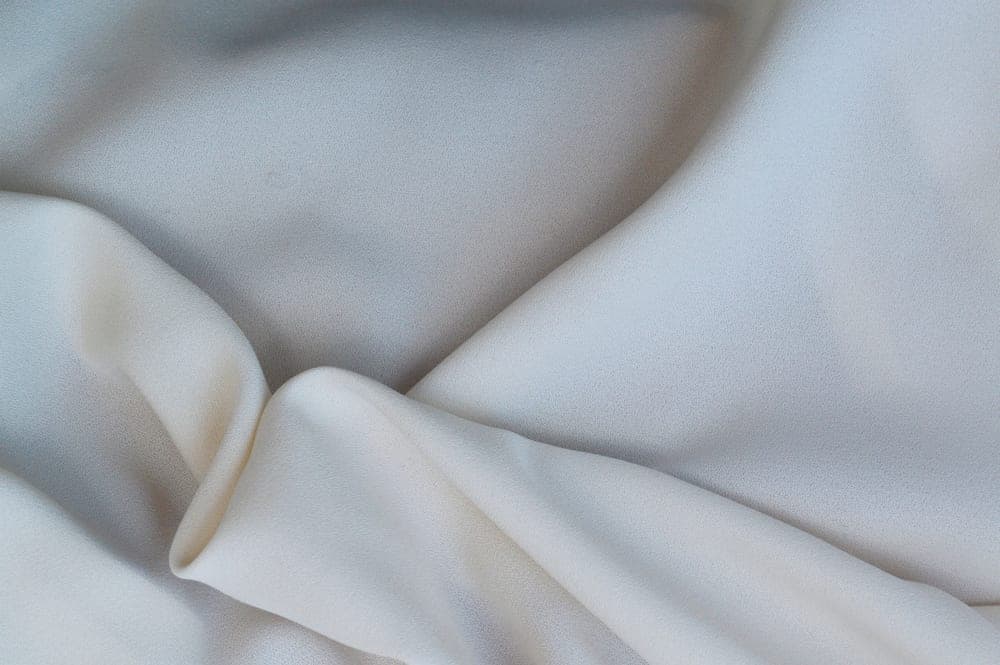 Alaska Bear Natural Silk Sleep MaskA flat silk mask that costs less than lunch and blocks a surprising amount of light - the honest default before you spend more. | The cheapest mask genuinely worth owning | Flat mulberry silk, no cups, no bulk | |
| 2 |  Drowsy Silk Sleep MaskAn oversized silk mask with a wide wrap-around band - the extra coverage seals the temples where narrow masks leak. | Travel, and anyone who finds standard masks too narrow | Oversized silk body with a wide wrap band | |
| 3 | 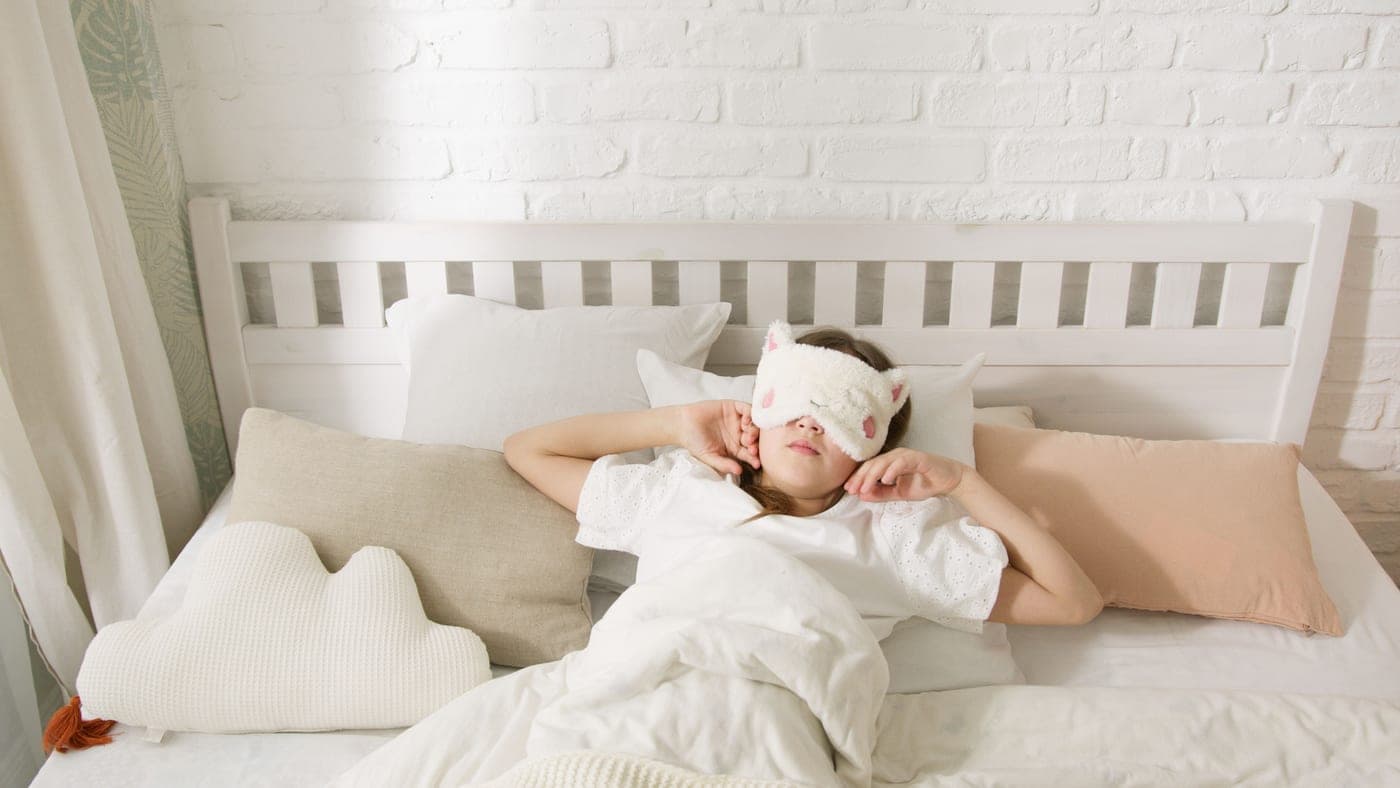 Manta Sleep Mask ProThe most adjustable mask in the category: the eye cups move independently, so you can seal a nose bridge that defeats every one-piece mask. | Total blackout on a back sleeper | Independently repositionable eye cups, zero eye pressure |
We have no live price feed for this site yet, so every button reads “Check price on Amazon” rather than showing a number that could be out of date. As an Amazon Associate we earn from qualifying purchases.
Low-friction silk, a wide band that spreads pressure, and the contoured option that touches almost nothing. Every pick is a real, currently-sold product; none has been tested by us, and the specifications are the manufacturers' own.
Our top pick · The cheapest mask genuinely worth owning
1. Alaska Bear Natural Silk Sleep Mask
A flat silk mask that costs less than lunch and blocks a surprising amount of light - the honest default before you spend more.
- Material:
- Natural mulberry silk shell
- Profile:
- Flat - sits against the face
- Strap:
- Elasticated, adjustable
- Packability:
- Folds to nothing
What it gets right
- Almost nothing to feel against a pillow, so side sleepers get on with it
- Silk is kinder to skin and lashes than a foam contact surface
- Cheap enough to keep a spare in a bag
Where it falls short
- Flat masks touch the eyelid, so you cannot open your eyes underneath
- Light leaks around the nose on most faces
- Silk stains and is easily damaged in a hot wash
Skip it if: You need genuine blackout for daytime sleep. A flat mask will not get you there.
Pick 2 · Travel, and anyone who finds standard masks too narrow
2. Drowsy Silk Sleep Mask
An oversized silk mask with a wide wrap-around band - the extra coverage seals the temples where narrow masks leak.
- Material:
- Mulberry silk with a padded interior
- Coverage:
- Oversized - extends past the temples
- Strap:
- Wide band, adjustable
- Profile:
- Soft and low, though bulkier than a plain silk mask
What it gets right
- Temple coverage is the reason it outperforms cheaper silk masks
- The wide band spreads pressure instead of cutting a line into your head
- Comfortable enough for a long-haul flight
Where it falls short
- Premium price for a mask without molded cups
- Bulkier than a plain silk mask in a bag
- Contacts the eyelid, so no blinking underneath
Skip it if: You want zero eyelid contact. Buy a contoured mask with cups instead.
Pick 3 · Total blackout on a back sleeper
3. Manta Sleep Mask Pro
The most adjustable mask in the category: the eye cups move independently, so you can seal a nose bridge that defeats every one-piece mask.
- Construction:
- Modular cups on a hook-and-loop band
- Eye pressure:
- None - the cups arch over the eye socket
- Adjustment:
- Cups reposition horizontally to match your face
- Strap:
- Wide adjustable band
What it gets right
- Seals light at the nose bridge better than any fixed-shape mask once fitted
- No contact with the eyelid, so you can blink freely and sleep in contacts
- Cups and band are replaceable, so the mask outlives its fabric
Where it falls short
- The deepest profile here - the cups stand well off the face
- Fitting it correctly takes a few nights of adjustment
- Premium price
Skip it if: You sleep strictly on your side. The cups press into the pillow and then into your face.
Questions people actually ask
Do sleep masks cause wrinkles?
Not meaningfully, compared with the pillow. Lying on one side puts the weight of your head through your cheek for hours, which is far the largest mechanical load on a sleeping face. A mask adds banded pressure and some friction on top; a low-friction silk surface, a wide band instead of a cord, and contoured cups that arch over the eye socket remove nearly all of it.
Which type of sleep mask is best for your skin?
A contoured mask with molded eye cups, because it does not touch your eyelids at all - it rests on brow and cheekbone, so the thinnest skin on your face has nothing on it. If you sleep on your side and cannot take the depth, a wide-banded silk mask that spreads pressure is the next best thing.
Can sleep masks cause acne?
An unwashed one can. Anything worn against your face for eight hours collects sebum, dead skin and whatever you applied before bed, and wearing it again unwashed makes it an occlusive layer. Wash it weekly, give night creams twenty minutes to absorb first, and prefer a mask whose care instructions you will actually follow.
Is silk better than cotton for a sleep mask?
For friction, yes - silk lets skin slide rather than drag as you move, which is the load fabric choice actually addresses. For blackout, no: a flat silk mask will not match a contoured one. Pick silk if skin is your main concern and your room is already dark.
Does wearing a sleep mask every night damage your eyes?
The complaint worth taking seriously is dryness rather than damage. A mask pressing on the eyelids can leave the lids slightly open or disturb the tear film, and that is a real and fairly common problem with nightly use. A contoured mask with cups avoids lid contact entirely, which is the straightforward fix.
Will a tight sleep mask leave permanent marks?
The morning lines are temporary. The reason to loosen it anyway is that a line in the morning means the strap is concentrating more pressure than it needs to, every night, in the same place - and a wider band at lower tension blocks just as much light.
Sources
- Manta Sleep - Sleep Mask product specifications (manufacturer).
- Drowsy Sleep Co - Products FAQs (manufacturer specifications, sizing and returns policy).
- Mavogel - Cotton Sleep Mask (manufacturer specifications: five layers of cotton, elastic sponge and modal, patented bending nose design).
- TechGearLab - The Best Sleep Mask, tested and ranked.
- CNN Underscored - The best sleep masks, tried and tested.
- HGTV - The Best Sleep Masks of 2026, tested and reviewed.
- Reviewed - The Best Sleep Masks.
Back to the best sleep masks.
Read next
- Best sleep masksThe main roundup, with the contoured designs this page favors.Read it
- Best sleep mask for dry eyesThe mask-and-face problem we would actually worry about.Read it
- Are sleep masks worth it?The question to settle before any of this.Read it
- Best sleep masks for womenHair, skin and blackout, in one place.Read it
- Sleeping positions and the gear that suits themThe bigger lever on everything this page discusses.Read it