
How this page is funded: we earn a commission if you buy through the links below, at no extra cost to you. As an Amazon Associate we earn from qualifying purchases. It does not change which products we pick or the order they appear in. Full disclosure.
How these picks were made: by comparing published specifications and clearly-credited public reporting. We do not run a laboratory, we have not measured these products, and we do not claim to have slept with them. Here is exactly how we choose.
Short version: the Philips SmartSleep HF3520 is the pick for most people with any budget at all - 20 published light-intensity settings, a colored sunrise, wake sounds and FM radio, and no app or account. The Lumie Bodyclock Shine 300 is the upgrade if you want to set the sunrise length yourself; the Hatch Restore 3 is the one to buy for the bedtime routine rather than the hardware. The ecozy Sunrise Alarm Clock is the budget pick - a sunrise light and 26 masking sounds for the least money here.
Let us deal with the cap honestly, because it is the reason this page exists. People search for an alarm clock under $1,000 and the answer is that no alarm clock worth owning comes close to that number. The most expensive clock in our registry is a fraction of it. There is no $1,000 tier where a clock starts measuring your sleep cycles and waking you at the perfect moment - that is a different product category, one this site deliberately stays out of, and spending more on a clock stops buying anything useful well before $200.
So this page does the thing the budget actually allows: it picks the best clock in the category outright, then shows what each step down costs you. The figure inside each button is what Amazon showed at the last daily check, with the date stamped beneath it. If a price goes stale, the number disappears rather than staying here and being wrong.
Where the money stops mattering
Three things separate a good clock from a cheap one, and only the first is worth paying much for.
- Light output and control. This is the feature that decides whether the clock works at all. Independent light-meter testing of this category found real differences between clocks making similar claims (independent measurements, theirs not ours). A budget lamp can be too dim to move a heavy sleeper, and no amount of extra features fixes that.
- Sunrise duration and a real sunset. Mid-range clocks give you a fixed ramp; one clock here lets you set 15 to 90 minutes and fade back down at night. Evening light has the clearest published guidance in this field (Brown et al., PLOS Biology, 2022), so the sunset is a real feature rather than a flourish.
- Software, apps and content. This is where the top of the category spends your money, and it is the part that can be taken away: an app can change, a library can move behind a membership, a company can stop supporting a device. Paying more here buys convenience, not a better wake-up.
The field, cheapest feature set to richest
| Clock | Published light behavior | Sound on the unit | Account needed? | What the money buys |
|---|---|---|---|---|
| ecozy Sunrise Alarm Clock | Ramps to the set wake time; 17 colors, adjustable brightness | 26 sounds, dual Bluetooth speakers | No | The experiment - light plus masking for the least money |
| JALL Wake Up Light | Configurable ramp, multiple colors; no duration published | Nature sounds plus FM radio, dual alarms | No | A radio and a colored sunrise, cheaply |
| Dekala Arches | 9 dynamic lighting effects, 16 million colors; no duration published | White noise, brown noise, fan, waves, frog, lullaby; Bluetooth | App, but nothing paywalled | Design, voice control and wireless charging |
| Philips SmartSleep HF3520 | 20 intensity settings; colored sunrise; no sunset published | Natural wake sounds plus FM radio | No | The best light control with nothing to maintain |
| Hatch Restore 3 | Sunrise from roughly 30 min before the alarm, orange to white | Built-in library plus alarm tones; part is Hatch+ only | Yes - app required for setup | A guided bedtime routine, rented |
| Lumie Bodyclock Shine 300 | Sunrise adjustable 15-90 min with a matching sunset; auto-dimming face | 15 sleep and wake sounds, or FM radio | No | Control over the ramp, and the evening half of the day |
Philips SmartSleep HF3520 - the pick at any budget
Who it is for: almost everyone, including anyone who arrived here willing to spend far more.
Twenty published light-intensity settings, a colored sunrise simulation before the alarm, natural wake-up sounds, FM radio, and no account anywhere (manufacturer specifications). Nothing more expensive in this category reliably wakes you better. It is the default recommendation here and it has its own review. Its gaps are specific: no adjustable ramp length and no true sunset.
Lumie Bodyclock Shine 300 - the real upgrade
Who it is for: anyone who has used a fixed 30-minute sunrise and wanted it longer or shorter, or who wants the evening handled.
An adjustable 15 to 90 minute sunrise with a matching fade-to-dark sunset, 15 sleep and wake sounds or FM radio, and a light-sensitive auto-dimming face (manufacturer specifications). This is where extra money still buys something you will notice every day. Detail in the Lumie Bodyclock review.
Hatch Restore 3 - buy it for the routine
Who it is for: anyone whose real problem is the hour before sleep rather than the moment of waking.
A lamp plus a service: guided wind-downs, a large sound library, app-based setup, and part of the catalog behind Hatch+ (manufacturer specifications), (free versus paid, published by Hatch). Worth it if you will use the routine, poor value if you only want light. Hatch alternatives covers the clocks that do the hardware without the membership.
Dekala Arches - when it has to look like furniture
Who it is for: anyone who wants a bedside object rather than a gadget, with app and voice control and nothing paywalled.
App, voice or spoken-prompt button control, nine lighting effects, a named brown-noise setting, a Bluetooth speaker and a wireless charging base (listing specifications). It publishes no sunrise duration, so the light cannot be compared with the Lumie’s on paper - you are paying for the design and the integration.
JALL and ecozy - the cheap end, and what it costs you
Who they are for: anyone finding out whether light waking works for them before spending real money on it.
The JALL gives a configurable colored sunrise, dual alarms, nature sounds, FM radio and a USB port (listing specifications). The ecozy is the budget pick outright: a sunrise light, 26 masking sounds, 17 night-light colors and dual Bluetooth speakers (listing specifications). What you give up at this end is peak brightness, published light figures and build quality. If you are a heavy sleeper, neither will move you alone - sunrise alarms for heavy sleepers is the page for that, and sunrise alarm clocks under $50 is the whole cheap tier.
What not to spend the rest on
- Anything that claims to wake you at the perfect point in your sleep cycle. That is a tracker claim, not a clock feature, and sleep tracking is outside what this site covers.
- Sound count. The cheapest clock on this page publishes the longest sound list. It is the easiest number to inflate and the least connected to quality.
- Colors. Sixteen million colors is sixteen million chances to pick a blue at bedtime, which is the wrong direction (Harvard Health, blue light).
- A second device you will not use. If the money is burning a hole, spend the remainder on the thing that is actually keeping you awake - noise or light. The sleep gear guide maps problem to product.
For the field sorted by price rather than by feature, see sunrise alarm clocks under $100, or start from the main sunrise alarm clock roundup.
Every clock here, and where the money goes
Tap any row to jump to the full write-up. Each thumbnail is the product photograph from that item’s own Amazon listing, and the price in the last column is the one Amazon showed at the last check.
| # | Product | Best for | The spec that decides it | Price |
|---|---|---|---|---|
| 1 | 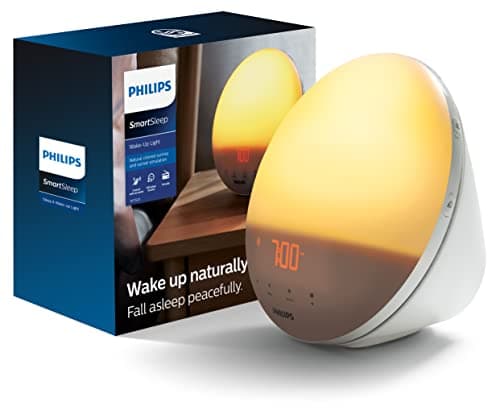 Philips SmartSleep Wake-Up Light HF3520The reference sunrise. No account, no app, no monthly fee - a dial, twenty brightness steps, and a light that ramps properly. | Sunrise quality with no app and no subscription | 20 light-intensity settings, no app or subscription | |
| 2 | 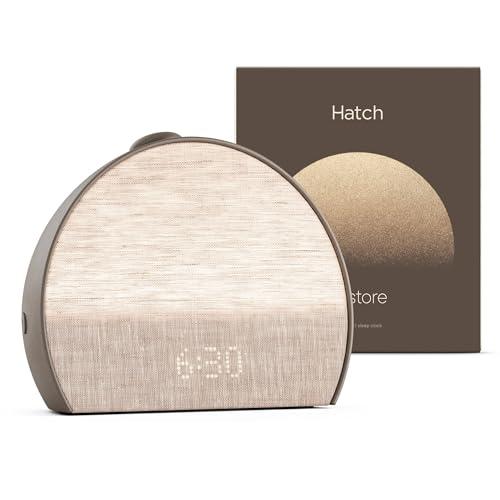 Hatch Restore 3The most complete bedside device of the group - sunrise, wind-down, sound library and alarms in one - and the only one with a subscription attached. | One device for the whole bedtime routine | Roughly 30-minute sunrise, deep orange through to bright white | |
| 3 | 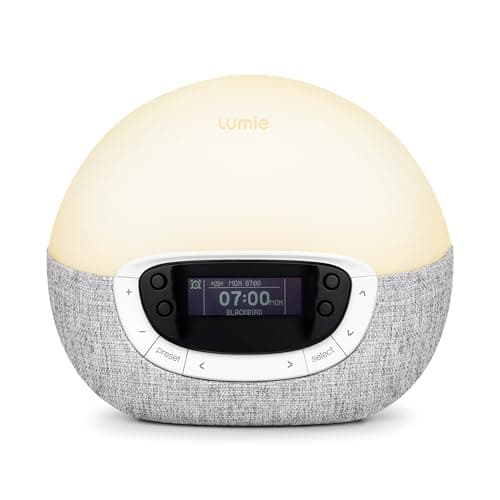 Lumie Bodyclock Shine 300The specialist's pick: adjustable ramp duration in both directions, from a manufacturer that only makes light-therapy devices. | Long, slow sunrises and a proper sunset | 15 to 90 minute sunrise and sunset durations | |
| 4 | 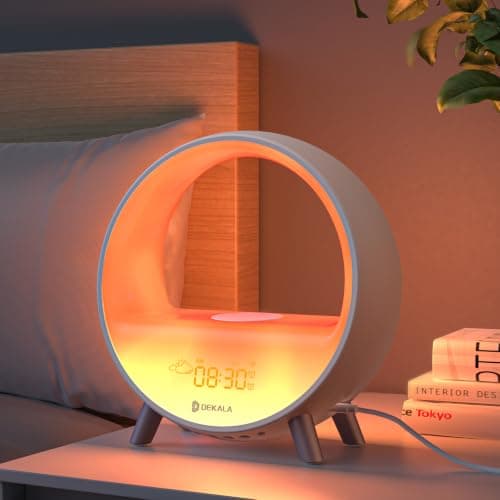 Dekala ArchesA lamp first and an alarm second: the whole wake routine - noise, volume, light color, brightness - is built in the app, and the arch itself is the only thing on show. | A real bedside object that happens to do sunrises | App, voice or button control over 2.4 GHz Wi-Fi, with a wireless charging base | |
| 5 | 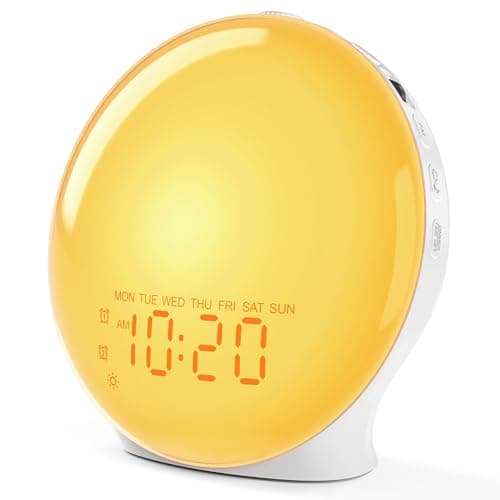 JALL Wake Up LightThe cheap way to test the idea. The light is dimmer than the premium units, but the mechanism is the same. | Finding out whether sunrise waking works for you | Full-screen display with colored sunrise, at entry-level pricing | |
| 6 | 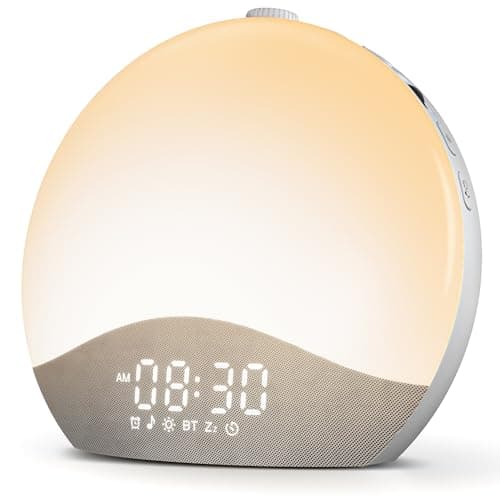 ecozy Sunrise Alarm ClockA sunrise light, a 26-sound masking machine and a Bluetooth speaker in one cheap box - the device to buy if you are testing the idea rather than committing to it. | The cheapest way to find out whether light wakes you | Sunrise wake light plus 26 sleep sounds and 17 night-light colors |
Prices come straight from Amazon and are refreshed daily; the date they were checked is stamped under the buy buttons below. If a price has gone stale or a listing has no offer, the button falls back to “Check price on Amazon” rather than showing a number we cannot stand behind. As an Amazon Associate we earn from qualifying purchases.
The number inside each button is the price Amazon showed at the last daily check, with the date of that check stamped underneath - that date is the as-of date for this page. Every one of these was far under the $1,000 cap at that check; the useful comparison is between them, not against the cap.
#ad How we are funded · price as of November 23, 2026
Our top pick · Sunrise quality with no app and no subscription
1. Philips SmartSleep Wake-Up Light HF3520
The reference sunrise. No account, no app, no monthly fee - a dial, twenty brightness steps, and a light that ramps properly.
- Light settings:
- 20 intensity levels
- Sunrise:
- Colored sunrise simulation before the alarm
- Sound:
- Natural wake-up sounds plus FM radio
- Account:
- None required
What it gets right
- Nothing to sign up for and nothing to update - it is an appliance
- Twenty brightness steps means you can actually find a comfortable display level
- Long-standing design with a well-understood service life
Where it falls short
- No app, so scheduling is manual
- The sound library is small and dated
- Larger footprint than the smart units
Skip it if: You want a sound machine and a sunrise in one device. This is a light first and foremost.
#ad How we are funded · price as of November 23, 2026
Pick 2 · One device for the whole bedtime routine
2. Hatch Restore 3
The most complete bedside device of the group - sunrise, wind-down, sound library and alarms in one - and the only one with a subscription attached.
- Sunrise:
- Gradual ramp beginning around 30 minutes before the alarm
- Color path:
- Deep orange warming to bright white
- Sound:
- Built-in sound library plus alarm tones
- App:
- Required for setup; premium library is subscription-gated
What it gets right
- Sunrise, wind-down and sound machine in a single footprint
- The app makes complex schedules genuinely easy to set
- The display dims properly, unlike most clock radios
Where it falls short
- The best sound content sits behind a subscription
- App dependency: no phone, no changes
- Most expensive way to buy a sunrise
Skip it if: You resent subscriptions. The Philips does the light half with no account at all.
#ad How we are funded · price as of November 23, 2026
Pick 3 · Long, slow sunrises and a proper sunset
3. Lumie Bodyclock Shine 300
The specialist's pick: adjustable ramp duration in both directions, from a manufacturer that only makes light-therapy devices.
- Sunrise:
- Adjustable from 15 to 90 minutes
- Sunset:
- Matching fade-to-dark, same 15-90 minute range
- Sound:
- 15 sleep and wake sounds, or FM radio
- Display:
- Light-sensitive auto-dimming clock face
- Specialism:
- Designed in Cambridge by the inventors of the wake-up light
What it gets right
- The sunset fade is as well implemented as the sunrise, which is rare
- Duration control matters more than peak brightness for light sleepers
- No subscription
Where it falls short
- Priced with the premium units without the smart features
- US availability is patchier than Philips or Hatch
- Dated interface
Skip it if: You want app scheduling. This is a well-made physical device with physical controls.
#ad How we are funded · price as of November 23, 2026
Pick 4 · A real bedside object that happens to do sunrises
4. Dekala Arches
A lamp first and an alarm second: the whole wake routine - noise, volume, light color, brightness - is built in the app, and the arch itself is the only thing on show.
- Control:
- Dekala app, voice control, or buttons with spoken prompts
- Sounds:
- White noise, brown noise, fan, waves, frog, lullaby and light music
- Light:
- 9 dynamic lighting effects, 16 million colors
- Also does:
- Bluetooth speaker, wireless phone charger, weather display
- Size:
- 6.5 x 6.5 x 1.5 in, 1.76 lb; 365-day warranty
What it gets right
- Looks like an object rather than a gadget - the only pick here you would leave out in a guest room
- Brown noise is named on the listing, which is rare on a sunrise device
- The buttons speak their own prompts, so it still works when the Wi-Fi does not
Where it falls short
- Among the more expensive sunrise devices sold
- Mains-powered with a charging base - this is bedside furniture, not luggage
- Sixteen million colors is sixteen million chances to pick a blue at bedtime
Skip it if: You want to set it without a phone in your hand. The app is where the routine actually gets built.
#ad How we are funded · price as of November 23, 2026
Pick 5 · Finding out whether sunrise waking works for you
5. JALL Wake Up Light
The cheap way to test the idea. The light is dimmer than the premium units, but the mechanism is the same.
- Sunrise:
- Configurable ramp before the alarm
- Colors:
- Multiple selectable light colors
- Sound:
- Built-in nature sounds plus FM radio
- Extras:
- Dual alarms, snooze, USB charging port
What it gets right
- A fraction of the price of the Philips or the Hatch
- Includes dual alarms and a USB port the premium units often omit
- Low risk if you are not sure the approach suits you
Where it falls short
- Peak brightness is well below the premium units, and that is the spec that matters most
- Build quality is what the price suggests
- Display dimming is coarser than the Philips
Skip it if: You are a genuinely heavy sleeper. Buy brightness - it is the one spec you cannot compromise on.
#ad How we are funded · price as of November 23, 2026
Pick 6 · The cheapest way to find out whether light wakes you
6. ecozy Sunrise Alarm Clock
A sunrise light, a 26-sound masking machine and a Bluetooth speaker in one cheap box - the device to buy if you are testing the idea rather than committing to it.
- Sunrise:
- Light ramps up to your set wake time rather than a sudden alarm
- Sounds:
- 26, from rain through to white noise
- Light:
- 17 colors, adjustable brightness, from night light to reading lamp
- Speaker:
- Dual speakers, pairs over Bluetooth
- Setup:
- Four steps: plug in, set the time, set the alarm, pick the light
What it gets right
- Cheap enough to treat as an experiment rather than a commitment
- The masking sounds mean it earns its nightstand space even on nights you do not use the alarm
- Doubles as a reading lamp and a colored bedside lamp
Where it falls short
- Peak brightness is well below a premium wake-up light
- Mains only, and the listing insists on the supplied adapter
- A 17-color light invites you to pick a blue, which is the wrong choice at bedtime
Skip it if: You are a genuinely heavy sleeper. Budget lights do not put out enough light to move a heavy sleeper on their own.
Questions people actually ask
What is the best alarm clock under $1,000?
The Philips SmartSleep HF3520, and it costs a small fraction of that cap. It publishes 20 light-intensity settings, a colored sunrise, natural wake sounds and FM radio, and needs no app or account. Nothing more expensive in this category wakes you more reliably.
Is there any alarm clock that costs near $1,000?
Not one worth buying. The most expensive clock in this site's registry is a fraction of $1,000, and spending beyond roughly $200 stops buying better waking - it buys software, design and content. If you have a large budget, spend the remainder on whatever is actually keeping you awake.
What should I spend on a sunrise alarm clock?
Enough to get published light figures and a ramp you can live with. The cheap tier is the sensible way to find out whether light waking works for you at all; the mid tier buys real light control; the top tier mostly buys apps and content. Our under-$50 and under-$100 pages cover the lower bands.
Does a more expensive alarm clock wake you up better?
Up to a point. Brighter, better-controlled light does wake more people, and independent light-meter work has found real differences between clocks with similar marketing. Past the mid range the extra money goes into subscriptions, speakers and design rather than light.
Which alarm clock is best for a heavy sleeper?
None of the budget lights on their own - they are not bright enough. A heavy sleeper wants light plus either a very loud conventional alarm or a bed shaker. Our sunrise alarms for heavy sleepers page covers that route specifically.
Do expensive alarm clocks need a subscription?
Some do. One pick here requires its app for setup and keeps part of its sound catalog behind a membership. The two best-specified lights on this page need no account at all, which is worth weighing as part of the price.
Sources
- Philips - SmartSleep Wake-up Light HF3520 product page (manufacturer specifications: colored sunrise simulation and 20 light-intensity settings).
- Lumie - Bodyclock Shine 300 (manufacturer specifications: 15 to 90 minute sunrise and sunset durations, 15 wake and sleep sounds, light-sensitive auto-dimming display, FM radio).
- Hatch - Restore 3 product page (manufacturer specifications and current subscription terms).
- Hatch Support - What do I get with Hatch+? What do I get for free? (full free vs subscription content lists).
- Hatch - Hatch+ membership pricing and included content (manufacturer).
- Dekala - Arches sunrise alarm clock, app control and sound list (Amazon listing, specifications as published by the seller).
- JALL - wake up light sunrise alarm clock, nature sounds and FM radio, dual alarms (Amazon listing, specifications as published by the seller).
- ecozy - sunrise alarm clock and sound machine, sound list and light options (Amazon listing, specifications as published by the seller).
- Optimize Your Biology - Best Sunrise Alarm Clocks 2026 (independent light-meter measurements, theirs not ours).
- Brown TM et al. Recommendations for daytime, evening and nighttime indoor light exposure to best support physiology, sleep and wakefulness in healthy adults. PLOS Biology, 2022.
- Harvard Health Publishing - Blue light has a dark side.
- Tom's Guide - The best sunrise alarm clocks, tested and ranked.
- Sleep Foundation - Best Sunrise Alarm Clocks.
Back to the best sunrise alarm clocks.
Read next
- Sunrise alarm clocks under $100The band where most of the value sits.Read it
- Why sunrise alarm clocks are so expensiveWhat the money is actually buying.Read it
- Sunrise alarm clocks under $50The cheap tier, and its real limits.Read it
- Sunrise alarms for heavy sleepersIf light alone has never worked for you.Read it