
How this page is funded: we earn a commission if you buy through the links below, at no extra cost to you. As an Amazon Associate we earn from qualifying purchases. It does not change which products we pick or the order they appear in. Full disclosure.
How these picks were made: by comparing published specifications and clearly-credited public reporting. We do not run a laboratory, we have not measured these products, and we do not claim to have slept with them. Here is exactly how we choose.
Short version: the Lumie Bodyclock Shine 300 is the pick, because it is the only clock here that publishes a matching sunset with the same adjustable 15 to 90 minute range as its sunrise. The Hatch Restore 3 is the pick if you want the whole bedtime routine in one device rather than just a fade. The Dekala Arches is the budget pick among clocks that genuinely do the evening half - below its price, the category stops fading down and starts just switching off.
This is a feature page rather than a category page, so it is worth defining the feature tightly. A sunset is a controlled decrease in intensity and color temperature over a set period, ending in darkness. It is not a sleep timer that cuts the lamp after 30 minutes, and it is not a dimmer you turn down by hand. The difference matters because evening light exposure is the half of the day with the clearest published guidance (Brown et al., PLOS Biology, 2022).
Why the evening half is the half that works
Most people buy these clocks for the morning and get more out of the evening. The reason is that the morning ramp competes with an alarm you can also hear, whereas the evening fade replaces a decision - the decision to turn the light off - with something automatic.
Short-wavelength light in the hours before bed is the exposure with the most evidence behind it (Harvard Health on blue light), and a sunset that warms as it dims is doing two things at once: dropping intensity and stripping blue out of the spectrum. A lamp you dim by hand only does the first.
The four specs that separate a real sunset from a timer
- A published duration, ideally adjustable. The Lumie quotes 15 to 90 minutes for both directions (manufacturer specifications). That is the benchmark. A clock that says “sunset mode” with no number is a timer.
- A color path, not just a brightness path. Fading white light to dim white light is less useful than fading to deep amber.
- An end state of actual darkness. Some devices bottom out at a night-light glow. If you need the room dark, check whether zero is reachable - and if it is not, a mask solves it; blackout sleep masks covers that.
- Whether sound fades with the light. The Hatch and the Dekala both carry sound libraries, so the wind-down can be audio plus light (Restore 3 specifications).
How the four picks differ
The Lumie is the specialist: it was designed by the people who introduced the wake-up light, and the sunset is a first-class feature with the same controls as the sunrise rather than an afterthought. If the fade itself is what you are buying, this is the one.
The Hatch Restore 3 is the routine device. Its sunrise begins around 30 minutes before the alarm and runs deep orange through to bright white, and the evening side is a configurable wind-down with sound. The trade-off is the membership on part of the content library - set out plainly by Hatch (free versus Hatch+) - and if that is a problem, sunrise alarms without a subscription is the page to read instead.
The Dekala Arches is the cheapest genuine both-ways clock here, and it is also the most device-like: Wi-Fi app control, voice control, nine dynamic lighting effects, a Bluetooth speaker and a wireless charging base (listing specifications). The Casper Glow sits at the other end of the design argument - it is a wind-down object first, controlled by twisting the lamp itself, with no sound at all (manufacturer specifications). Buy the Casper if the evening is the whole point and you already have an alarm you trust.
Who should skip this feature
If you fall asleep easily and your problem is purely getting up, you are paying for half a device you will not use - buy on sunrise quality and brightness instead, and sunrise alarms for heavy sleepers is the better starting point. If your evenings are hard because your mind will not stop rather than because the light is wrong, a racing mind at bedtime is a different problem with different gear. And if you work nights, the whole sunrise-sunset model has to be inverted - sunrise alarms for night shift handles that.
For the full field at every price, start from the main sunrise alarm clock roundup.
Clocks that fade down as well as up
Tap any row to jump to the full write-up. Each thumbnail is the product photograph from that item’s own Amazon listing, and the price in the last column is the one Amazon showed at the last check.
| # | Product | Best for | The spec that decides it | Price |
|---|---|---|---|---|
| 1 | 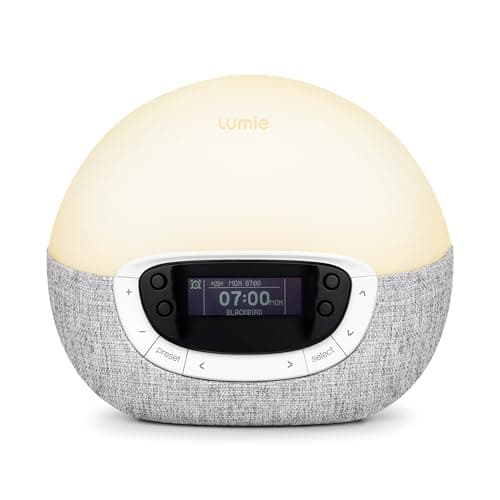 Lumie Bodyclock Shine 300The specialist's pick: adjustable ramp duration in both directions, from a manufacturer that only makes light-therapy devices. | Long, slow sunrises and a proper sunset | 15 to 90 minute sunrise and sunset durations | |
| 2 | 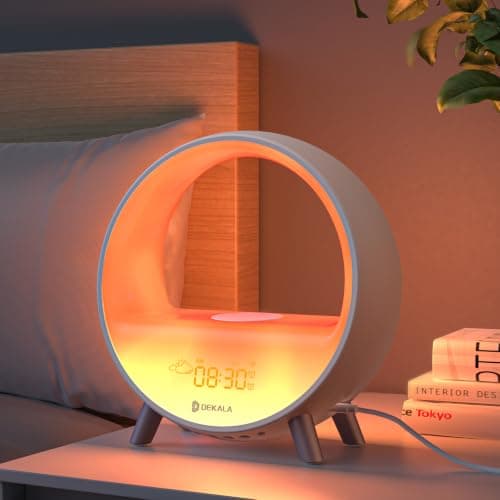 Dekala ArchesA lamp first and an alarm second: the whole wake routine - noise, volume, light color, brightness - is built in the app, and the arch itself is the only thing on show. | A real bedside object that happens to do sunrises | App, voice or button control over 2.4 GHz Wi-Fi, with a wireless charging base | |
| 3 | 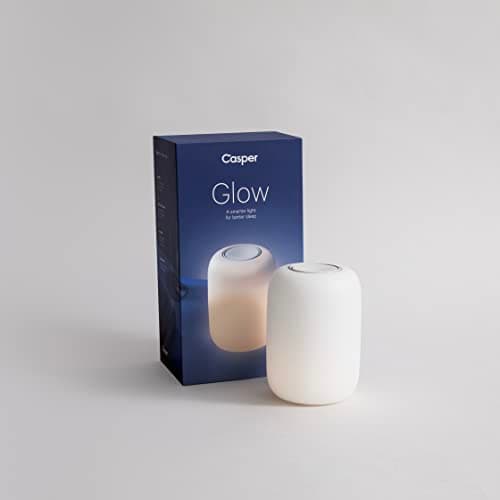 Casper Glow LightThe gesture light: twist the body to set the brightness, lift it off its base and carry it anywhere, and schedule the lighting in the app. | Winding down, more than waking up | Gyroscope brightness control, wireless charging base, iOS app scheduling | |
| 4 | 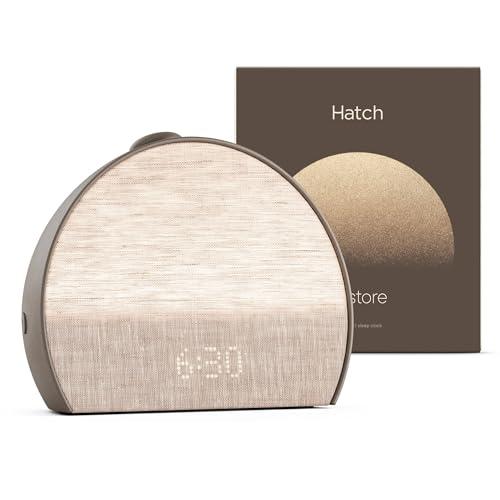 Hatch Restore 3The most complete bedside device of the group - sunrise, wind-down, sound library and alarms in one - and the only one with a subscription attached. | One device for the whole bedtime routine | Roughly 30-minute sunrise, deep orange through to bright white |
Prices come straight from Amazon and are refreshed daily; the date they were checked is stamped under the buy buttons below. If a price has gone stale or a listing has no offer, the button falls back to “Check price on Amazon” rather than showing a number we cannot stand behind. As an Amazon Associate we earn from qualifying purchases.
Each row carries the price Amazon showed at the last daily check, with the check date stamped under the button. Every pick here publishes a wind-down or sunset behavior, not just a morning ramp.
#ad How we are funded · price as of November 12, 2026
Our top pick · Long, slow sunrises and a proper sunset
1. Lumie Bodyclock Shine 300
The specialist's pick: adjustable ramp duration in both directions, from a manufacturer that only makes light-therapy devices.
- Sunrise:
- Adjustable from 15 to 90 minutes
- Sunset:
- Matching fade-to-dark, same 15-90 minute range
- Sound:
- 15 sleep and wake sounds, or FM radio
- Display:
- Light-sensitive auto-dimming clock face
- Specialism:
- Designed in Cambridge by the inventors of the wake-up light
What it gets right
- The sunset fade is as well implemented as the sunrise, which is rare
- Duration control matters more than peak brightness for light sleepers
- No subscription
Where it falls short
- Priced with the premium units without the smart features
- US availability is patchier than Philips or Hatch
- Dated interface
Skip it if: You want app scheduling. This is a well-made physical device with physical controls.
#ad How we are funded · price as of November 12, 2026
Pick 2 · A real bedside object that happens to do sunrises
2. Dekala Arches
A lamp first and an alarm second: the whole wake routine - noise, volume, light color, brightness - is built in the app, and the arch itself is the only thing on show.
- Control:
- Dekala app, voice control, or buttons with spoken prompts
- Sounds:
- White noise, brown noise, fan, waves, frog, lullaby and light music
- Light:
- 9 dynamic lighting effects, 16 million colors
- Also does:
- Bluetooth speaker, wireless phone charger, weather display
- Size:
- 6.5 x 6.5 x 1.5 in, 1.76 lb; 365-day warranty
What it gets right
- Looks like an object rather than a gadget - the only pick here you would leave out in a guest room
- Brown noise is named on the listing, which is rare on a sunrise device
- The buttons speak their own prompts, so it still works when the Wi-Fi does not
Where it falls short
- Among the more expensive sunrise devices sold
- Mains-powered with a charging base - this is bedside furniture, not luggage
- Sixteen million colors is sixteen million chances to pick a blue at bedtime
Skip it if: You want to set it without a phone in your hand. The app is where the routine actually gets built.
#ad How we are funded · price as of November 12, 2026
Pick 3 · Winding down, more than waking up
3. Casper Glow Light
The gesture light: twist the body to set the brightness, lift it off its base and carry it anywhere, and schedule the lighting in the app.
- Controls:
- Built-in gyroscope - twist the light itself to set brightness
- App:
- Designed for Apple iOS; schedule, customize and fine-tune the lighting
- Power:
- Charges wirelessly on its base, then runs unplugged
- Size:
- 5.5 x 5.5 x 3.7 in
- Sound:
- None
What it gets right
- Genuinely portable - lift it off the base and carry it through the house
- A twist of the whole object is the one bedtime control people actually use
- Made for the wind-down half of the day, which most sunrise devices treat as an afterthought
Where it falls short
- App support is iOS-first; Android is limited
- No sound and no radio, so it cannot be your only alarm
- Expensive for a light with no speaker
Skip it if: You are on Android and want full app control, or you need an audible alarm as a backstop.
#ad How we are funded · price as of November 12, 2026
Pick 4 · One device for the whole bedtime routine
4. Hatch Restore 3
The most complete bedside device of the group - sunrise, wind-down, sound library and alarms in one - and the only one with a subscription attached.
- Sunrise:
- Gradual ramp beginning around 30 minutes before the alarm
- Color path:
- Deep orange warming to bright white
- Sound:
- Built-in sound library plus alarm tones
- App:
- Required for setup; premium library is subscription-gated
What it gets right
- Sunrise, wind-down and sound machine in a single footprint
- The app makes complex schedules genuinely easy to set
- The display dims properly, unlike most clock radios
Where it falls short
- The best sound content sits behind a subscription
- App dependency: no phone, no changes
- Most expensive way to buy a sunrise
Skip it if: You resent subscriptions. The Philips does the light half with no account at all.
Questions people actually ask
What is the best sunrise and sunset alarm clock?
The Lumie Bodyclock Shine 300. It is the only clock here that publishes a matching sunset with the same adjustable 15 to 90 minute range as its sunrise, which is the spec that separates a real fade from a sleep timer. The Hatch Restore 3 is better if you want a full guided wind-down, and the Dekala Arches is the cheapest clock that still fades both ways.
What is the difference between a sunset mode and a sleep timer?
A sleep timer switches the lamp off after a set period. A sunset reduces intensity gradually over a published duration and usually warms the color as it goes, ending in darkness. Only the second one is doing anything for your evening light exposure.
Do sunset lamps actually help you fall asleep?
The published guidance is about evening light intensity and spectrum rather than about lamps specifically, so the honest claim is narrower than the marketing: a light that dims and warms automatically reduces your late-evening exposure without you having to remember to do it.
Does the Casper Glow have an alarm?
It is built as a wind-down light rather than an alarm clock - it has no sound, and brightness is set by twisting the lamp with its built-in gyroscope. Buy it to fix your evenings, not your mornings.
How long should a sunset fade be?
Long enough to cover your actual wind-down, which for most people is somewhere between 30 and 60 minutes. That is why an adjustable range matters more than any single default - a fixed 15-minute fade is over before you have put your book down.
Sources
- Lumie - Bodyclock Shine 300 (manufacturer specifications: 15 to 90 minute sunrise and sunset durations, 15 wake and sleep sounds, light-sensitive auto-dimming display, FM radio).
- Hatch - Restore 3 product page (manufacturer specifications and current subscription terms).
- Dekala - Arches sunrise alarm clock, app control and sound list (Amazon listing, specifications as published by the seller).
- Casper - Glow Light product specifications (manufacturer).
- Brown TM et al. Recommendations for daytime, evening and nighttime indoor light exposure to best support physiology, sleep and wakefulness in healthy adults. PLOS Biology, 2022.
- Harvard Health Publishing - Blue light has a dark side.
- Hatch Support - What do I get with Hatch+? What do I get for free? (full free vs subscription content lists).
- Tom's Guide - The best sunrise alarm clocks, tested and ranked.
Back to the best sunrise alarm clocks.
Read next
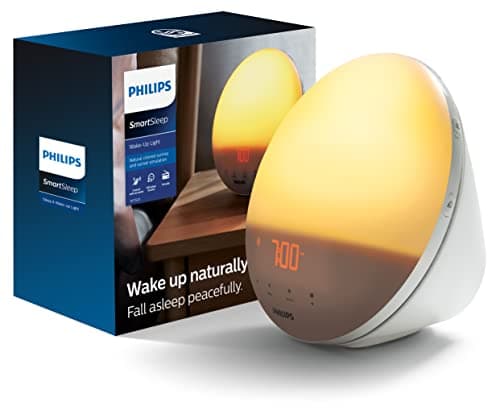 Best sunrise alarm clocks without a subscriptionIf the membership is the sticking point.Read it
- How sunrise alarm clocks workThe mechanism, before you spend anything.Read it
- Lumie Bodyclock Shine 300 reviewThe pick here, in full.Read it
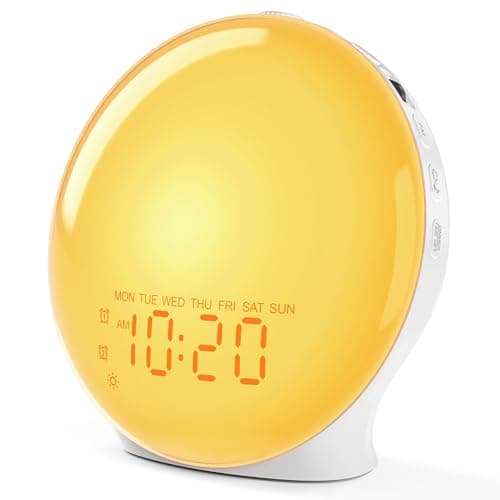 Best sunrise alarm clocks under $100Where the sunset feature usually disappears.Read it