
How this page is funded: we earn a commission if you buy through the links below, at no extra cost to you. As an Amazon Associate we earn from qualifying purchases. It does not change which products we pick or the order they appear in. Full disclosure.
How these picks were made: by comparing published specifications and clearly-credited public reporting. We do not run a laboratory, we have not measured these products, and we do not claim to have slept with them. Here is exactly how we choose.
Short version: the Lumie Bodyclock Shine 300 is the pick, because a long adjustable ramp and a display that dims itself are worth more on an inverted schedule than on a normal one - you are waking into genuine darkness and sleeping through genuine daylight, and both ends need handling. The Hatch Restore 3 is the alternative if your shift pattern rotates, because changing the schedule from an app beats re-setting a clock by hand every week. And the Sonic Bomb with its bed shaker is on this list for one honest reason: if you are sleeping at the wrong point in your circadian cycle, light alone sometimes will not do it.
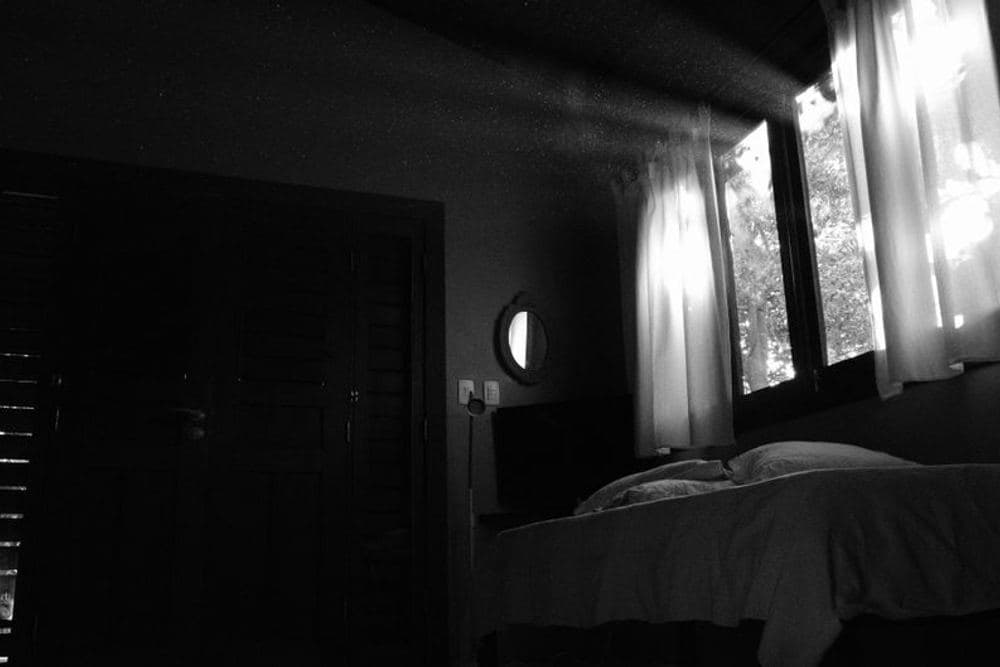
A standard sunrise alarm assumes the sun is coming up roughly when the clock says it is. Night shift breaks that assumption at both ends. You wake at 9pm into a dark house, and you try to sleep at 8am with the sun climbing outside the window.
Read this part first
Shift work is not a scheduling inconvenience, it is a recognized occupational health issue, and the gear on this page manages symptoms rather than solving it. NIOSH publishes material specifically for workers on this - its shift work and sleep overview and the more detailed module on coping with night and evening shifts are the two worth reading, and both are free. Nothing here is medical advice, and if your sleep is collapsing on a rotating pattern that is a conversation to have with a clinician rather than a purchase.
The broader version of this problem, across all the gear categories, is on how to sleep when you work night shifts.
What changes when the schedule inverts
- Your wake is in the dark. This is the good news. Without competing daylight, a wake-up light has the room to itself and is arguably more effective than it would be at 7am in June.
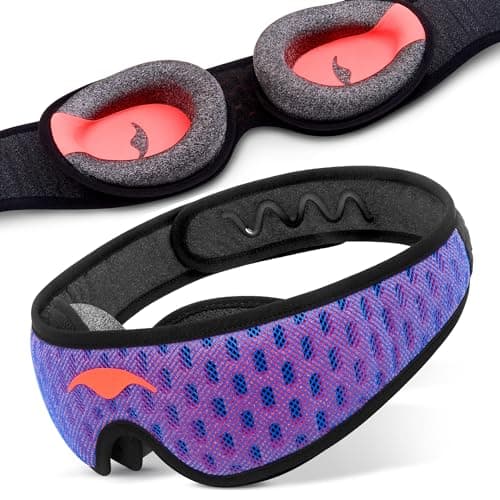
- Your sleep is in daylight. The hard part, and the clock cannot help. Blackout at the window, or a mask, and probably both - sleep masks for night shift workers is the gear page.
- Your schedule may rotate. A fixed-time clock is fine on a permanent nights pattern and infuriating on a rotating one, which is the single best argument for an app-controlled model.
- Light after the shift works against you. Going home into morning sun is a cue to be awake, at the exact moment you need the opposite. That is a sunglasses problem rather than a clock problem, but it is part of the same system.
- The house is awake when you are not. Daytime noise is the other half of the problem, and masking is usually the answer - white noise machines for daytime noise and earplugs both apply.
What we ranked on
- Can the alarm time be changed quickly? On a rotating roster this outranks light quality, because a clock that is annoying to reset is a clock you stop using.
- Ramp length. Waking in the dark means the light has no competition, so a long ramp is both pleasant and sufficient.
- Display behavior. You are sleeping in a room you have deliberately blacked out. A bright clock face undoes some of that work.
- A backup that actually works. Waking against your circadian rhythm is harder than waking with it. A vibration alarm is the most reliable backup there is, and far less unpleasant than a 113 dB siren.
- Whether it also handles the wind-down. Going to bed at 8am is easier with a sunset than without one.
The three, compared
| Clock | Why it suits shift work | The catch |
|---|---|---|
| Lumie Bodyclock Shine 300 | 15 to 90 minute sunrise and sunset; auto-dimming display | Alarm times are set on the device, not from a phone |
| Hatch Restore 3 | Schedules changed from the app - best for rotating rosters | Some content sits behind the Hatch+ membership |
| Sonic Alert Sonic Bomb | 12-volt bed shaker; the siren can be switched off entirely | Not a wake-up light at all - a backup, not a replacement |
Why the Lumie is the default
The two specifications Lumie publishes - 15 to 90 minute sunrise and sunset durations, with a light-sensitive display - map directly onto the two halves of a shift worker’s day. The long sunrise handles a wake that has no daylight behind it. The sunset handles a bedtime that happens while the world is getting brighter. And the display dims itself in a room you have blacked out, which is precisely when you need it to. The full review has the rest.
If your roster moves, the calculus changes. Hatch publishes the Restore 3 specifications including app scheduling, and the ability to set next week’s pattern from your phone on the bus home is worth real money on a rotating shift. Read what is free and what is not before you buy, and see Hatch versus Philips if you are choosing between connected and not.
Why there is a bed shaker on this page
We would rather be honest than consistent. Waking at 9pm is waking at a point in the circadian cycle where the body is not primed to rise, and for some people light simply does not get there. A vibration alarm under the mattress is the most reliable wake available and it does not wake anyone else in the house, which matters when your schedule is already out of step with everyone you live with. Sonic Alert’s Sonic Bomb pairs a 12-volt bed shaker with a siren that can be turned off entirely - use it as the backup and leave the siren off. The heavy-sleeper roundup goes deeper on shakers.
The clock is one third of the fix
Blackout, masking and a consistent sleep window do more for a shift worker than any alarm. Get the room dark enough that it does not matter what time it is outside, get the daytime noise handled, keep the sleep window the same on days off if you possibly can, and then let the clock do the waking. The gear sweep across all four categories is on the sleep gear buyer’s guide.
Three clocks for an inverted schedule
Tap any row to jump to the full write-up. Each thumbnail is the product photograph from that item’s own Amazon listing, and the price in the last column is the one Amazon showed at the last check.
| # | Product | Best for | The spec that decides it | Price |
|---|---|---|---|---|
| 1 | 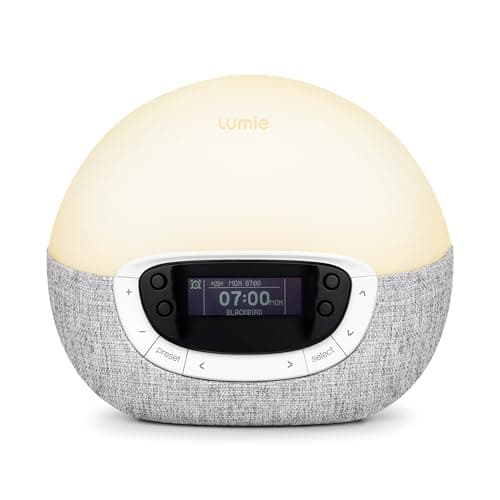 Lumie Bodyclock Shine 300The specialist's pick: adjustable ramp duration in both directions, from a manufacturer that only makes light-therapy devices. | Long, slow sunrises and a proper sunset | 15 to 90 minute sunrise and sunset durations | |
| 2 | 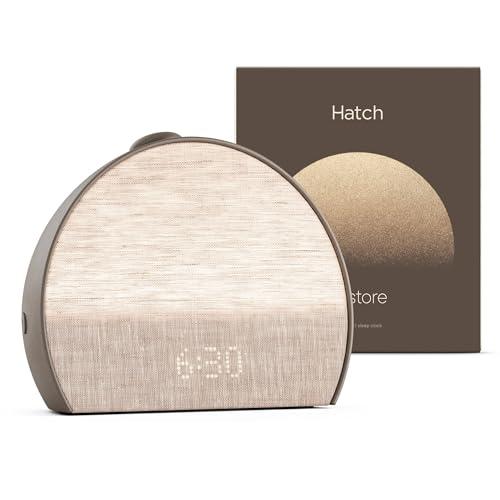 Hatch Restore 3The most complete bedside device of the group - sunrise, wind-down, sound library and alarms in one - and the only one with a subscription attached. | One device for the whole bedtime routine | Roughly 30-minute sunrise, deep orange through to bright white | |
| 3 | 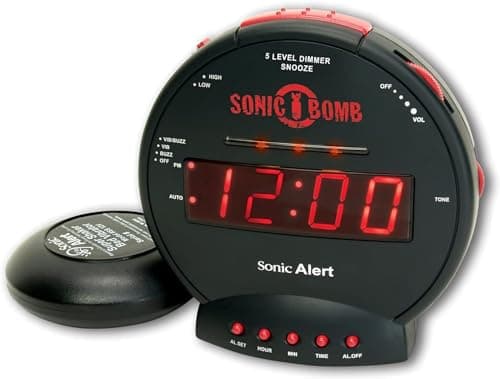 Sonic Alert Sonic Bomb (with Super Shaker)Not a sunrise clock at all - a vibrating pad that goes under the mattress, so waking you does not depend on which way your head is turned. | Side sleepers who face away from the light | 12-volt bed shaker; 113 dB alarm that can be switched off entirely |
Prices come straight from Amazon and are refreshed daily; the date they were checked is stamped under the buy buttons below. If a price has gone stale or a listing has no offer, the button falls back to “Check price on Amazon” rather than showing a number we cannot stand behind. As an Amazon Associate we earn from qualifying purchases.
Chosen for waking in the dark rather than for simulating a morning. Every pick is a real, currently-sold product; none has been tested by us, and the specifications are the manufacturers' own.
#ad How we are funded · price as of November 12, 2026
Our top pick · Long, slow sunrises and a proper sunset
1. Lumie Bodyclock Shine 300
The specialist's pick: adjustable ramp duration in both directions, from a manufacturer that only makes light-therapy devices.
- Sunrise:
- Adjustable from 15 to 90 minutes
- Sunset:
- Matching fade-to-dark, same 15-90 minute range
- Sound:
- 15 sleep and wake sounds, or FM radio
- Display:
- Light-sensitive auto-dimming clock face
- Specialism:
- Designed in Cambridge by the inventors of the wake-up light
What it gets right
- The sunset fade is as well implemented as the sunrise, which is rare
- Duration control matters more than peak brightness for light sleepers
- No subscription
Where it falls short
- Priced with the premium units without the smart features
- US availability is patchier than Philips or Hatch
- Dated interface
Skip it if: You want app scheduling. This is a well-made physical device with physical controls.
#ad How we are funded · price as of November 12, 2026
Pick 2 · One device for the whole bedtime routine
2. Hatch Restore 3
The most complete bedside device of the group - sunrise, wind-down, sound library and alarms in one - and the only one with a subscription attached.
- Sunrise:
- Gradual ramp beginning around 30 minutes before the alarm
- Color path:
- Deep orange warming to bright white
- Sound:
- Built-in sound library plus alarm tones
- App:
- Required for setup; premium library is subscription-gated
What it gets right
- Sunrise, wind-down and sound machine in a single footprint
- The app makes complex schedules genuinely easy to set
- The display dims properly, unlike most clock radios
Where it falls short
- The best sound content sits behind a subscription
- App dependency: no phone, no changes
- Most expensive way to buy a sunrise
Skip it if: You resent subscriptions. The Philips does the light half with no account at all.
Pick 3 · Side sleepers who face away from the light
3. Sonic Alert Sonic Bomb (with Super Shaker)
Not a sunrise clock at all - a vibrating pad that goes under the mattress, so waking you does not depend on which way your head is turned.
- Wake method:
- 12-volt vibrating bed shaker, plus sound and flashing lights
- Alarm volume:
- 113 dB, with adjustable tone and volume
- Sound-free mode:
- Yes - the sound can be switched off to wake by vibration alone
- Snooze / duration:
- Snooze 1-30 minutes; alarm duration 1-59 minutes
- Other:
- Dual alarm, 5-level dimmer, battery backup for settings up to one week
What it gets right
- Vibration reaches you through the mattress regardless of sleeping position
- The loud alarm is optional, so one partner can be woken without the other
- Published, checkable specifications rather than vague marketing claims
Where it falls short
- No sunrise light at all - this solves waking, not the gentle part
- Styling and display are utilitarian at best
- 113 dB is genuinely startling, which is the opposite of a gradual wake
Skip it if: You want to be eased awake. This is a wake-up tool for people who sleep through everything, not a calm morning.
Questions people actually ask
Do sunrise alarm clocks work for night shift workers?
They work well for the waking half, and arguably better than on a normal schedule: you wake into a dark room, so the light has no daylight to compete with. What they cannot do is help you sleep through the day - that is a blackout and masking problem, not a clock problem.
What is the best alarm clock for waking up at night?
A wake-up light with a long adjustable ramp and a display that dims itself, because you are waking in genuine darkness and sleeping in a deliberately blacked-out room. If your roster rotates, app scheduling matters more than light quality, because resetting a clock by hand every week is how people stop using them.
Should a shift worker use a bed shaker alarm?
As a backup, often yes. Waking at a point in the circadian cycle when the body is not primed to rise is genuinely harder, and vibration is the most reliable cue available. It also does not wake the rest of the household, which matters when your schedule is out of step with theirs.
How do I sleep during the day on night shift?
Blackout at the window rather than at your face if you can manage it, masking sound for daytime household and street noise, and the same sleep window every day including days off where that is possible. NIOSH publishes free guidance for shift workers that is more thorough than any gear page.
Does a sunset feature help if I go to bed in the morning?
It helps more than it does on a normal schedule. You are trying to wind down while the world outside is getting brighter, and a fading light gives you a cue that runs against that. It is not a substitute for blackout, but it is a reason to prefer a clock that does both ends.
Sources
- CDC / NIOSH - Shift Work and Sleep, NIOSH Science Blog.
- CDC / NIOSH - NIOSH Training for Nurses on Shift Work and Long Work Hours, Module 9: Coping with the Night and Evening Shifts.
- Lumie - Bodyclock Shine 300 (manufacturer specifications: 15 to 90 minute sunrise and sunset durations, 15 wake and sleep sounds, light-sensitive auto-dimming display, FM radio).
- Hatch - Restore 3 product page (manufacturer specifications and current subscription terms).
- Hatch Support - What do I get with Hatch+? What do I get for free? (full free vs subscription content lists).
- Sonic Alert Sonic Bomb alarm clock with Super Shaker - retailer listing of the manufacturer's published specifications (113 dB alarm, 12-volt bed shaker).
- Brown TM et al. Recommendations for daytime, evening and nighttime indoor light exposure to best support physiology, sleep and wakefulness in healthy adults. PLOS Biology, 2022.
Back to the best sunrise alarm clocks.
Read next
 How to sleep when you work night shiftsThe whole problem, across every gear category.Read it
- Best sleep masks for night shift workersThe daytime-sleep half of the fix.Read it
- Best sunrise alarm clocks for heavy sleepersMore on shakers and backup alarms.Read it
- Lumie Bodyclock Shine 300 reviewThe long-ramp clock, in full.Read it
 Best sunrise alarm clocksThe whole category, ranked on the spec that matters.Read it