
How this page is funded: we earn a commission if you buy through the links below, at no extra cost to you. As an Amazon Associate we earn from qualifying purchases. It does not change which products we pick or the order they appear in. Full disclosure.
How these picks were made: by comparing published specifications and clearly-credited public reporting. We do not run a laboratory, we have not measured these products, and we do not claim to have slept with them. Here is exactly how we choose.
Short version: the Lumie Bodyclock Shine 300 is the alternative to buy if the light is what you want, because it is the only clock here that lets you set the sunrise length yourself, anywhere from 15 to 90 minutes, with a matching sunset. The Dekala Arches is the one to buy if you want app and voice control without a membership attached. The JALL is the budget pick - the cheapest way to get a configurable colored sunrise, dual alarms and a radio.
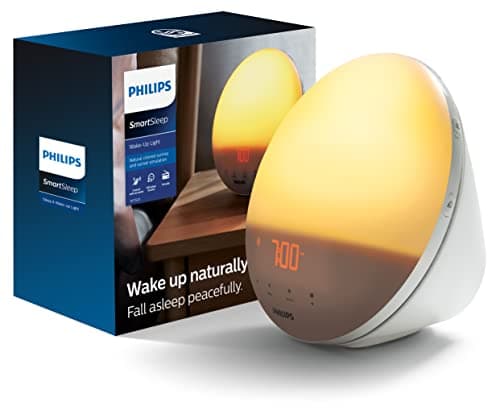
A word on the Philips first, because this is not a page about why it is bad - it is the clock this site recommends most often, and it has its own review. People look for alternatives for three ordinary reasons: they want a longer or adjustable sunrise, they want a sunset as well as a sunrise, or they have found the price has drifted and want to know what else is good. All three are answered below.
What the Philips is known for
Three things, from the manufacturer’s published specifications (SmartSleep HF3520 product page):
- Twenty light-intensity settings. Far more granular control over brightness than most of this category offers, which is what lets you tune it to a room rather than accepting whatever the maker chose.
- A colored sunrise simulation before the alarm, rather than a plain white lamp ramping up.
- No account, no app, no subscription. It is set on the unit, it has natural wake-up sounds and FM radio built in, and nothing about it requires a login. In a category drifting toward memberships, that is a real differentiator.
What it is not: adjustable in sunrise duration, and it has no real sunset. Those are the two most common reasons people go looking, and they point at different products.
How we chose the alternatives
Every pick had to beat or match the Philips on at least one stated strength rather than simply being cheaper. The criteria, in the order they decide a purchase:
- Published light behavior. A sunrise duration, an intensity range, a color path - something you can actually compare. Independent light-meter work on this category found real differences between clocks making similar claims (independent measurements), so a clock that publishes nothing is a clock you are buying on faith.
- What it costs to own, not just to buy. A membership is a recurring cost and it belongs in the comparison.
- Whether the display dims to something livable. The most common reason a sunrise clock gets returned is a face bright enough to light the room.
- Whether it also does the evening. Evening light exposure is the half of the day with the clearest published guidance (Brown et al., PLOS Biology, 2022), and a clock that only does mornings is doing half the job.
- No testing we did not do. We have not put a lux meter in front of any of these. Every figure is the maker’s published specification or clearly attributed public reporting, and every pick carries its cons.
The light and account situation, side by side
Every figure in this table is the manufacturer’s own published specification, taken from the sources listed at the foot of the page. Where a maker publishes nothing for a column, it says so rather than being filled in with a guess.
| Clock | Published light behavior | Sound on the unit | Account needed? |
|---|---|---|---|
| Philips SmartSleep HF3520 | 20 intensity settings; colored sunrise before the alarm; no sunset published | Natural wake-up sounds plus FM radio | No |
| Lumie Bodyclock Shine 300 | Sunrise adjustable 15-90 min; matching fade-to-dark sunset, same range; light-sensitive auto-dimming face | 15 sleep and wake sounds, or FM radio | No |
| Dekala Arches | 9 dynamic lighting effects across 16 million colors; no sunrise duration published | White noise, brown noise, fan, waves, frog, lullaby, light music; Bluetooth speaker | App, but nothing paywalled |
| Hatch Restore 3 | Sunrise from roughly 30 min before the alarm, deep orange to bright white | Built-in library plus alarm tones; part of the catalog is Hatch+ only | Yes - app required for setup |
| HoMedics SoundSpa Sunrise | Sunrise simulation plus a 7-color night light; no duration published | 4 sleep sounds, 4 wake sounds, Bluetooth speaker, 30/60/90 min shut-off | No |
| JALL Wake Up Light | Configurable ramp before the alarm; multiple selectable colors; no duration published | Nature sounds plus FM radio; dual alarms, snooze, USB port | No |
The pattern worth noticing: the two clocks that publish a real number for the light - the Philips with its 20 intensity settings and the Lumie with its 15-to-90-minute range - are also the two with no app at all. The more connected a device in this category is, the more its marketing talks about colors and effects and the less it says about intensity or duration, which are the only two things that decide whether a light wakes you up.
If what you want is better light control
Buy the Lumie Bodyclock Shine 300. It publishes an adjustable sunrise of 15 to 90 minutes with a matching fade-to-dark sunset in the same range, 15 sleep and wake sounds or FM radio, and a light-sensitive auto-dimming clock face - and it is made by the company that introduced the wake-up light (manufacturer specifications).
That adjustable duration is the single most meaningful upgrade over the Philips. A 30-minute default suits a lot of people and suits some people badly: if you wake at the first hint of light you want 90 minutes of very gradual ramp, and if you sleep through anything you want a short steep one. The auto-dimming face also solves the bright-display complaint without you having to remember anything.
Cons, honestly: it is more expensive than the Philips at most points; the sound library is small and the speaker is ordinary; and there is no app at all, which is a feature for some readers and a limitation for others. Full write-up in the Lumie Bodyclock review, and the feature itself is ranked on the best sunrise and sunset alarm clocks.
If what you want is a connected device, without a membership
Buy the Dekala Arches. It publishes 2.4 GHz Wi-Fi app control, voice control and buttons with spoken prompts, a sound list naming white noise, brown noise, fan, waves, frog, lullaby and light music, nine dynamic lighting effects across 16 million colors, a Bluetooth speaker, a wireless phone charger and a weather display, in a 6.5 x 6.5 x 1.5 in body with a 365-day warranty (listing specifications). Nothing is paywalled, and its named waves and frog tracks put it on the nature-sounds machine roundup as well.
This is the pick for the reader who liked the idea of a Hatch but not the recurring charge. Cons: it is the most feature-dense and therefore the most complicated device here, which is the opposite of what some people want from a bedside clock; the published light information is about effects and colors rather than a sunrise duration; and a Wi-Fi device in the bedroom is a dependency the Philips does not have.
If what you want is the bedtime content
Buy the Hatch Restore 3. Its sunrise begins around 30 minutes before the alarm and runs deep orange through to bright white, with a built-in sound library, alarm tones and a routine builder (manufacturer specifications). It is the only product here that is a content service as well as a lamp, and if guided wind-downs and a growing catalog of soundscapes are what you will actually use, that is a real thing no one-time purchase matches.
Be clear about the trade: the app is required for setup, and part of the library sits behind Hatch+ - the company documents the split openly (free versus Hatch+) and prices the membership on its own page (Hatch+ membership). That is the exact thing the Philips exists to avoid, so this is a sideways move rather than an upgrade. The head-to-head is on Hatch versus Philips, and Hatch Restore alternatives runs the comparison from the other direction.
If what you want is to spend less
Two answers at two levels. The HoMedics SoundSpa Sunrise puts four sleep sounds, four separate wake-up sounds, a sunrise simulation, a seven-color night light, a Bluetooth speaker and a 30/60/90 minute auto shut-off in one inexpensive box (manufacturer specifications). It is the best answer on this page for a bedside table that needs to be a sound machine as well as an alarm.
The JALL Wake Up Light is the budget pick and the cheapest configurable sunrise here: a full-screen display with a configurable ramp, multiple selectable light colors, built-in nature sounds plus FM radio, dual alarms, snooze and a USB charging port (listing specifications). Cons for both: the build quality is plainly below the Philips, neither publishes brightness figures you can compare, and cheap nature sounds are often harsh at alarm volume - which is why having a radio or Bluetooth as an escape route matters. More of this band on sunrise alarm clocks under $100 and under $50.
What no alternative here matches
The combination of twenty published intensity settings and complete independence from an app. The Lumie beats it on duration control but has a smaller intensity range and no app either way; the Dekala has the app but publishes effects rather than light figures; the Hatch has the content but requires the app for setup. If what you want is fine-grained brightness on a device that will still work identically in ten years with no company behind it, the Philips is the one, and this page is not an argument against buying it.
A note on price, since it is often the trigger for shopping around: everything on this site is priced through a daily check rather than typed into the page, so the numbers in the buy buttons move on their own and the figure stamped under them is the date it was last checked. The ranking above is by what each clock does, which does not change when a price does. If you want the field by price instead, start from under $100.
Who should just buy the Philips
Three readers, and it is worth saying so plainly on a page like this. Anyone buying their first wake-up light, because it is the most sensible default in the category and the one with the least that can go wrong. Anyone who wants brightness control above everything else, because twenty published intensity steps is more granular than anything else here offers. And anyone who dislikes the idea of a bedside device that depends on a company staying in business - there is no app, no cloud and no account, so it will behave identically years from now.
The readers who should look elsewhere are narrower than the volume of “alternatives” searches suggests: you want to set the ramp length yourself, you want a genuine sunset, you want app or voice control, or the price has moved and you want the best cheap option instead. Each of those has a clear answer above.
Before you buy any of them
- Check whether light wakes you at all. It does not work for everyone, and the cheap clocks are the sensible way to find out - are sunrise alarm clocks worth it is the honest version, and how sunrise alarms work explains the mechanism and where to place the lamp.
- If you are a heavy sleeper, plan for sound or vibration too. Light alone rarely does it - sunrise alarms for heavy sleepers covers the bed-shaker route.
- Decide whether you want the evening half. Only the Lumie here publishes a true matching sunset; most of the rest stop at a sleep timer.
- Check the return window. Whether a given ramp works for you is not knowable from a specification, and this is a category where trying it is the only real test.
For the full field at every price and feature set, start from the main sunrise alarm clock roundup, or sunrise alarms without a subscription if the recurring charge is the thing you are avoiding.
What to buy instead, and why
Tap any row to jump to the full write-up. Each thumbnail is the product photograph from that item’s own Amazon listing, and the price in the last column is the one Amazon showed at the last check.
| # | Product | Best for | The spec that decides it | Price |
|---|---|---|---|---|
| 1 | 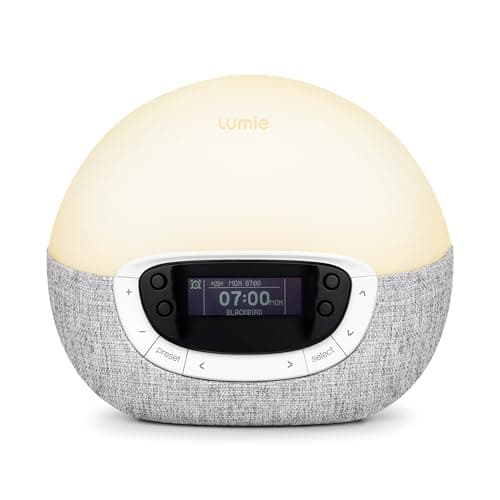 Lumie Bodyclock Shine 300The specialist's pick: adjustable ramp duration in both directions, from a manufacturer that only makes light-therapy devices. | Long, slow sunrises and a proper sunset | 15 to 90 minute sunrise and sunset durations | |
| 2 | 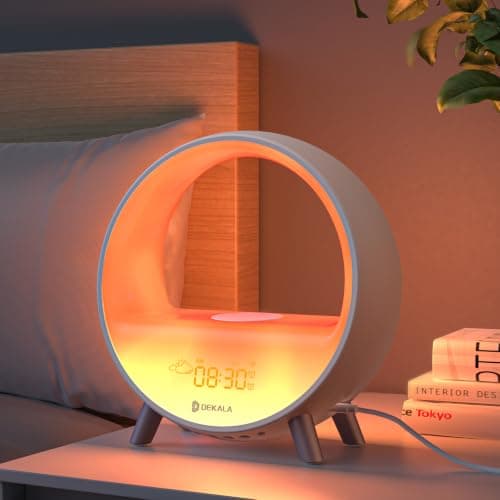 Dekala ArchesA lamp first and an alarm second: the whole wake routine - noise, volume, light color, brightness - is built in the app, and the arch itself is the only thing on show. | A real bedside object that happens to do sunrises | App, voice or button control over 2.4 GHz Wi-Fi, with a wireless charging base | |
| 3 | 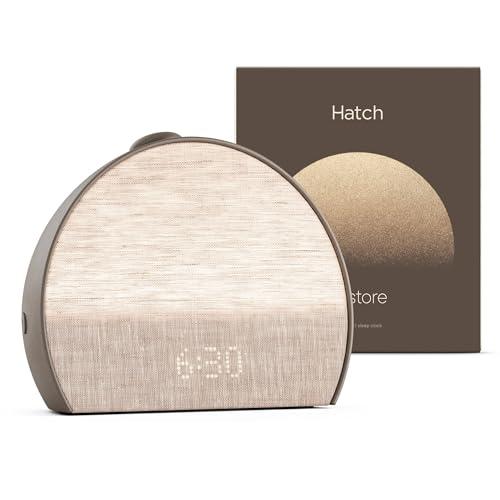 Hatch Restore 3The most complete bedside device of the group - sunrise, wind-down, sound library and alarms in one - and the only one with a subscription attached. | One device for the whole bedtime routine | Roughly 30-minute sunrise, deep orange through to bright white | |
| 4 | 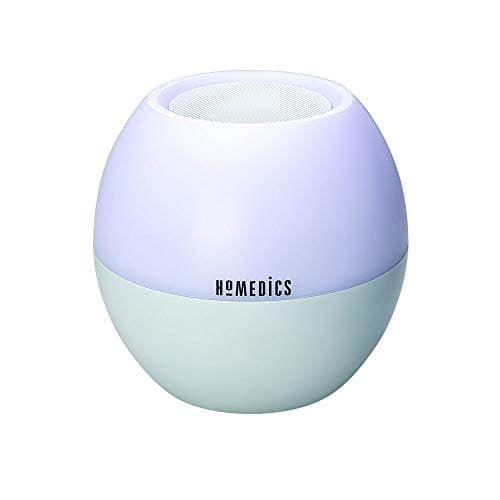 HoMedics SoundSpa SunriseThe budget crossover: four sleep sounds, four separate wake sounds, a sunrise ramp and a Bluetooth speaker in a single unit. | A sound machine and a sunrise alarm in one cheap box | 4 sleep sounds + 4 wake sounds + sunrise ramp + Bluetooth speaker | |
| 5 | 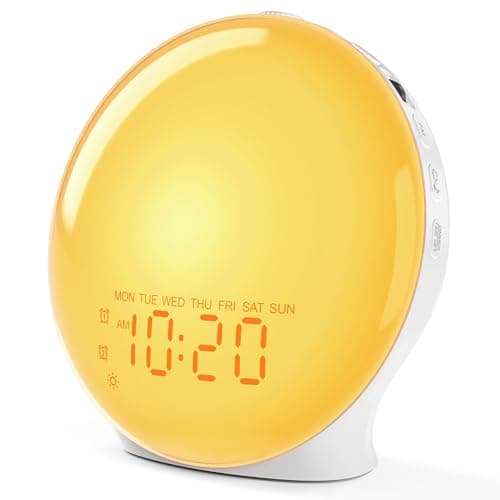 JALL Wake Up LightThe cheap way to test the idea. The light is dimmer than the premium units, but the mechanism is the same. | Finding out whether sunrise waking works for you | Full-screen display with colored sunrise, at entry-level pricing |
Prices come straight from Amazon and are refreshed daily; the date they were checked is stamped under the buy buttons below. If a price has gone stale or a listing has no offer, the button falls back to “Check price on Amazon” rather than showing a number we cannot stand behind. As an Amazon Associate we earn from qualifying purchases.
Each row carries the price Amazon showed at the last daily check, with the check date stamped under the button. Ranked by how closely each one matches a stated Philips strength rather than by price alone.
#ad How we are funded · price as of November 23, 2026
Our top pick · Long, slow sunrises and a proper sunset
1. Lumie Bodyclock Shine 300
The specialist's pick: adjustable ramp duration in both directions, from a manufacturer that only makes light-therapy devices.
- Sunrise:
- Adjustable from 15 to 90 minutes
- Sunset:
- Matching fade-to-dark, same 15-90 minute range
- Sound:
- 15 sleep and wake sounds, or FM radio
- Display:
- Light-sensitive auto-dimming clock face
- Specialism:
- Designed in Cambridge by the inventors of the wake-up light
What it gets right
- The sunset fade is as well implemented as the sunrise, which is rare
- Duration control matters more than peak brightness for light sleepers
- No subscription
Where it falls short
- Priced with the premium units without the smart features
- US availability is patchier than Philips or Hatch
- Dated interface
Skip it if: You want app scheduling. This is a well-made physical device with physical controls.
#ad How we are funded · price as of November 23, 2026
Pick 2 · A real bedside object that happens to do sunrises
2. Dekala Arches
A lamp first and an alarm second: the whole wake routine - noise, volume, light color, brightness - is built in the app, and the arch itself is the only thing on show.
- Control:
- Dekala app, voice control, or buttons with spoken prompts
- Sounds:
- White noise, brown noise, fan, waves, frog, lullaby and light music
- Light:
- 9 dynamic lighting effects, 16 million colors
- Also does:
- Bluetooth speaker, wireless phone charger, weather display
- Size:
- 6.5 x 6.5 x 1.5 in, 1.76 lb; 365-day warranty
What it gets right
- Looks like an object rather than a gadget - the only pick here you would leave out in a guest room
- Brown noise is named on the listing, which is rare on a sunrise device
- The buttons speak their own prompts, so it still works when the Wi-Fi does not
Where it falls short
- Among the more expensive sunrise devices sold
- Mains-powered with a charging base - this is bedside furniture, not luggage
- Sixteen million colors is sixteen million chances to pick a blue at bedtime
Skip it if: You want to set it without a phone in your hand. The app is where the routine actually gets built.
#ad How we are funded · price as of November 23, 2026
Pick 3 · One device for the whole bedtime routine
3. Hatch Restore 3
The most complete bedside device of the group - sunrise, wind-down, sound library and alarms in one - and the only one with a subscription attached.
- Sunrise:
- Gradual ramp beginning around 30 minutes before the alarm
- Color path:
- Deep orange warming to bright white
- Sound:
- Built-in sound library plus alarm tones
- App:
- Required for setup; premium library is subscription-gated
What it gets right
- Sunrise, wind-down and sound machine in a single footprint
- The app makes complex schedules genuinely easy to set
- The display dims properly, unlike most clock radios
Where it falls short
- The best sound content sits behind a subscription
- App dependency: no phone, no changes
- Most expensive way to buy a sunrise
Skip it if: You resent subscriptions. The Philips does the light half with no account at all.
#ad How we are funded · price as of November 23, 2026
Pick 4 · A sound machine and a sunrise alarm in one cheap box
4. HoMedics SoundSpa Sunrise
The budget crossover: four sleep sounds, four separate wake sounds, a sunrise ramp and a Bluetooth speaker in a single unit.
- Sounds:
- 4 for sleep, plus 4 separate wake-up sounds
- Light:
- Sunrise simulation, plus a 7-color night light
- Bluetooth:
- Yes - streams from a phone
- Timer:
- 30, 60 or 90 minute auto shut-off
- Power:
- 120V adapter included
What it gets right
- Does two jobs for the price of a cheap version of either
- Separate wake sounds, so the alarm is not just the sleep sound turned up
- Bluetooth makes it the only speaker the nightstand needs
Where it falls short
- Only four sleep sounds, and they loop
- The sunrise is dimmer and shorter than a dedicated wake-up light
- No app, and no scheduling beyond the alarm
Skip it if: The sunrise is the main event for you. A dedicated wake-up light puts far more light in the room.
#ad How we are funded · price as of November 23, 2026
Pick 5 · Finding out whether sunrise waking works for you
5. JALL Wake Up Light
The cheap way to test the idea. The light is dimmer than the premium units, but the mechanism is the same.
- Sunrise:
- Configurable ramp before the alarm
- Colors:
- Multiple selectable light colors
- Sound:
- Built-in nature sounds plus FM radio
- Extras:
- Dual alarms, snooze, USB charging port
What it gets right
- A fraction of the price of the Philips or the Hatch
- Includes dual alarms and a USB port the premium units often omit
- Low risk if you are not sure the approach suits you
Where it falls short
- Peak brightness is well below the premium units, and that is the spec that matters most
- Build quality is what the price suggests
- Display dimming is coarser than the Philips
Skip it if: You are a genuinely heavy sleeper. Buy brightness - it is the one spec you cannot compromise on.
Questions people actually ask
What is the best alternative to the Philips wake-up light?
The Lumie Bodyclock Shine 300 if the light is what you want - it is the only clock here with an adjustable 15 to 90 minute sunrise and a matching sunset. The Dekala Arches if you want app and voice control with no membership, and the JALL if you want the cheapest configurable colored sunrise.
Is the Lumie better than the Philips SmartSleep?
For light control, yes - you can set the sunrise length yourself anywhere from 15 to 90 minutes and get a matching sunset, where the Philips gives you a fixed ramp. The Philips wins on intensity granularity with 20 published settings, and it is usually cheaper.
Is there a cheaper alternative to the Philips wake-up light?
Yes. The JALL Wake Up Light gives you a configurable colored sunrise, dual alarms, nature sounds, FM radio and a USB port for a fraction of the price, and the HoMedics SoundSpa Sunrise adds a proper sound machine and a Bluetooth speaker. Both are built to a lower standard and neither publishes comparable brightness figures.
Does the Philips wake-up light need an app or a subscription?
No. It is set entirely on the unit, with 20 light-intensity settings, a colored sunrise, natural wake sounds and FM radio, and the manufacturer requires no account. That independence is one of the main reasons it gets recommended.
Does the Philips wake-up light have a sunset mode?
It does not have a true adjustable sunset in the way the Lumie does. If a gradual fade down at night is what you are after rather than just a ramp up in the morning, that is the single clearest reason to choose a different clock.
Should I buy a Hatch instead of a Philips?
Only if you want the bedtime content. The Hatch Restore 3 is a lamp plus a service - guided wind-downs and a large sound library, with part of it behind the Hatch+ membership and the app required for setup. If you only want to be woken by light, you would be paying for a subscription you will not use.
Sources
- Philips - SmartSleep Wake-up Light HF3520 product page (manufacturer specifications: colored sunrise simulation and 20 light-intensity settings).
- Lumie - Bodyclock Shine 300 (manufacturer specifications: 15 to 90 minute sunrise and sunset durations, 15 wake and sleep sounds, light-sensitive auto-dimming display, FM radio).
- Dekala - Arches sunrise alarm clock, app control and sound list (Amazon listing, specifications as published by the seller).
- Hatch - Restore 3 product page (manufacturer specifications and current subscription terms).
- Hatch Support - What do I get with Hatch+? What do I get for free? (full free vs subscription content lists).
- Hatch - Hatch+ membership pricing and included content (manufacturer).
- HoMedics - SoundSpa Sunrise sound machine (manufacturer specifications).
- JALL - wake up light sunrise alarm clock, nature sounds and FM radio, dual alarms (Amazon listing, specifications as published by the seller).
- Optimize Your Biology - Best Sunrise Alarm Clocks 2026 (independent light-meter measurements, theirs not ours).
- Brown TM et al. Recommendations for daytime, evening and nighttime indoor light exposure to best support physiology, sleep and wakefulness in healthy adults. PLOS Biology, 2022.
- Tom's Guide - The best sunrise alarm clocks, tested and ranked.
- Sleep Foundation - Best Sunrise Alarm Clocks.
Back to the best sunrise alarm clocks.